EU Naval Forces Intercept a Russian-Linked Tanker as the Shadow Fleet Comes Under Pressure
An Italy-led mission detained a sanctioned, Cameroon-reflagged tanker near Sicily, tying the Ukraine war to sanctions enforcement and Mediterranean shipping.
Commentary & Analysis ·
Verified key facts
- An Italy-led EU naval mission intercepted a sanctioned, Russian-linked tanker re-registered in Cameroon, according to the Guardian.
- The interception took place near Sicily as the vessel travelled from Benin toward Istanbul.
- Authorities detained the ship while investigating suspected sanctions evasion.
- European officials framed the action as enforcement against the shadow fleet.
- Russia has generally denounced such measures as unlawful pressure.
A seizure in the central Mediterranean
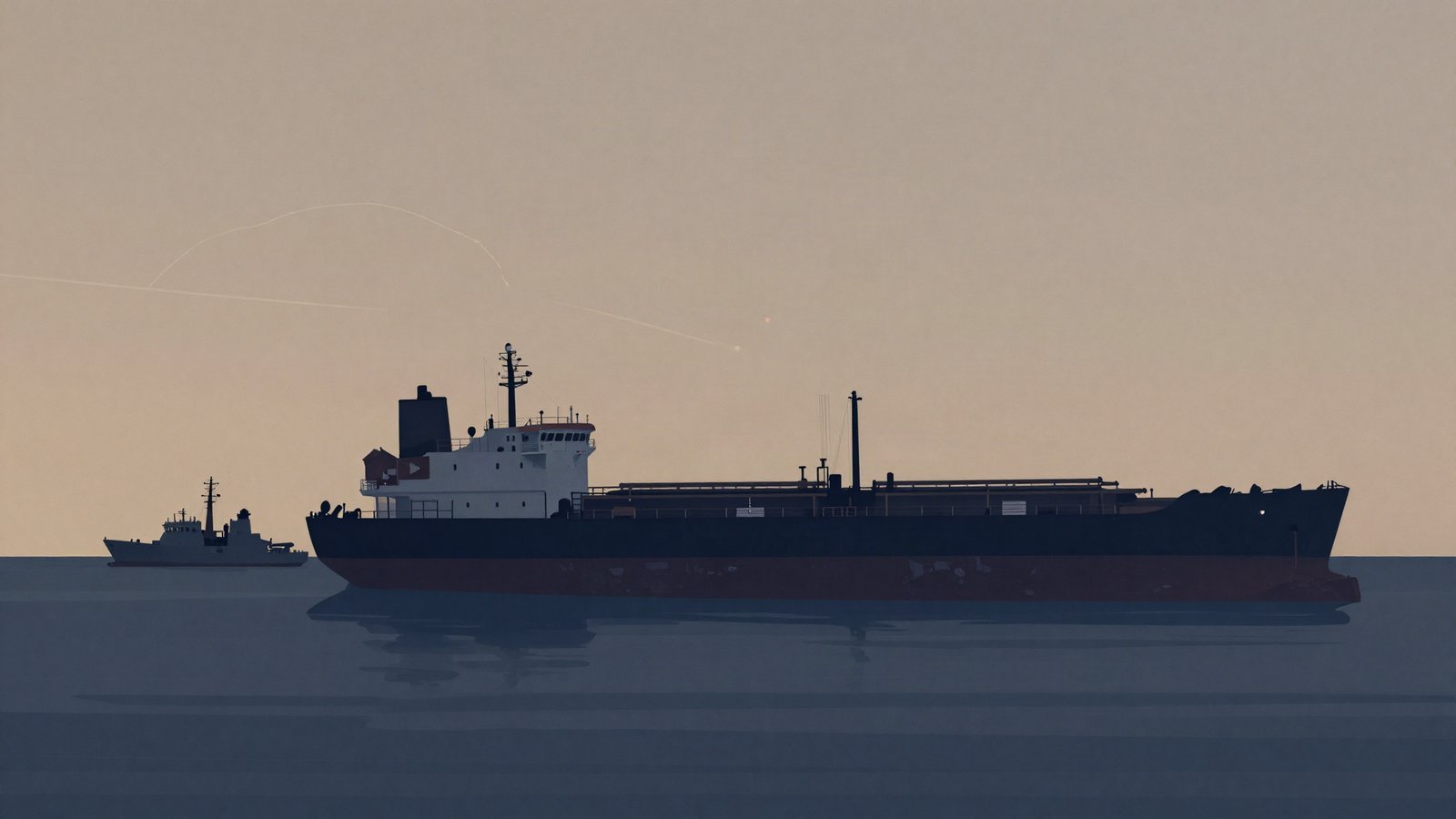
An Italy-led European Union naval mission intercepted a sanctioned tanker linked to Russia near Sicily, according to the Guardian, detaining the vessel while it investigated suspected sanctions evasion. The ship had been re-registered in Cameroon and was travelling from Benin toward Istanbul when it was stopped. The operation drew a direct line from the war in Ukraine to the enforcement of sanctions and the security of Mediterranean shipping lanes.
The interception is notable less for the single vessel than for what it represents. European governments have grown increasingly focused on the so-called shadow fleet: aging tankers with opaque ownership and shifting flags, used to move oil in ways that critics say sidestep sanctions. Stopping one ship is a discrete act; the message is aimed at a much larger network.
What the shadow fleet is
The term describes vessels that carry sanctioned or price-capped oil while obscuring who owns and insures them. Re-registration under flags of convenience, frequent name changes and layered corporate structures make the trade hard to trace. The tanker stopped near Sicily, reflagged in Cameroon and routed between West Africa and Turkey, fit the profile that European authorities have been trying to disrupt.
For the EU, the appeal of interdiction is straightforward. Restricting this trade aims to squeeze the oil revenue that helps fund Russia's war, while pushing for greater transparency in ship ownership and insurance. The Sicily operation was presented as part of that wider effort rather than an isolated stop.
Two views of the same operation
European officials cast the detention as legitimate enforcement against a fleet designed to evade sanctions. Russia, which has generally denounced such measures, has framed them as unlawful pressure on lawful commerce. The two positions reflect a deeper disagreement over the legality and legitimacy of the sanctions regime itself, a dispute unlikely to be settled by any single seizure.
How the specific case is resolved will depend on evidence gathered during the investigation, including documentation of the cargo, its ownership and the vessel's insurance. Those details, largely unavailable publicly at this stage, will shape whether the detention holds up and what precedent it sets.
The choice of the central Mediterranean as the setting is telling. The waters around Sicily lie on routes that connect ports across the region. An Italy-led mission operating there signals that enforcement is moving into busy commercial lanes rather than remaining confined to distant chokepoints. That shift raises the visibility of the campaign, but it also increases the potential for friction with the heavy civilian traffic these waters carry every day.
Crews and environmental risk
Interdictions carry consequences beyond the geopolitical. Seizures can strand crews who may have limited knowledge of the ownership arrangements behind the ships they serve on, raising questions about their welfare and legal exposure. Environmental risk also rises when aging vessels are detained or rerouted without clear management, since poorly maintained tankers carrying oil pose spill hazards if left in limbo.
These practical dimensions complicate the enforcement picture. A measure aimed at cutting revenue can, if mishandled, create humanitarian and ecological problems of its own, a tension authorities must weigh as interdictions become more common.
Risks of a wider standoff
Escalation could take several forms. Retaliatory detentions, prolonged legal disputes, unsafe evasive manoeuvring by targeted ships and further flag-hopping are all plausible responses to intensified enforcement. Each would add friction to already crowded shipping routes and could raise the chance of accidents at sea.
Flag-hopping, the practice of repeatedly re-registering a vessel under new national flags, is central to how the shadow fleet operates. A ship reflagged in one country and then another can obscure its ownership and complicate legal action, since jurisdiction and responsibility become harder to pin down. Enforcement that pushes operators toward ever more obscure flags may win individual cases while making the broader network harder to trace, a dilemma European authorities are only beginning to confront.
A sanctions regime under strain
The interception reflects a broader Western effort to limit the revenue Russia earns from oil exports. That effort has included price caps and restrictions on the services that underpin the trade. The shadow fleet emerged in part as a response to those measures, offering a way to keep oil moving outside the reach of Western insurers and regulators. Each interdiction tests whether enforcement can keep pace with the ingenuity of evasion, a contest with no clear end in sight.
A legal basis on trial
The case near Sicily opens several threads worth following.
- Court proceedings and the legal basis for the detention
- Findings on cargo ownership and the vessel's true operators
- Insurance documentation and how it is verified
- Whether more EU missions receive authority to interdict
- Any Russian response, diplomatic or maritime
The interception showed how the economic front of the Ukraine war has reached into the Mediterranean, turning questions of flags, insurance and ownership into instruments of pressure. Whether interdiction becomes a routine tool or a rare one will depend on how this case is resolved and how far European governments are willing to extend it.
Sources
- Guardian - Ukraine war briefing and tanker interception
You may also like to read
Russian Strikes on Ports, Cities and Energy Sites Keep Civilian Pressure on Ukraine
Attacks near Mykolaiv and drone waves across several regions kept pressure on Ukraine's ports and power, with Moscow and Kyiv describing the targets differently.

EU adopts its 21st sanctions package against Russia, hitting energy, finance and crypto
The bloc froze the oil price cap for a year and tightened measures on LNG, banks and crypto, with parallel restrictions imposed on Belarus.
EU adopts 21st sanctions package on Russia and freezes oil price cap at $44
The bloc agreed new measures on energy, finance and trade after weeks of talks, with an exemption for Greek shipping of Russian LNG.
Romania's Drone Interception Renews Fears the Ukraine War Could Spill Into NATO Territory
Romania said a fighter jet downed a suspected Russian drone after repeated airspace incidents, testing NATO's rules on attribution and escalation near the border.