Russian Strikes on Ports, Cities and Energy Sites Keep Civilian Pressure on Ukraine
Attacks near Mykolaiv and drone waves across several regions kept pressure on Ukraine's ports and power, with Moscow and Kyiv describing the targets differently.
Commentary & Analysis ·
Verified key facts
- Russian forces struck port infrastructure and vessels near Mykolaiv during the week, according to the Guardian and Al Jazeera.
- Drones were launched toward multiple Ukrainian regions over the same period.
- Moscow said it targeted military-linked sites; Kyiv said civilian and commercial areas were repeatedly hit.
- Ukraine reported civilian deaths and damage across several regions.
- Port damage carries risks for grain exports, employment and Black Sea shipping safety.
Pressure returns to the Black Sea coast
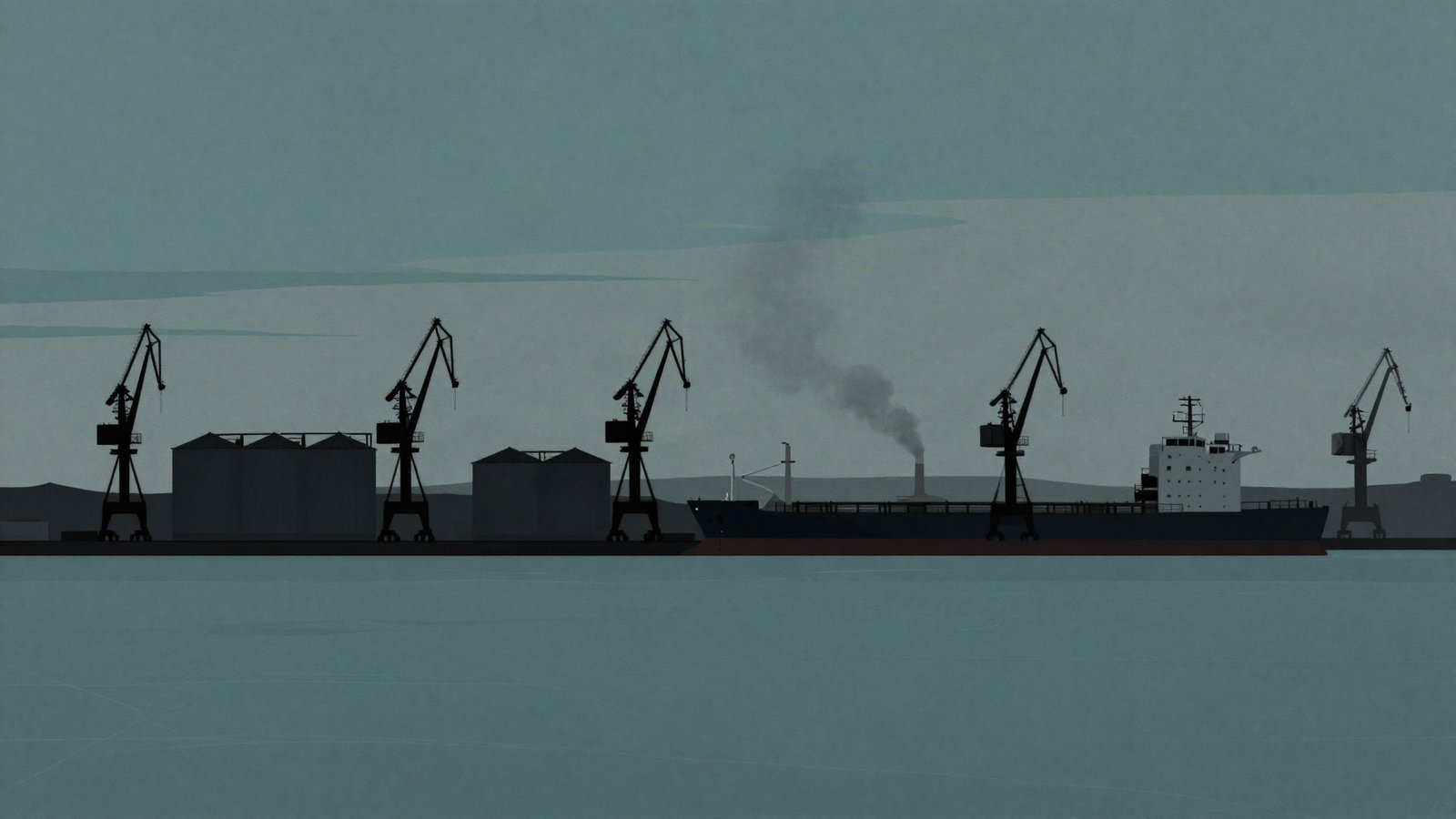
Russian attacks over the week concentrated in part on Ukraine's maritime edge, with strikes reported on port infrastructure and vessels near Mykolaiv. According to accounts from the Guardian and Al Jazeera, the campaign also sent drones toward multiple Ukrainian regions. It sustained a pattern of pressure that has fallen heavily on ports, cities and energy-related sites. The combination of targets kept both humanitarian and economic strain on the country.
Mykolaiv sits near the mouth of Ukraine's southern shipping routes, and damage there resonates well beyond the city itself. Ports are where the war's local and global dimensions meet: they employ thousands, move the grain that feeds distant markets, and depend on the fragile safety of Black Sea navigation. A single week of strikes can ripple through all three.
Competing accounts of the targets
Moscow said its forces were striking military-linked targets, a framing it has applied consistently across the conflict. Kyiv countered that civilian areas and commercial infrastructure were repeatedly affected, and reported civilian deaths and damage in several regions. As with earlier exchanges, these figures come from officials on one side and cannot be independently verified.
The campaign, according to the reporting, combined drones and missiles with attacks on transport and energy-related facilities. That mix makes it difficult to draw a clean line between military and civilian effects, since ports and power infrastructure often serve both purposes and sit close to populated areas.
Consequences for civilians and the economy
Damage to port facilities threatens grain exports, local employment and maritime safety in one stroke. Urban strikes, meanwhile, drive displacement, interrupt power supplies and leave lasting trauma among residents. The overlap of these harms is what makes the coastal campaign so consequential: it touches livelihoods, basic services and mental health simultaneously.
The reach of the damage extends outward. Because Ukraine is a significant grain exporter, disruption to its ports can feed into global food markets, affecting prices and supply far from the battlefield. That linkage has kept international attention on the fate of the country's shipping lanes throughout the war.
New hazards at sea
The maritime dimension carries its own escalation risks. Floating mines, damaged vessels and the possibility of misidentification all raise the danger of incidents in the Black Sea that could widen the conflict or draw in third parties. Shipping operators and port authorities must weigh these hazards against the pressure to keep trade moving, a calculation that grows more fraught with each strike.
Insurance costs and operating notices reflect that uncertainty. When ports issue warnings or vessels are hit, the commercial machinery around shipping responds quickly, sometimes rerouting cargo or pausing movements, with knock-on effects for exporters and importers alike.
Mykolaiv's significance lies partly in its location. The city and its surrounding waters sit close to the front in Ukraine's south, making its port facilities both economically important and militarily exposed. Damage there tends to carry weight beyond the immediate site, because it touches shipping routes that connect Ukraine's agricultural heartland to buyers abroad. That combination of vulnerability and importance keeps the area in the spotlight whenever strikes are reported.
The wider diplomatic backdrop
Ukraine continued to press for additional air-defence support and for tighter sanctions enforcement against Russian shipping and energy revenue. Those two requests are connected: better defences might blunt the strikes, while economic measures aim at the resources funding them. Neither yielded a visible breakthrough during the week, and no pause in the coastal campaign emerged.
Background: a contested sea
The Black Sea has been a recurring front throughout the war, shaped by earlier disputes over grain shipments and the safety of civilian vessels. Arrangements to permit exports have come and gone, and the security of the sea lanes has remained precarious. The latest strikes near Mykolaiv fit that longer story of a waterway that is at once a lifeline and a battleground.
Ukraine's role as a major supplier of wheat, sunflower oil and other staples means that disruption to its ports reverberates in markets far removed from the fighting. Buyers in parts of the Middle East, North Africa and Asia have historically drawn on these exports, and uncertainty over supply can nudge prices upward. That connection has kept the security of the sea lanes on the agenda of governments and humanitarian bodies well beyond the region.
Alongside the ports, the week's campaign touched energy-related facilities, according to the reporting. Strikes on power infrastructure carry consequences that extend past the immediate damage. Interrupted electricity affects hospitals, water systems and heating, while repeated attacks strain the crews and spare parts needed for repairs. Kyiv has argued that such strikes amount to pressure on civilian life; Moscow has framed its targeting as military in nature. Neither characterisation can be independently confirmed.
Port notices and coastal pressure
Several indicators will show how the coastal pressure develops.
- Port operating notices and any suspension of shipping
- Shipping insurance rates and rerouting decisions
- Verified casualty figures from independent sources
- Ukrainian requests for additional air-defence systems
- Sanctions enforcement targeting Russian energy revenue and shipping
The week's strikes underscored how tightly Ukraine's ports bind local welfare to global markets. Until the fighting eases or defences improve, the coast is likely to remain a pressure point. It is where civilian hardship, economic disruption and the risk of a wider maritime incident all converge.
Sources
- Guardian - Ukraine war briefing
- Al Jazeera - Ukraine coverage
You may also like to read
Strikes on Odesa ports and merchant ships raise fears for Black Sea trade
Ukraine says Russian attacks on Black Sea ports killed foreign sailors and endangered grain exports, prompting an emergency UN session.
Ukraine and Russia Trade Deadly Drone Strikes as the Air War Reaches Far Behind the Front
Long-range drone attacks struck Russian regions and Ukrainian cities in early August, both sides claiming military targets as casualty reports stayed unverified.
Romania's Drone Interception Renews Fears the Ukraine War Could Spill Into NATO Territory
Romania said a fighter jet downed a suspected Russian drone after repeated airspace incidents, testing NATO's rules on attribution and escalation near the border.

Wildberries Warehouses Become a Flashpoint in Ukraine's Campaign Against Russia's War Economy
A Samara warehouse fire after a reported Ukrainian drone strike renewed debate over dual-use logistics, economic warfare and the workers caught in between.