Ukraine and Russia Trade Deadly Drone Strikes as the Air War Reaches Far Behind the Front
Long-range drone attacks struck Russian regions and Ukrainian cities in early August, both sides claiming military targets as casualty reports stayed unverified.
Commentary & Analysis ·
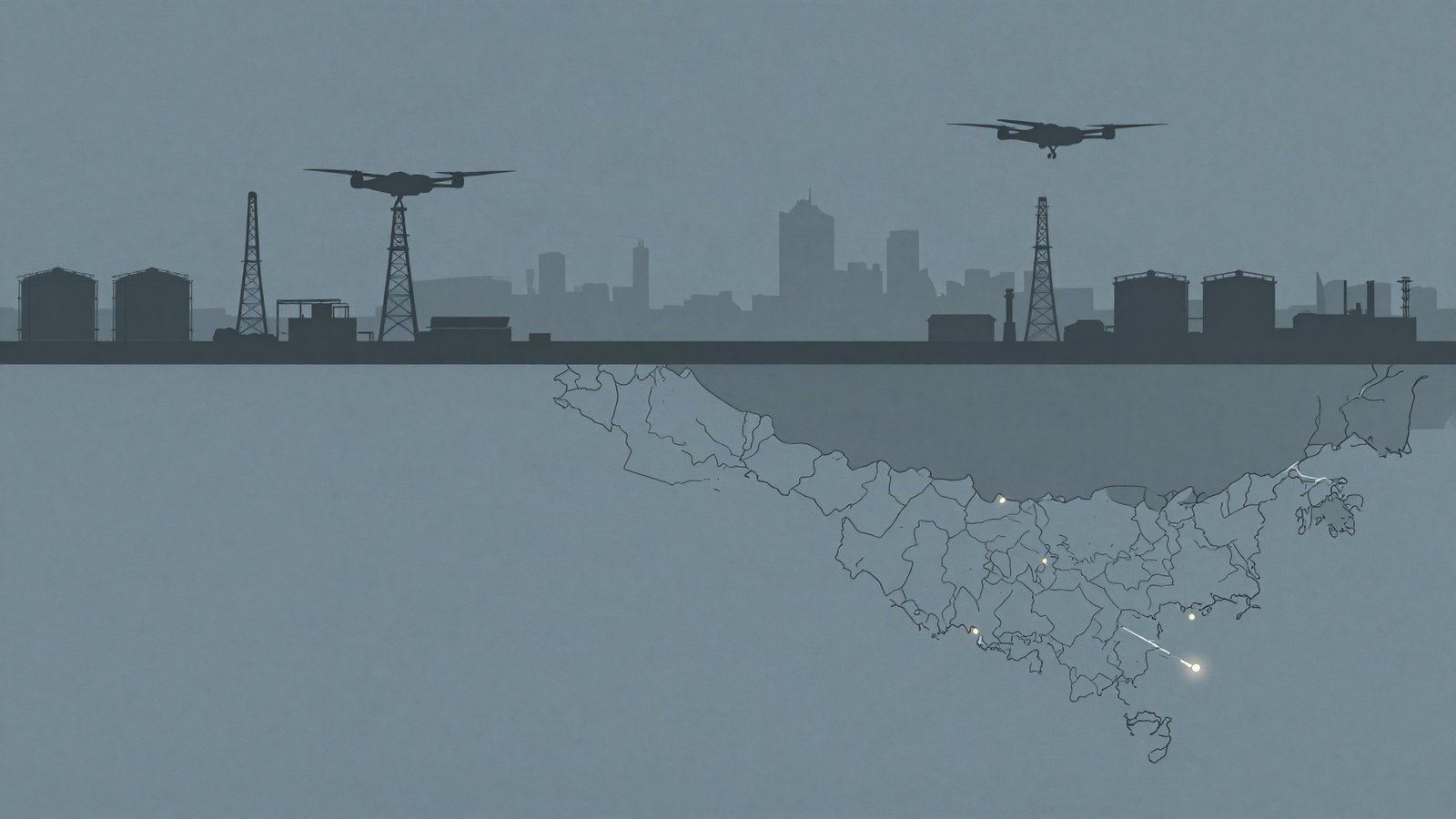
Verified key facts
- Ukrainian drones struck several Russian regions on 2 August, according to reports cited by AP and the Guardian.
- Russia continued launching drones and missiles at Ukrainian cities and infrastructure over the same week.
- Deaths were reported on both sides, including civilians in Saratov, Udmurtia, Zaporizhzhia and Kharkiv.
- Ukraine said it hit a refinery and military airbase in Saratov; Russia said strikes damaged residential areas and a Wildberries warehouse.
- No ceasefire emerged, and independent verification of casualty figures remained difficult.
A week defined by strikes far from the trenches
The war between Russia and Ukraine spent much of early August playing out in the skies over places that once felt distant from the fighting. Rather than concentrating along the contact line in the east and south, the exchanges reached deep into each country's interior. Ukrainian drones were reported to have struck multiple Russian regions on 2 August, according to accounts cited by The Associated Press and the Guardian. Over the same week, Russian drones and missiles kept hitting Ukrainian cities and infrastructure.
The pattern reflects a phase of the conflict shaped by unmanned aircraft. Cheaper and longer in range than ever, these systems let both militaries reach targets hundreds of kilometres from the front. That reach has changed how the war is experienced. Industrial plants, storage depots and residential districts far from any trench have become part of the daily map of risk. Emergency crews have been left contending with fires and debris in several locations at once.
Who did what, according to each side
Ukraine reported attacks on a refinery and a military airbase in the Saratov region, framing them as blows against sites that support Russia's war effort. Russia, for its part, said Ukrainian strikes had hit residential areas and a Wildberries warehouse, describing the targets as civilian. Moscow also launched another large wave of drones toward Ukraine during the week, according to the same reporting.
These accounts cannot be independently confirmed, and each government's description of what was struck differs sharply from the other's. Regional governors and air-defence forces featured prominently in the claims and counterclaims, issuing statements about intercepted craft, downed drones and damage on the ground. The figures they cited have not been verified by outside observers.
The human toll on both sides
Deaths were reported in both Russia and Ukraine over the week, including civilians in Saratov, Udmurtia, Zaporizhzhia and Kharkiv, according to authorities on each side. Because the reports come from officials and emergency services rather than neutral monitors, the totals remain provisional. What is clearer is the strain on responders. Fires and scattered debris in populated areas force rescue teams to work several scenes at once, amid hazards of unexploded ordnance and structural damage.
Both governments framed their own operations as attacks on military or war-supporting infrastructure while accusing the other of deliberately endangering civilians. That mirror-image messaging has become a fixture of the conflict, and it complicates any effort to assess proportionality from the outside.
Why reaching deeper carries new dangers
Long-range strikes change the strategic arithmetic. Each attack that lands far behind the lines invites retaliation in kind, drawing more of each country's territory into the exchange. The campaigns also draw down finite stocks of air-defence interceptors, a resource Ukraine in particular has repeatedly said it needs replenished. As the geography of the war widens, the task of verifying what happened, and to whom, grows harder.
The strikes came against a backdrop of continued sanctions pressure on Moscow and high-level contacts between Washington and Kyiv, though no pause in the fighting emerged. Analysts have long noted that infrastructure-focused campaigns can grind on without decisive battlefield shifts, imposing steady costs on civilians and economies alike.
Background to an escalating air campaign
The drone-heavy phase did not appear overnight. Since Russia's full-scale invasion in 2022, both sides have expanded fleets of long-range unmanned systems. Ukraine has increasingly signalled its intent to carry the war to Russian soil, including energy and logistics targets. Russia has sustained large barrages against Ukrainian power and urban centres, particularly around anniversaries and seasonal pressure points. The August exchanges fit that longer trajectory rather than marking a sudden break.
Cheap, mass-produced drones have reshaped the economics of the conflict. A single interceptor missile can cost many times more than the drone it destroys, an imbalance that pressures defenders to find lower-cost countermeasures. That dynamic partly explains why both militaries have leaned so heavily on unmanned systems, and why the resulting campaigns can persist for months without a decisive shift on the ground.
The verification problem
One consistent feature of the week's reporting was the difficulty of confirming what actually happened. Casualty and damage figures came almost entirely from officials on each side, whose accounts served competing narratives. Independent monitors rarely have access to strike sites in real time, and imagery can take days to analyse. News organisations, including those cited here, have repeatedly cautioned that such figures cannot be verified, a caveat that applies across the reporting.
Indicators in the days ahead
In the coming days, observers will be watching several indicators for signs of where the air war is heading.
- Air-defence claims from both governments and how they are corroborated
- Independent damage assessments at named sites such as the Saratov refinery
- Any shift toward retaliatory targeting of civilian infrastructure
- Diplomatic efforts, however tentative, to limit strikes on non-military sites
- Requests from Kyiv for additional interceptors and air-defence systems
For now, the trajectory points to more of the same. Two militaries reach ever deeper into each other's territory, each offering casualty claims that outside observers cannot readily confirm, and no off-ramp is visible. The expansion of the air war raises the stakes without, so far, moving either side closer to a negotiated halt.
Sources
- AP - Ukrainian drones kill five in Russia
- Guardian - Ukraine war briefing, 3 August
You may also like to read

Ukraine and Russia trade long-range strikes as both sides report civilian deaths
Kyiv reported deadly Russian strikes on defence and residential sites, while Moscow said Ukrainian drones hit factories deep inside Russia.
Romania's Drone Interception Renews Fears the Ukraine War Could Spill Into NATO Territory
Romania said a fighter jet downed a suspected Russian drone after repeated airspace incidents, testing NATO's rules on attribution and escalation near the border.
Russian Strikes on Ports, Cities and Energy Sites Keep Civilian Pressure on Ukraine
Attacks near Mykolaiv and drone waves across several regions kept pressure on Ukraine's ports and power, with Moscow and Kyiv describing the targets differently.

Wildberries Warehouses Become a Flashpoint in Ukraine's Campaign Against Russia's War Economy
A Samara warehouse fire after a reported Ukrainian drone strike renewed debate over dual-use logistics, economic warfare and the workers caught in between.