Drone Attack at Egypt's Damietta Port Shows the Iran War Reaching New Civilian Infrastructure
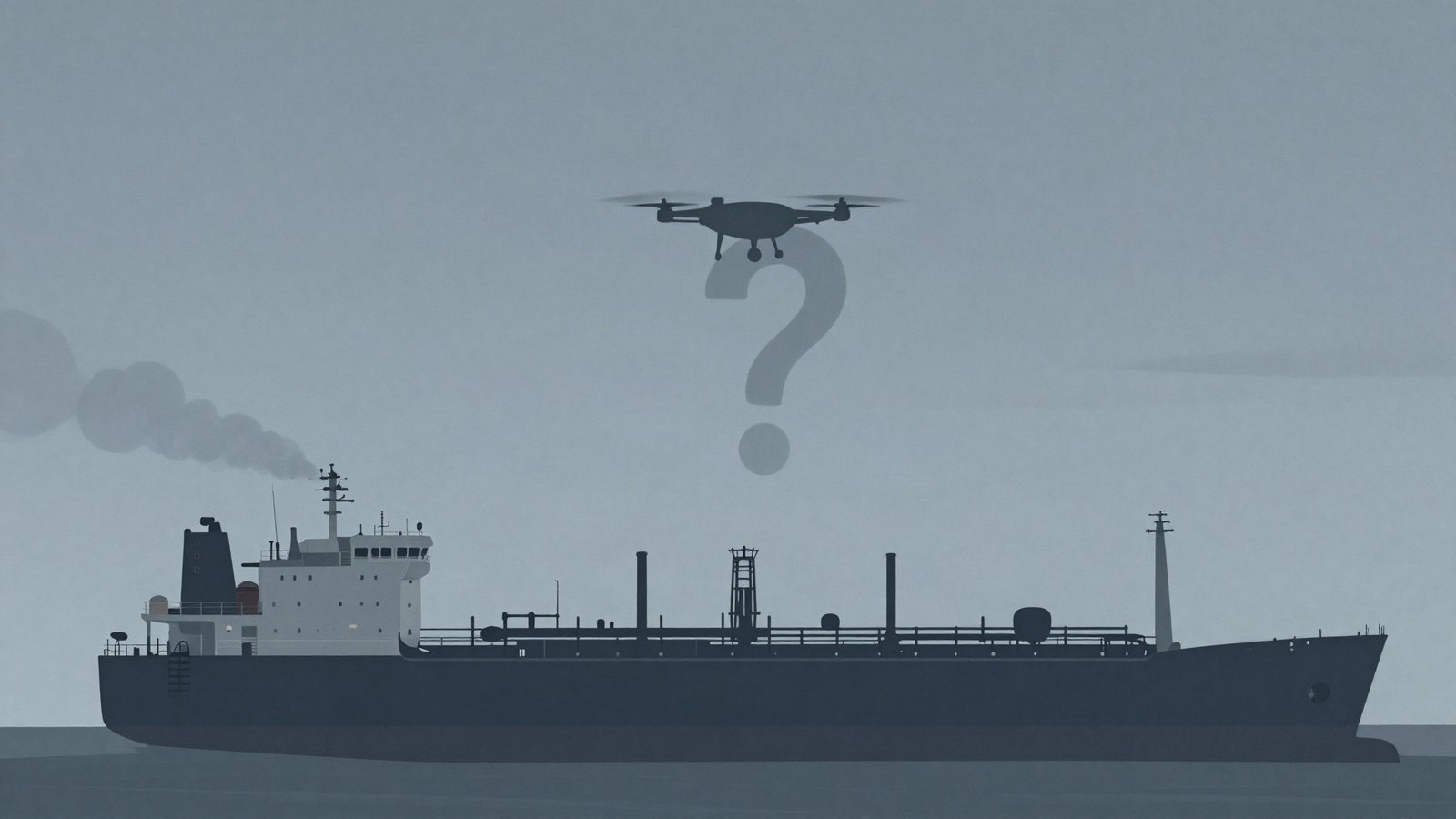
Drones struck two gas vessels at Egypt's Damietta port, with no party confirmed responsible, as Cairo condemned the attack and worked to prevent wider escalation.
Commentary & Analysis ·
Verified key facts
- Drones struck two gas vessels at Egypt's Damietta port, according to the reporting.
- No responsible party was immediately confirmed.
- Egypt condemned the attack and sought to prevent wider escalation.
- Port workers, seafarers and nearby communities faced immediate danger, and gas supply was disrupted.
- Analysts warn ambiguous attacks can produce miscalculation, false accusations and misdirected retaliation.
A strike far from the front lines
The war centred on Iran reached new ground this week. According to documented accountsing, drones struck two gas vessels at Egypt's Damietta port. The attack extended the conflict to civilian infrastructure in a country that had not been at its centre.
Crucially, no responsible party was immediately confirmed. The absence of a clear claim of responsibility set this incident apart. It illustrated, the reporting notes, how unclear attribution and proxy warfare can expand a conflict into unexpected places.
What happened at the port
Damietta is a significant Egyptian port, and the targeting of gas vessels there carried weight for energy and trade. According to documented accountsing, authorities responded to fires and investigated flight paths and possible launch points.
The investigation into flight paths reflects the central puzzle of the attack, namely who launched it and from where. The principals here are Egypt, shipping companies, unknown attackers and regional militaries. With the attacker unidentified, forensic work became essential to understanding what had occurred.
Damietta sits on Egypt's Mediterranean coast and serves as a hub for gas and cargo traffic. An attack there touches not only the vessels involved but the broader network of trade that passes through the port. Because such facilities handle sensitive cargo, they require careful safety management even in normal times. A strike introduces hazards that port authorities must contain quickly. The stakes of restoring order are therefore high.
The problem of attribution
The lack of a confirmed perpetrator is more than a gap in the record. In a tense regional environment, an unclaimed attack can itself become a source of instability. Without knowing who is responsible, states may struggle to calibrate a response.
The reporting frames the incident as a demonstration of how proxy warfare and ambiguous attribution work. When attacks can be carried out at a distance and without acknowledgement, the usual signals that govern conflict become harder to read. That ambiguity is a feature of the danger, not merely an inconvenience.
Drones have made such ambiguity more common in recent conflicts. They can travel considerable distances and strike without exposing those who launched them. That reach allows attacks to appear far from any obvious front line, as at Damietta. It also makes tracing responsibility a technical challenge, since investigators must reconstruct flight paths and possible launch sites from limited evidence. The forensic task is demanding and slow.
Cairo's response
Egypt moved to contain the fallout. According to documented accountsing, it condemned the attack and sought to prevent wider escalation. Cairo's priority appeared to be limiting the incident's consequences rather than widening the confrontation.
At the same time, competing regional actors denied or avoided responsibility. In an environment where no party claimed the attack, others sought to distance themselves from it. These competing responses left the question of accountability open, complicating any collective effort to respond.
Danger for workers and supply
The human and economic effects were immediate. According to published reporting, port workers, seafarers and nearby communities faced immediate danger. Gas supply and trade routes were disrupted as a result of the strike.
A port is a busy workplace, and an attack there threatens the people who keep it running. Fires aboard gas vessels pose particular hazards. Beyond the immediate danger, disruption to gas supply and shipping can affect energy availability and commerce, extending the impact well beyond the dockside.
Nearby communities also live with the consequences of an incident at a major port. Smoke, the risk of further blasts and disruption to local trade can all reach beyond the perimeter. For residents, an attack that seems distant on a map can feel immediate on the ground. That proximity is part of why authorities moved quickly to respond to the fires and reassure the public.
Egypt's wider diplomatic role
The attack landed as Egypt played an active diplomatic part in the region. According to published reporting, Cairo continued its efforts on Gaza and Iran while strengthening its port and air defences. The country balanced diplomacy with steps to protect its own infrastructure.
Egypt has long positioned itself as a mediator in regional disputes. An attack on its own territory complicates that role, adding a direct security concern to its diplomatic agenda. Strengthening defences signalled an intent to guard against further strikes even as talks continued.
The country's control of a key maritime corridor gives it a particular interest in the security of shipping. Disruption near its coast threatens both its economy and its standing as a guarantor of stable trade routes. That combination raises the pressure on Cairo to respond effectively. It also gives Egypt an incentive to press for de-escalation across the wider conflict, lest more such incidents follow.
The risk of misdirected retaliation
Independent analystsing warned of a specific hazard tied to the ambiguity. Attacks without clear attribution, they said, can produce miscalculation, false accusations and retaliation against the wrong actor. Uncertainty about the attacker raises the chance of a mistaken response.
If a state blames the wrong party, it could retaliate against an actor that had no role, widening the conflict along a false line. Several developments will help clarify the picture. Forensic findings may identify the source of the attack. Maritime notices and any eventual claim of responsibility will further shape how states respond, and whether the incident escalates or is contained.
Sources
- Guardian - Iraq and Egypt spillover live
You may also like to read
Egypt, UAE, Turkey, Saudi Arabia, Ethiopia and Chad Are Drawn Into Sudan's Regional Power Struggle
Accusations of external sponsorship and cross-border spillover are making Sudan's war harder to contain, as regional states are said to back rival sides.
Houthis Attack Saudi Tankers and Threaten a Wider Red Sea Blockade
The Houthis claimed missile and drone attacks on two Saudi oil tankers and declared curbs on Saudi-linked shipping, raising the stakes on a vital Red Sea route.
Analysts Say Iran Is Setting the Tempo in a Prolonged War With the United States
Analysts describe Tehran using regional disruption and endurance, not a single decisive battle, to shape US choices, as mediators keep searching for an off-ramp.
Drone Strike on Tanker Forces Iraq to Pause Oil Loadings as War Creeps Across Border
A drone crashed into a tanker at Iraq's Basra terminal on 16 July, briefly halting all crude loadings and exposing Baghdad's deepening entanglement in the war.