Egypt, UAE, Turkey, Saudi Arabia, Ethiopia and Chad Are Drawn Into Sudan's Regional Power Struggle
Accusations of external sponsorship and cross-border spillover are making Sudan's war harder to contain, as regional states are said to back rival sides.
Commentary & Analysis ·
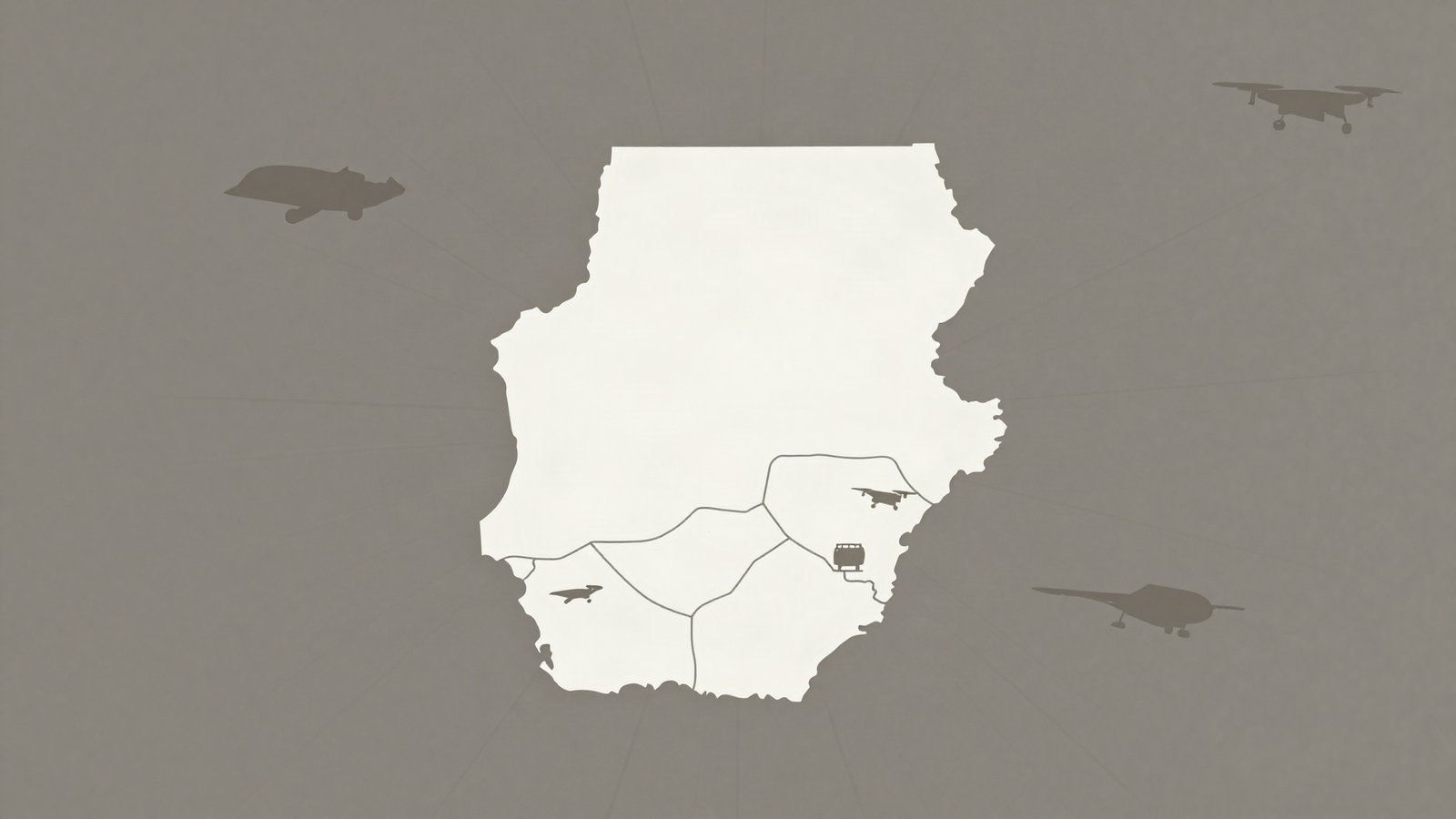
Verified key facts
- Regional states are accused of supporting different sides through arms, finance, logistics or diplomacy, per available reporting.
- The UAE denies backing the RSF; other states frame support as protection of stability or national interests.
- Support networks affect drone capacity, mercenary recruitment, border routes and political recognition.
- Refugees and weapons cross borders, pressuring Chad, CAR, South Sudan and Egypt.
- African Union, European and US initiatives compete with bilateral mediation.
A war with many outside hands
Sudan's conflict is increasingly understood not as a purely domestic struggle but as one entangled with the interests of several regional states. According to published reporting, external sponsorship and spillover are making the war harder to contain. A conflict shaped by outside support and cross-border effects is generally more difficult to resolve, because a settlement must satisfy not only the domestic parties but their external backers.
Regional states are accused of supporting different sides through arms, finance, logistics or diplomacy, contemporaneous reporting states. The principals here are Egypt, the United Arab Emirates, Turkey, Saudi Arabia, Ethiopia and Chad, alongside the Sudanese Armed Forces and the Rapid Support Forces. The NE Times reports these as accusations and presents the involved states' own positions where available.
The forms of support alleged
According to the reporting, support networks affect drone capacity, mercenary recruitment, border routes and political recognition. These are the practical channels through which external involvement is said to shape the conflict. Access to drones can alter the balance on the battlefield; control of border routes affects supply and movement; and political recognition confers legitimacy on one party or another.
The breadth of these alleged forms of support, spanning military hardware, personnel, logistics and diplomacy, illustrates why external involvement is so consequential. Support need not take the form of direct intervention to have significant effects. The provision of capabilities and cover can sustain a party's ability to fight and to claim standing on the international stage.
Denials and differing framings
The United Arab Emirates denies backing the RSF, according to contemporaneous reporting, while other states frame their support as protection of stability or the pursuit of national interests. These differing framings are significant: states rarely describe their involvement as fuelling conflict, presenting it instead as defensive, stabilising or legitimate. The NE Times reports these positions as the stated claims of the actors concerned.
The gap between accusations of sponsorship and the denials or justifications offered is a defining feature of the debate over Sudan's war. Establishing the facts of external involvement requires evidence that traces the flow of weapons, money and personnel. That work is often undertaken by investigators and monitors, and its findings are typically contested.
Spillover across borders
The war's effects do not remain within Sudan's borders. Refugees and weapons cross into neighbouring states, placing pressure on Chad, the Central African Republic, South Sudan and Egypt, according to the reporting. Refugee movements strain the resources and stability of host countries, while the movement of weapons can feed insecurity beyond Sudan itself.
This cross-border dimension is part of what makes the conflict a regional concern rather than a contained national one. Neighbouring states face the consequences of a war they may also be accused of influencing, creating a complex web of interests and pressures. The stability of a wide region is bound up with the trajectory of Sudan's fighting.
Competing diplomatic tracks
Efforts to address the conflict are themselves fragmented. African Union, European and United States initiatives compete with bilateral mediation, according to the reporting. The proliferation of diplomatic tracks can dilute pressure on the parties and allow them to move between processes. That complicates the search for a single, authoritative framework capable of ending the war.
When mediation is divided among multiple actors with differing relationships to the parties and their backers, coordination becomes a challenge in its own right. A unified approach is generally seen as more effective, but the range of interested external actors makes such unity difficult to achieve in practice.
The involvement of outside states also shapes how the conflict is understood internationally. When several governments have stakes in the outcome, framing the war becomes contested, with each backer inclined to describe events in terms favourable to the side it supports. The result is that even basic facts about the war can become subjects of dispute between capitals.
This affects everything from calls for accountability to the willingness to enforce measures such as arms embargoes. Observers note that a war entangled with multiple external interests tends to attract fragmented and sometimes contradictory responses. These can in turn prolong the fighting rather than bring it to a close. It is one reason mediators have struggled to translate concern into effective, coordinated action, while Sudanese civilians bear the consequences of decisions taken far from the country.
Escalation risks and what to watch
Analysts tracking the conflict warn that proxy escalation could create new fronts and deepen ethnic tension across borders. Where external actors back rival sides, competition between them can intensify the conflict and extend it into new areas. The ethnic dimension raises the additional risk that tensions could spread across the region's porous borders.
Attention in the weeks ahead will centre on arms embargo enforcement, flight routes, border clashes and diplomatic forums, published reporting indicates. The enforcement of any arms embargo would test the international will to limit external involvement, while flight routes and border clashes would signal the practical reality of that involvement. For now, Sudan's war remains embedded in a regional contest that makes its resolution more difficult and its consequences wider.
Sources
- FT - Sudan fallout across borders
- AP - Child soldiers and mercenaries
You may also like to read

Former Child Soldiers Describe Forced Recruitment and Colombian Mercenaries in Sudan's War
Testimony attributed to former child soldiers alleges the RSF abducted and forced them to fight, sometimes under foreign instructors, in accounts now being examined.
Sudan's Front Line Shifts to Kordofan and Blue Nile After the Country's De Facto Partition
With the capital no longer the focal point, fighting has moved to the regions linking Sudan's rival eastern and western zones, deepening a de facto partition.

Darfur Atrocities and El Fasher Control Keep Genocide Warnings at the Centre of Sudan's War
Reports of killings, displacement and blocked aid around El Fasher keep accountability and genocide warnings at the heart of concern over Sudan's war.

Drone Strikes and Fano Fighting Continue Across Ethiopia's Amhara Region
New monitoring points to ongoing drone operations, casualties and telecom restrictions in Amhara, as the government and rights advocates give differing accounts.