Sudan's Front Line Shifts to Kordofan and Blue Nile After the Country's De Facto Partition
With the capital no longer the focal point, fighting has moved to the regions linking Sudan's rival eastern and western zones, deepening a de facto partition.
Commentary & Analysis ·
Verified key facts
- The SAF controls much of the east and parts of central Sudan, while the RSF dominates large western areas including Darfur, per contemporaneous reporting.
- Fighting has moved from central Khartoum toward regions connecting the rival zones.
- Both sides used drones, artillery and ground offensives around Kordofan and Blue Nile.
- Road closures, displacement and hunger are spreading into previously receiving communities.
- Mediation efforts remain fragmented and ceasefire attempts have failed.
A war that has moved, not ended
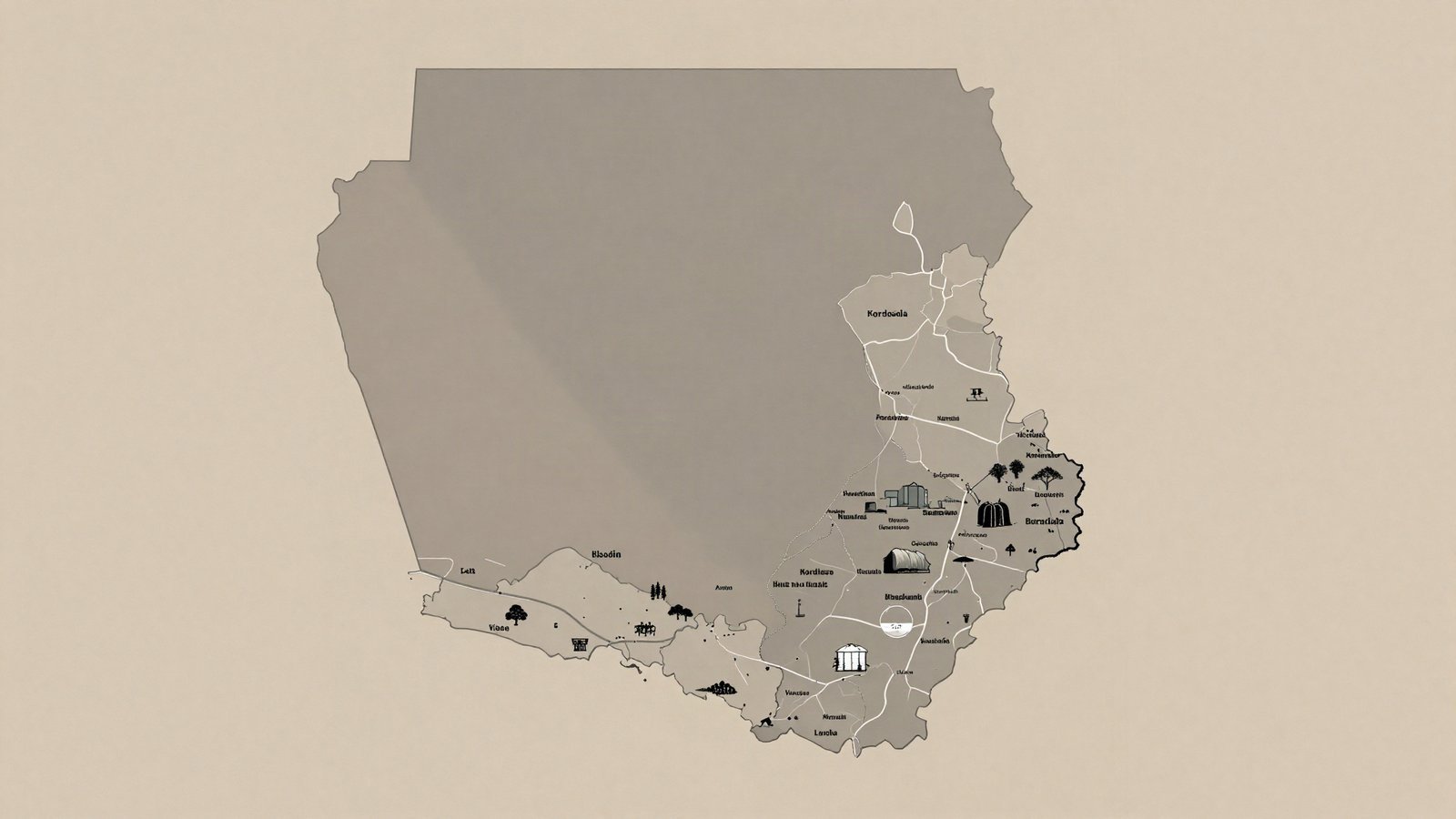
The geography of Sudan's conflict has shifted. According to available reporting, fighting has moved away from central Khartoum toward the regions that connect the rival eastern and western zones, chief among them Kordofan and Blue Nile. The change reflects not a winding down of the war but its migration to new fronts, as the parties contest the areas that link their respective spheres of control.
This movement follows what available reporting describes as a de facto partition of the country. The Sudanese Armed Forces control much of the east and parts of central Sudan, while the Rapid Support Forces dominate large western areas, including Darfur. Between these zones lie the regions now drawing the heaviest fighting, strategically important precisely because they sit at the seam of a divided country.
The weapons and the battlegrounds
Both sides used drones, artillery and ground offensives around Kordofan and Blue Nile, according to contemporaneous reporting. The combination of stand-off weapons and ground assaults points to sustained, conventional-style fighting over territory rather than sporadic clashes. The principal actors are the Sudanese Armed Forces, the Rapid Support Forces and allied militias.
Control of these connecting regions carries significance beyond the immediate battlefield. Roads, supply lines and infrastructure that pass through them determine the ability of each side to move forces and goods between areas it holds. Contesting this ground is therefore about more than territory; it concerns the coherence of the zones each party controls and the viability of any partition.
Competing claims to legitimacy
Each side claims legitimacy and accuses the other of atrocities and foreign dependency, according to available reporting. These competing narratives are characteristic of a conflict in which both parties present themselves as the rightful authority and their opponent as illegitimate or reliant on outside backers. The NE Times presents these as claims by the parties and does not adjudicate between them.
Accusations of atrocities are serious and, where they arise, are matters for investigation rather than assertion. The charges are mutual, with each side accusing the other. That dynamic underscores the difficulty of establishing an agreed account of events, in a war where independent access is limited and information is contested.
Hunger and displacement spread
The humanitarian consequences of the shifting front are being felt in communities that had previously received people fleeing other areas. Road closures, displacement and hunger are spreading into these communities, according to the reporting, compounding pressures on places that were already hosting the displaced. Areas that offered refuge are themselves becoming zones of hardship.
Road closures are particularly consequential in a country where the movement of food and aid depends on overland routes. When roads are cut, markets are disrupted and humanitarian access is constrained, hunger deepens. The spread of these conditions into previously receiving communities suggests the war's humanitarian footprint is widening rather than contracting.
Humanitarian organisations have repeatedly warned that access, not only funding, is the binding constraint in Sudan. Where routes are closed or insecure, supplies cannot reach those in need. Assessments of the scale of hunger also become harder to make when aid workers and monitors cannot travel. The spread of the front to new regions widens that problem, drawing more communities into the zone where relief is difficult to deliver.
Fragmented mediation
Efforts to mediate the conflict remain fragmented, and ceasefire attempts have failed, according to documented accounts. The absence of a unified, effective diplomatic track has left the parties without a framework capable of halting the fighting. Fragmented mediation, involving multiple actors and initiatives, can dilute pressure and allow parties to shop between processes rather than commit to one.
The failure of ceasefire attempts is a recurring feature of the war. It reflects both the parties' calculations that they may gain more by fighting and the difficulty of enforcing any agreement. Without monitoring and consequences for violations, ceasefires have struggled to hold, and the conflict has continued to evolve rather than pause.
The shift toward Kordofan and Blue Nile also has implications for Sudan's economy. These regions sit near infrastructure and routes that matter for trade and, in places, for oil. Fighting that disrupts them can cut revenue and further weaken the capacity of either side to govern the areas it holds. For civilians, the economic damage compounds the direct harms of displacement and hunger. Analysts note that the longer such disruption continues, the harder recovery becomes, whatever the eventual political outcome of the war.
The stakes of a hardening partition
Analysts tracking the conflict warn that a hardened partition could create rival governments, ethnic cleansing and regional intervention. A country divided into consolidated, rival administrations would face profound questions about its future unity. The risk of atrocities along ethnic lines is a grave concern raised in relation to the conflict. Regional intervention could further internationalise an already complex war.
The war's direction will be read from control of major roads, oil infrastructure, the city of El Obeid and the emergence of any new political administrations, published reporting indicates. These will signal whether the partition is deepening into something more permanent. For now, Sudan's war has relocated rather than resolved, with the regions between its divided halves bearing the brunt of the fighting and its human cost.
Sources
- UK country policy note - Sudan security situation July 2026
- FT - Sudan war spills across borders
You may also like to read
Drone strikes reshape Sudan's war as Kordofan aid crisis deepens
Aid groups warn escalating RSF drone strikes on North Kordofan are cutting off food, fuel and water, as the army and paramilitaries trade blame.
Darfur Atrocities and El Fasher Control Keep Genocide Warnings at the Centre of Sudan's War
Reports of killings, displacement and blocked aid around El Fasher keep accountability and genocide warnings at the heart of concern over Sudan's war.

Former Child Soldiers Describe Forced Recruitment and Colombian Mercenaries in Sudan's War
Testimony attributed to former child soldiers alleges the RSF abducted and forced them to fight, sometimes under foreign instructors, in accounts now being examined.
Half a Million Trapped as RSF Tightens Siege of Sudan's El Obeid
Escalating RSF strikes on El Obeid have trapped half a million people, cutting food, water and power as aid agencies warn of catastrophe.