Half a Million Trapped as RSF Tightens Siege of Sudan's El Obeid
Escalating RSF strikes on El Obeid have trapped half a million people, cutting food, water and power as aid agencies warn of catastrophe.
Commentary & Analysis ·
Verified key facts
- Around 500,000 people are trapped in El Obeid, capital of North Kordofan state.
- Al Jazeera reported escalating RSF drone strikes cutting food, water and fuel.
- The city has been without electricity for nearly a month, aid groups said.
- The IRC warned an imminent RSF offensive could push the region toward catastrophe.
- The EU Parliament called for the RSF to be designated a terrorist group over the siege.
What happened
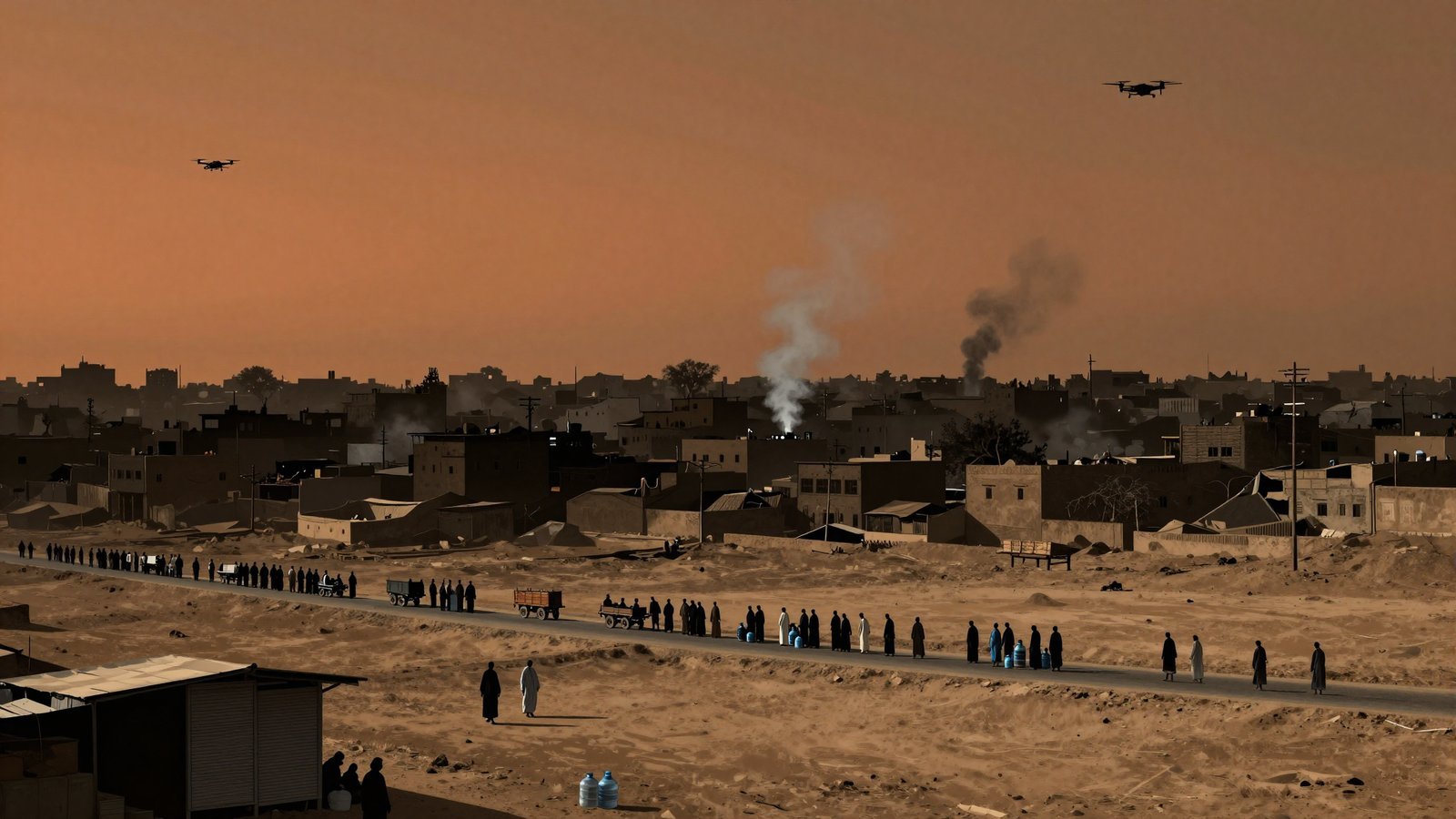
The paramilitary Rapid Support Forces have intensified their siege of El Obeid, the capital of Sudan's North Kordofan state, trapping around half a million people. Al Jazeera reported that escalating drone strikes were killing civilians and cutting off access to food, water and fuel.
Aid agencies said the city had been without electricity for nearly a month, with fuel shortages and soaring food prices deepening the crisis. Trapped residents were unable to flee because of dangerous conditions on the roads out of the city.
The International Rescue Committee warned that an imminent RSF ground offensive was pushing North Kordofan toward humanitarian catastrophe. Aid groups compared the situation to earlier sieges elsewhere in Sudan that ended in mass suffering.
Al Jazeera framed the siege as a possible echo of el-Fasher, another city that endured a prolonged encirclement. Such comparisons carry weight in Sudan, where earlier blockades produced acute hunger and heavy civilian casualties over many months.
A strategic city
El Obeid holds significant strategic value. It hosts the only airport in North Kordofan, a facility that has served United Nations missions in the disputed Abyei region. The city also sits at a junction linking the capital Khartoum with the Darfur region.
Control of the city would strengthen the RSF's grip across Kordofan and Darfur. Reporting described the paramilitary group as seeking to consolidate dominance over a broad swathe of central and western Sudan.
- El Obeid links Khartoum to Darfur along key supply routes.
- Its airport has supported UN operations in the region.
- The city has been partially besieged for much of the three-year war.
The wider war
Sudan's conflict erupted in 2023 between the army and the RSF, plunging the country into one of the world's largest displacement crises. Fighting has devastated cities, collapsed services and driven millions from their homes.
The Kordofan region has become a focal point as both sides contest control. Aid groups fear that a fall of El Obeid could trigger further mass displacement and worsen an already dire humanitarian emergency.
Sudan's war has already produced widespread famine conditions in parts of the country, according to international monitors. Blockades that cut off food and medicine have been a recurring feature, leaving besieged populations acutely vulnerable to hunger and disease.
International response
The European Parliament called for the RSF to be designated a terrorist organisation over its conduct at El Obeid, according to Sudan Tribune. Such calls reflect mounting international alarm at the toll on civilians.
Humanitarian organisations pressed for safe corridors to deliver aid and allow civilians to leave. Access, however, has remained severely constrained by the fighting and the siege conditions around the city.
Diplomatic efforts to halt Sudan's war have repeatedly stalled, with successive ceasefire initiatives failing to hold. Regional powers and outside states have been accused of backing rival sides, complicating attempts to broker a durable settlement.
Recent developments
The National reported that Sudan's army later seized a nearby town in Kordofan, easing some pressure on El Obeid. The advance helped secure a supply route toward the army garrison inside the city. The captured town of Bara lies less than 50 kilometres away.
Any relief of the siege would be significant for trapped residents, but the broader battle for Kordofan remained fluid. Control of surrounding towns has shifted during the long conflict.
Why it matters
The siege of El Obeid concentrates the horrors of Sudan's war in a single city, where hundreds of thousands face hunger, thirst and bombardment. Its fate carries weight for the humanitarian outlook across Kordofan and Darfur.
For the wider region, the fighting fuels displacement that spills across borders and strains neighbouring states. The crisis has drawn comparatively limited global attention relative to its scale, aid agencies have argued.
Neighbouring countries have absorbed large numbers of Sudanese refugees since the war began, testing their own resources. A further collapse in Kordofan could add to those pressures and complicate an already fragile regional picture.
The targeting of a densely populated city with drones has also raised concerns about the conduct of the war. Rights advocates have repeatedly warned that attacks affecting civilian areas demand scrutiny and accountability.
Appeals for access to El Obeid
Humanitarian groups continued to appeal for access and protection for civilians as the military situation shifted. The immediate priority was to prevent a mass-casualty assault on a besieged population.
The army's gains near El Obeid raised the possibility of contested supply routes into the city. Whether they translate into lasting relief will depend on the balance of forces in the coming weeks.
For trapped residents, the immediate concern remained survival amid shortages of the most basic necessities. Restoring power, water and food supplies would require a durable easing of the siege, not a temporary shift on the front lines.
Aid agencies continued to call for donor funding to match the scale of Sudan's needs. The crisis has been chronically underfunded, they argue, even as the number of people requiring assistance across the country has climbed into the tens of millions.
The episode underscored how Sudan's war grinds on with devastating consequences for civilians. Sustained international pressure and access will be central to any effort to ease the suffering.
Sources
- Al Jazeera - El-Obeid under siege by RSF: Could this be Sudan's next el-Fasher? (6 Jul 2026)
- The IRC - Imminent RSF offensive pushing North Kordofan toward catastrophe (Jul 2026)
- The National - Sudan's army seizes town in Kordofan, easing pressure on besieged Al Obeid (26 Jul 2026)
You may also like to read

Darfur Atrocities and El Fasher Control Keep Genocide Warnings at the Centre of Sudan's War
Reports of killings, displacement and blocked aid around El Fasher keep accountability and genocide warnings at the heart of concern over Sudan's war.
Sudan's Front Line Shifts to Kordofan and Blue Nile After the Country's De Facto Partition
With the capital no longer the focal point, fighting has moved to the regions linking Sudan's rival eastern and western zones, deepening a de facto partition.

Former Child Soldiers Describe Forced Recruitment and Colombian Mercenaries in Sudan's War
Testimony attributed to former child soldiers alleges the RSF abducted and forced them to fight, sometimes under foreign instructors, in accounts now being examined.
Drone strikes reshape Sudan's war as Kordofan aid crisis deepens
Aid groups warn escalating RSF drone strikes on North Kordofan are cutting off food, fuel and water, as the army and paramilitaries trade blame.