Turkish and Egyptian Deployments Deepen the Foreign Military Role in Somalia
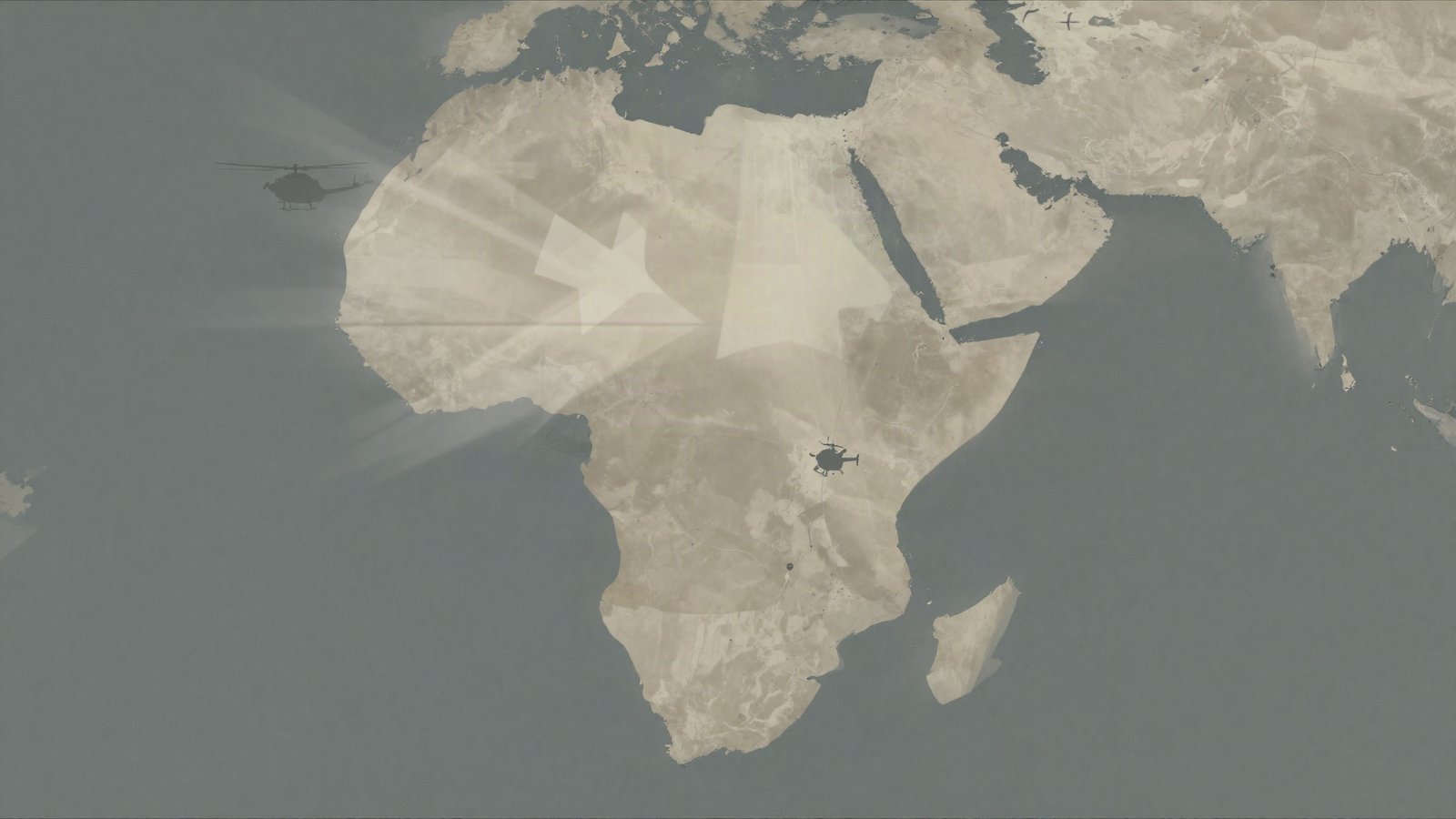
Turkey has deployed aircraft and ground forces while Egypt sent over 1,000 troops to join AUSSOM, deepening the foreign military role in Somalia.
Commentary & Analysis ·
Verified key facts
- Turkey deployed combat aircraft, helicopters and ground forces to Somalia, according to reports.
- Egypt sent more than 1,000 troops to participate in AUSSOM.
- Somalia described the deployments as sovereign partnerships.
- Regional rivals questioned the strategic implications, the reporting notes.
- The principal actors include Somalia, Turkey, Egypt, Ethiopia, the African Union and Al-Shabaab.
Foreign forces take a larger role
The international military presence in Somalia is deepening. According to reports, Turkey has deployed combat aircraft, helicopters and ground forces, while Egypt has sent more than 1,000 troops to participate in AUSSOM. The moves come as the African Union mission struggles with its finances, and as foreign powers take a more direct part in the country's security.
The shift is more than a matter of numbers. When outside states commit aircraft and substantial ground contingents, they acquire a stake in how the conflict unfolds. The reported deployments mark a new phase in which Somalia's war is increasingly shaped by the interests of external actors as well as by domestic forces.
What each country has committed
Turkey's reported contribution spans several capabilities: combat aircraft, helicopters and ground forces. That mix suggests a role in both air operations and direct support on the ground. Turkey has cultivated a long relationship with Somalia, and the deployment builds on training and investment programmes it has maintained in the country.
Egypt's reported commitment of more than 1,000 troops to AUSSOM places it within the African Union framework rather than outside it. Joining the mission gives Cairo a formal channel for involvement in Somali security. The reporting frames both contributions as part of a broader internationalisation of the conflict.
Somalia's framing
The Somali government described the deployments as sovereign partnerships. In that framing, inviting foreign forces is an exercise of national choice, not a surrender of independence. The government presents the arrangements as agreements between states, entered into to strengthen its capacity against Al-Shabaab.
That characterisation matters for legitimacy. By calling the deployments partnerships, Mogadishu seeks to distinguish them from external imposition. Whether they are seen that way inside Somalia, particularly by federal member states with their own concerns, is a separate question available reporting flags but does not resolve.
Regional rivalries in the background
Regional rivals questioned the strategic implications of the deployments. The involvement of Egypt is especially sensitive given its long-running rivalry with Ethiopia, a neighbouring state with its own interests in Somalia. When rival powers operate in the same theatre, their competition can complicate an already difficult security picture.
The Egypt-Ethiopia rivalry has roots well beyond Somalia, but it can play out on Somali territory. The reporting notes that this rivalry, combined with Turkish ambitions, could complicate command arrangements and local legitimacy. A mission drawing on states with competing agendas faces coordination challenges that a single-nation force would not.
Benefits and risks for civilians
For Somali civilians, the expanded foreign role carries both promise and hazard. Additional forces and air power may help protect cities from Al-Shabaab assaults. At the same time, the reporting cautions that military expansion can expose civilians to airstrikes and widen regional competition on Somali soil.
The balance between protection and risk is not fixed. It depends on how the forces operate, what rules of engagement they follow and how carefully they distinguish combatants from civilians. Greater firepower can shield populations, but it can also endanger them if used without restraint. The outcome will vary from place to place.
Command, coordination and legitimacy
A central challenge is holding together a mission that now draws on several outside states. The African Union and United Nations frameworks seek to coordinate this support, but layering national contingents with different priorities complicates the chain of command. Clear coordination is easier to describe than to achieve in practice.
Legitimacy is the other concern. Foreign troops operating in Somalia must maintain the confidence of local communities and of the federal member states. If they are seen as advancing external agendas rather than Somali security, their presence could generate friction that undermines the very stability they are meant to support.
Funding and mandate of the mission
Several indicators will show how the internationalisation develops. Observers will track the mission's funding, the rules of engagement governing the foreign forces, where troops are located and how they relate to Somalia's federal member states. Together these will reveal whether the deployments strengthen the security transition or complicate it.
The larger question is whether more foreign involvement brings Somalia closer to stability or entangles its conflict in wider regional rivalries. The reported deployments answer an immediate need for capacity, but they also introduce new interests into a fragile environment. How those interests are managed will shape the country's security for years to come.
The context for the deployments is the strain on AUSSOM's finances. As the African Union mission has struggled to secure reliable funding, bilateral arrangements with individual states have offered an alternative source of capability. That shift changes the character of the intervention, moving some of it outside the multilateral framework and into direct partnerships.
For Somalia, the trade-offs are real. Bilateral partners can provide equipment and forces more quickly than a donor-funded mission, but they also bring their own priorities. Balancing those relationships, while keeping them aligned with the federal government's goals, is a diplomatic task as demanding as the military one on the ground.
Sources
- EUAA - Updated list of Somalia actors
- AUSSOM official site
You may also like to read
Somali and African Union Forces Report Repelling an Al-Shabaab Assault Near Mogadishu
AUSSOM and Somali forces said they defended Mubarak, killed more than 40 militants and recovered two cities, in claims that Al-Shabaab routinely disputes.
Drone Attack at Egypt's Damietta Port Shows the Iran War Reaching New Civilian Infrastructure
Drones struck two gas vessels at Egypt's Damietta port, with no party confirmed responsible, as Cairo condemned the attack and worked to prevent wider escalation.
Drone Strikes and Fano Fighting Continue Across Ethiopia's Amhara Region
New monitoring points to ongoing drone operations, casualties and telecom restrictions in Amhara, as the government and rights advocates give differing accounts.
Egypt, UAE, Turkey, Saudi Arabia, Ethiopia and Chad Are Drawn Into Sudan's Regional Power Struggle
Accusations of external sponsorship and cross-border spillover are making Sudan's war harder to contain, as regional states are said to back rival sides.