DR Congo faces the fastest Ebola outbreak on record as deaths pass 1,000
The Bundibugyo strain has spread faster than any previous Ebola epidemic, with no approved vaccine, as conflict and mistrust hamper the response.
Commentary & Analysis ·
Verified key facts
- The death toll passed 1,000 by 22 July, from more than 3,000 confirmed cases.
- It is described as the fastest-spreading Ebola outbreak on record.
- The strain is Bundibugyo, for which no vaccine or treatment is licensed.
- The outbreak was declared on 15 May 2026 in the Democratic Republic of Congo.
- Cases passed 1,000 within about 40 days, against 235 days in the 2018 epidemic.
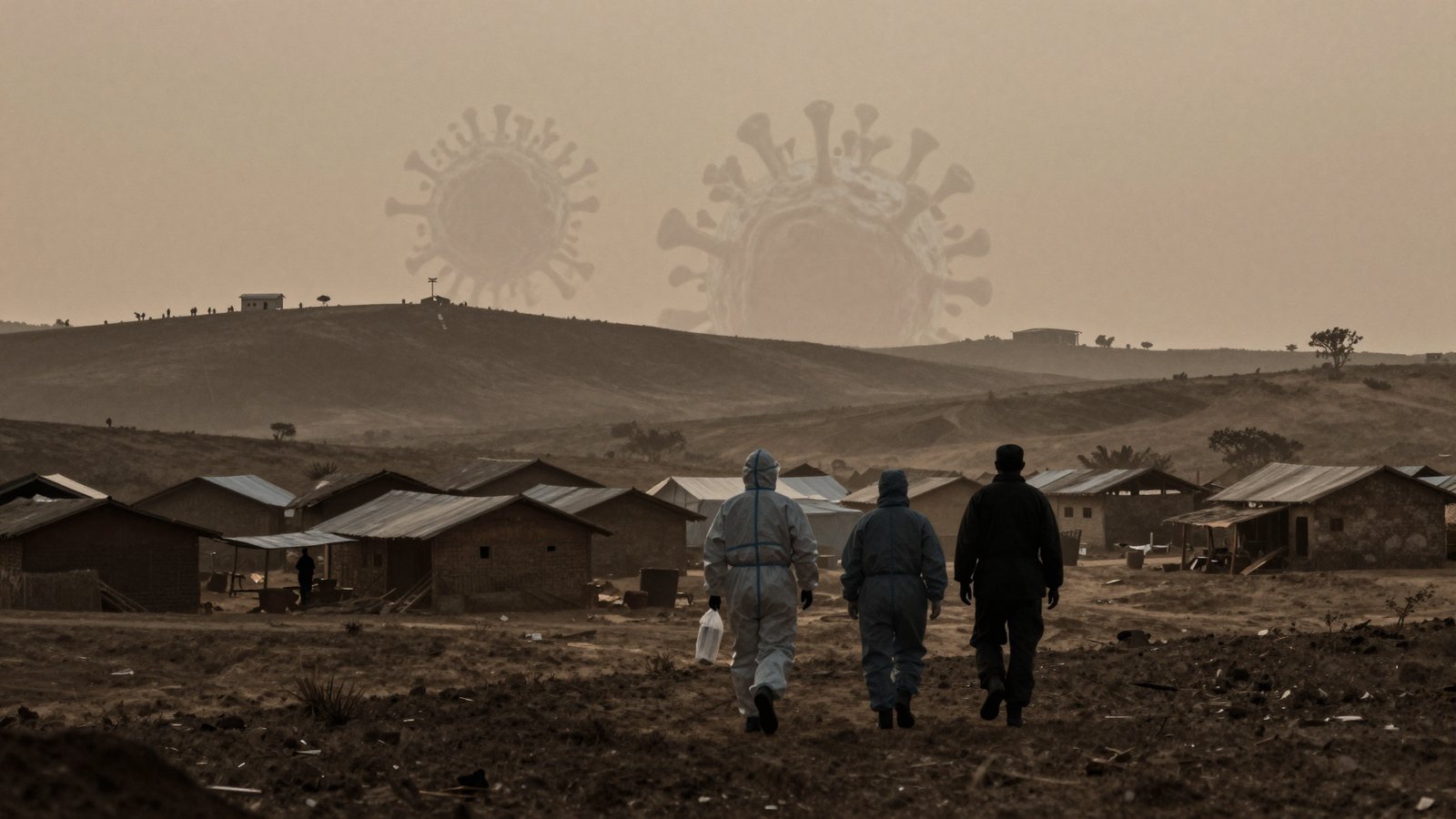
The Democratic Republic of Congo is confronting what health officials describe as the fastest-spreading Ebola outbreak on record. By 22 July, the death toll had climbed past 1,000, according to figures reported by NPR and Euronews from Congolese health authorities. The pace of transmission has alarmed responders who have handled the disease many times before.
A record for speed, not yet for scale
The outbreak was declared on 15 May 2026. Government data cited by NBC News put confirmed cases, including deaths, above 3,000 within roughly two months. Responders say the virus reached 1,000 cases in about 40 days of the response effort. In the 2018 outbreak in North Kivu, the same milestone took some 235 days.
The current epidemic has not yet matched the toll of the 2013 to 2016 West Africa epidemic, which killed more than 11,000 people. What worries specialists is the trajectory. A steep case curve early in an outbreak leaves little time for contact tracing and containment to catch up.
A strain without a licensed vaccine
The virus responsible is the Bundibugyo strain, a less common member of the Ebola family. That distinction matters. The vaccines and treatments developed and deployed against the Zaire strain in earlier Congolese outbreaks are not approved for Bundibugyo, according to reporting by Al Jazeera and Medical Daily.
This leaves responders relying on older tools. These include isolation of the sick, safe burials, contact tracing and infection control in clinics. Such measures work, but they depend on public cooperation and a functioning health system. Both are under strain in the affected regions.
Conflict and mistrust slow the response
Eastern Congo has endured years of armed conflict, mass displacement and weak infrastructure. Insecurity restricts where health teams can travel. It also fuels suspicion of outside responders, a pattern seen in previous outbreaks when treatment centres were attacked.
Community resistance can blunt even a well-resourced campaign. When families hide the sick or bury the dead without precautions, chains of transmission continue unseen. Health workers say building trust is as important as any medical intervention, yet trust is hard to rebuild during a fast-moving emergency.
Local health facilities can themselves become sites of spread. Without strict infection control, clinics that treat other illnesses may pass the virus to staff and patients. Protective equipment, clean water and trained personnel are all needed, and each is in short supply in the worst-affected districts.
- Insecurity limits access for tracing teams and burial workers.
- No licensed vaccine or therapy exists for the Bundibugyo strain.
- Health infrastructure in the affected areas is already stretched thin.
- Rapid early spread narrows the window for containment.
What the numbers do and do not tell us
Case and death counts in an active outbreak are provisional. Totals can jump as laboratories confirm samples and as teams reach areas that were previously cut off. A sharp rise in reported deaths may reflect better data collection as much as new infections. Officials caution that early figures should be read with care.
Even so, the direction is clear. The World Health Organization and national authorities have flagged the outbreak as a serious regional threat. Ebola spreads through contact with bodily fluids, which makes cross-border movement a concern for neighbouring states with porous frontiers.
How Ebola spreads
Ebola is not an airborne disease. It passes through direct contact with the blood or other bodily fluids of an infected person, whether living or dead. Care-giving and traditional burial practices, which involve close contact with the body, can therefore accelerate transmission if precautions are not taken.
The incubation period can stretch to three weeks. That lag means an infected person may travel widely before showing symptoms. In a region with fluid borders and heavy movement of traders and displaced families, tracing every contact becomes a formidable task for overstretched teams.
The international response
International agencies have been mobilising supplies, laboratory capacity and personnel. The absence of a strain-specific vaccine shifts the emphasis toward classic outbreak control. It also raises questions about research investment in the rarer Ebola strains, which receive less attention than the Zaire variant.
Funding is a recurring concern in prolonged emergencies. Donor attention often fades once early headlines pass, yet an outbreak like this one demands sustained support for months. Aid officials warn that gaps in financing can undo hard-won progress if teams are forced to scale back before transmission is broken.
For now, the priority is slowing transmission before it reaches larger towns. Health officials say the coming weeks will test whether responders can get ahead of a virus that has, so far, moved faster than they can. The outcome will depend as much on security and community trust as on medicine.
Why it matters beyond Congo
Outbreaks that spread quickly in fragile settings carry lessons for global health security. They show how conflict, weak systems and gaps in the vaccine pipeline can combine to blunt hard-won expertise. The response in Congo will shape thinking about preparedness for the next emergency, wherever it strikes.
Sources
- NPR
- NBC News
- Al Jazeera
- Euronews
You may also like to read
Ebola Outbreak in DR Congo and Uganda Passes 2,000 Confirmed Cases
The Bundibugyo strain of Ebola continues to spread in eastern DR Congo, with 754 deaths reported and Ituri province at the centre of the response.
M23 Says It Has Integrated Thousands of New Fighters as Eastern Congo Peace Deal Falters
The M23 movement says it has trained and integrated more than 9,000 fighters, a claim that raises doubts about disarmament as an eastern Congo peace deal struggles.

South Kivu Highlands Fighting Continues Despite Regional and US-Brokered Agreements
Clashes over strategic highland positions near Minembwe show that agreements brokered by regional and US mediators have yet to reach the fighters on the ground.
Africa's Malaria Vaccine Rollout Saves Lives But Faces a Fourth-Dose Test
More than 52 million malaria vaccine doses have reached 25 African countries, yet completing the full four-dose schedule remains a stubborn challenge.