Congo's Ebola Outbreak Becomes the Deadliest in the Country's History, With 2,325 Deaths Across Six Provinces
The Bundibugyo virus epidemic has passed the toll of the 2018-2020 outbreak and now reaches 54 health zones, with the WHO warning it is outpacing relief.
Commentary & Analysis ·
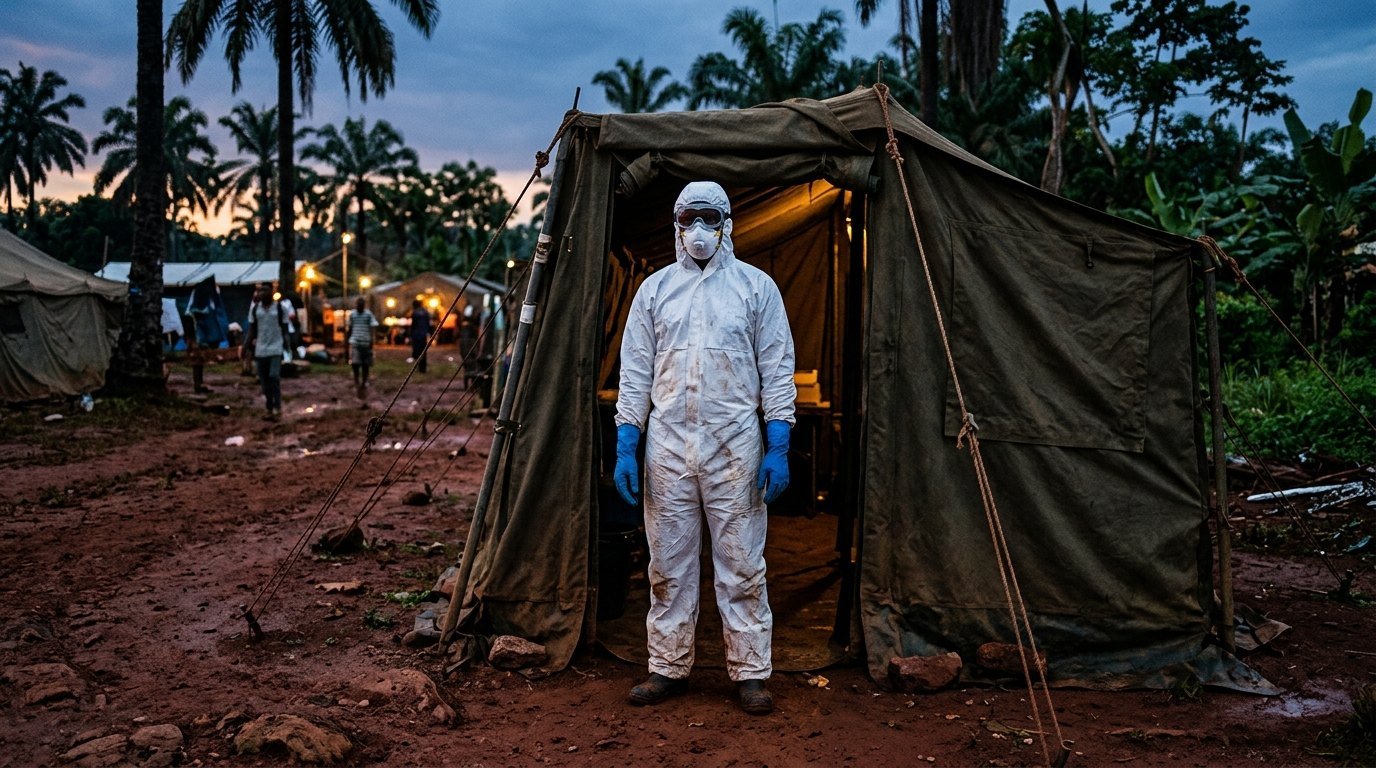
Verified key facts
- The death toll reached 2,325 as of 17 August, surpassing the 2,299 deaths of the 2018-2020 outbreak to become the deadliest in the country's history, according to UN News
- Confirmed cases stood at 4,945 with a fatality rate of about 46 per cent, 730 patients in isolation and 1,040 recovered, UN News reported
- The WHO's disease outbreak notice recorded 4,665 confirmed cases and 2,184 deaths in the DRC as of 12 August, a case fatality ratio of 46.8 per cent
- The outbreak now spans 54 health zones across six provinces: Ituri, North Kivu, South Kivu, Haut-Uele, Tshopo and Bas-Uele, with Ituri accounting for 85 per cent of confirmed cases
- It was declared on 15 May 2026 and designated a Public Health Emergency of International Concern on 17 May
- The week of 3 to 9 August was the peak so far, with 579 cases and 304 deaths recorded, per the WHO
- OCHA has allocated 54.5 million dollars to accelerate the response and prepare neighbouring countries
A record the country has now taken back from itself
The Bundibugyo virus outbreak in the Democratic Republic of the Congo has become the deadliest Ebola epidemic in the country's history. UN News reported that the death toll reached 2,325 as of 17 August, passing the 2,299 deaths recorded in the 2018-2020 outbreak in the east of the country.
Confirmed cases stood at 4,945 at the same date, with a fatality rate of around 46 per cent, 730 patients in isolation or hospital and 1,040 people recovered. The outbreak had already become the country's largest by confirmed cases in late July.
The comparison the World Health Organization has drawn is with West Africa in 2014-2016, which remains far larger at 28,616 cases and 11,310 deaths. The DRC outbreak is smaller in absolute terms but, in the WHO's assessment, spreading at a much faster rate.
The numbers behind the milestone
The WHO's own disease outbreak notice, using data to 12 August, put confirmed cases in the DRC at 4,665 and deaths at 2,184, a case fatality ratio of 46.8 per cent, with 965 recoveries. The gap between those figures and the UN News totals five days later is itself a measure of the pace.
Between the WHO's previous notice on 1 August and that update, an additional 1,060 confirmed cases and 597 confirmed deaths were reported. The week of 3 to 9 August was the worst yet recorded, with 579 cases and 304 deaths.
Beyond the DRC the outbreak has produced 20 confirmed cases and two deaths in Uganda, one imported case in France with no secondary transmission recorded as of 14 August, and two patients treated in Germany.
From one health zone to fifty-four
The geographical spread is the change that most alarms responders. The outbreak began in the Mongbwalu health zone in Ituri province and was initially confined there. It now covers 54 health zones across six provinces: Ituri, North Kivu, South Kivu, Haut-Uele, Tshopo and Bas-Uele.
Ituri remains the epicentre by a wide margin, accounting for 85 per cent of confirmed cases, or 3,979 of the 4,665 in the WHO's August notice. But an outbreak present in six provinces requires six parallel operations rather than one, at a time when the response is already short of staff and money.
Several of those provinces sit in the conflict-affected east of the country, where armed groups operate and where health teams have historically faced attacks and access restrictions. Contact tracing depends on being able to reach households safely and repeatedly, and in parts of North and South Kivu that cannot be assumed.
Why Bundibugyo is a harder problem
This outbreak is caused by Bundibugyo virus rather than the Zaire strain responsible for most of the DRC's previous epidemics. That distinction is not academic. The vaccine and the therapeutics with the strongest evidence base were developed against Zaire ebolavirus, and their performance against Bundibugyo is not established in the same way.
The WHO has approved a randomised clinical trial of the Ervebo vaccine in the current outbreak, and the PARTNERS therapeutic trial opened on 2 July and had enrolled more than 100 cases in Ituri province by the time of the August notice.
Running trials during an emergency is slower than deploying a proven tool, and it means the response has been operating for three months without the confident pharmaceutical backstop that shortened previous DRC outbreaks.
The WHO says the outbreak is outpacing the response
The organisation's public assessment has grown blunter as the figures have climbed. A WHO spokesperson, Tarik Jasarevic, said the agency had initiated a major scale-up in every aspect of the response.
In the same briefing the WHO warned that the outbreak is outpacing that response, citing inadequate health infrastructure, ongoing conflict and distrust of medical services among affected communities. Each of those three factors slows the same activity: finding cases early enough to isolate them before they infect a household.
The organisation's risk assessment is very high for the DRC, high for Uganda and for neighbouring countries, and low at the global level. The low global rating reflects the small number of exported cases rather than any assessment that the epidemic is under control.
The money and the emergency designation
The outbreak was declared by the DRC's health ministry on 15 May, and the WHO designated it a Public Health Emergency of International Concern on 17 May, the highest alert available under the International Health Regulations.
The UN Office for the Coordination of Humanitarian Affairs has allocated 54.5 million dollars to accelerate the response in the DRC and to prepare neighbouring countries, funding that covers surveillance, isolation capacity and cross-border screening.
Set against 4,945 confirmed cases spread over six provinces, that allocation is a contribution rather than a solution, and the WHO's appeals have repeatedly noted that the response remains underfunded relative to its stated plan.
The three-month target the WHO has set itself
The organisation has said it aims to control transmission within three months. Measured from the mid-August statements, that puts the target in the middle of November.
Achieving it would require the weekly case count to fall consistently from the 3 to 9 August peak, and to do so in all six affected provinces rather than only in Ituri, where most of the response capacity is concentrated. The trajectory through August has not yet shown that.
The figures to watch are narrow and published weekly: new confirmed cases per week, the number of health zones reporting a case in the previous 21 days, and the proportion of new cases already on a contact list when they fall ill. That last measure is the one that tells responders whether they are ahead of the virus or behind it.
Sources
- UN News - Ebola outbreak becomes deadliest in DR Congo's history
- World Health Organization - Ebola disease caused by Bundibugyo virus, Democratic Republic of the Congo, Disease Outbreak News
- WHO Regional Office for Africa - Ebola Bundibugyo virus disease outbreak, DRC and Uganda, weekly external situation report
- Al Jazeera - DRC Ebola death toll passes 2,000 amid fastest-growing outbreak on record
- The Washington Post - Ebola deaths surpass 2,000 in Democratic Republic of Congo
- European Centre for Disease Prevention and Control - Ebola disease outbreak in the Democratic Republic of the Congo and Uganda
You may also like to read
DR Congo faces the fastest Ebola outbreak on record as deaths pass 1,000
The Bundibugyo strain has spread faster than any previous Ebola epidemic, with no approved vaccine, as conflict and mistrust hamper the response.
Ebola Outbreak in DR Congo and Uganda Passes 2,000 Confirmed Cases
The Bundibugyo strain of Ebola continues to spread in eastern DR Congo, with 754 deaths reported and Ituri province at the centre of the response.
Congo's Ebola Outbreak Passes 2,000 Deaths as Experts Reassure Americans the US Risk Stays Low
The Bundibugyo-strain epidemic has recorded 4,381 confirmed cases across eastern DRC with earlier cross-border spread into Uganda, while US health experts stress the threat to Americans remains minimal.
Measles eases across the Americas, but health officials refuse to call it a win
Measles cases across the Americas fell by half in early July 2026, yet PAHO still rates the regional risk as very high amid stubborn immunity gaps.