Ebola Outbreak in DR Congo and Uganda Passes 2,000 Confirmed Cases
The Bundibugyo strain of Ebola continues to spread in eastern DR Congo, with 754 deaths reported and Ituri province at the centre of the response.
Commentary & Analysis ·
Verified key facts
- As of 14 July 2026, DR Congo reported 2,011 confirmed Bundibugyo virus cases including 754 related deaths.
- Ituri province is the most affected, with 1,808 cases and 631 deaths across 26 of 36 health zones.
- Uganda reported 20 confirmed cases including two deaths as of early July.
- A US aid worker who tested positive was medically evacuated from DRC to Germany on 13 July 2026.
A growing outbreak in eastern Africa
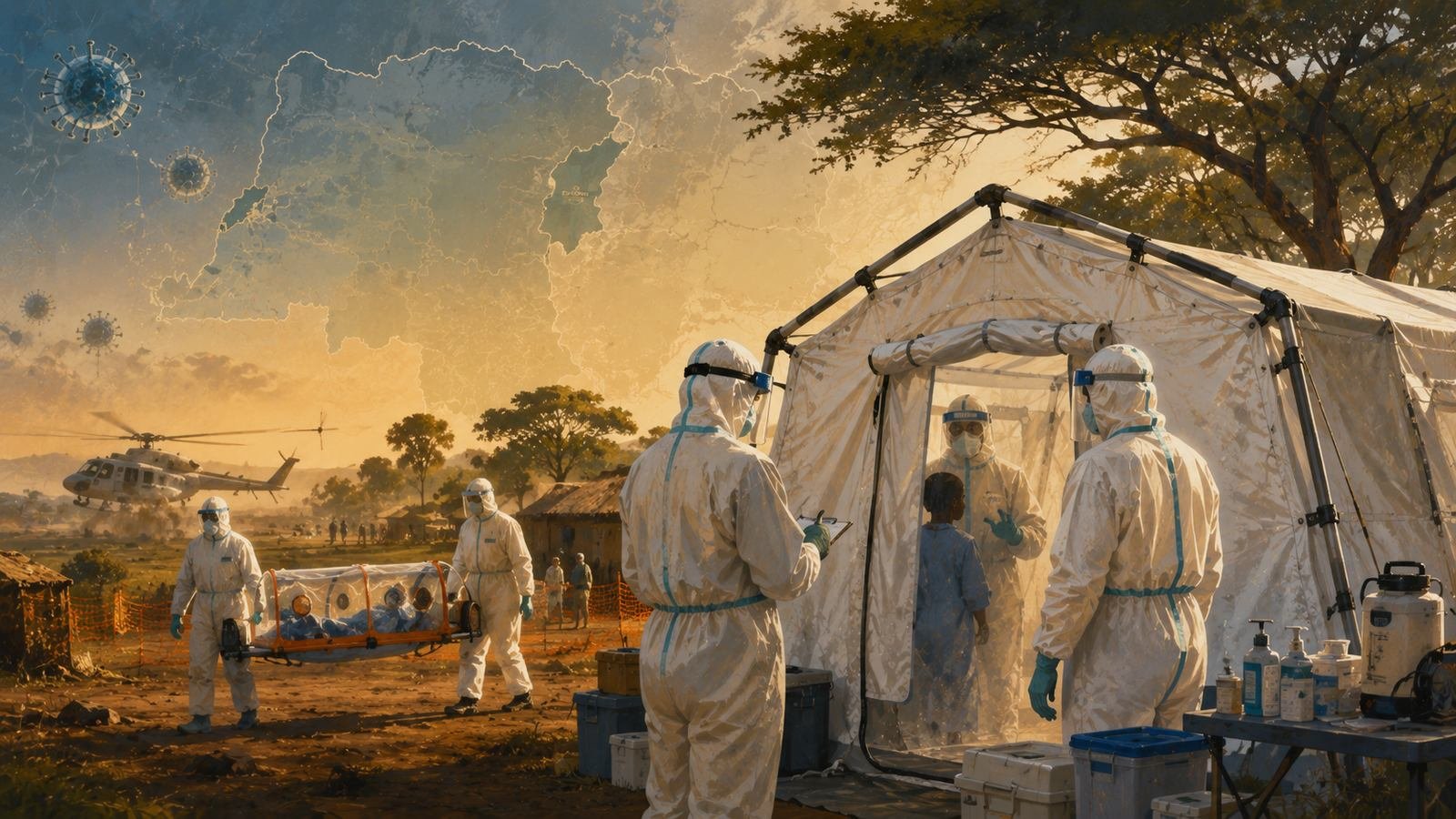
An Ebola outbreak driven by the Bundibugyo virus continues to expand in the Democratic Republic of the Congo. It also affects neighbouring Uganda. European and US health agencies are tracking the situation closely.
According to the European Centre for Disease Prevention and Control, DR Congo reported 2,011 confirmed cases as of 14 July 2026. That total included 754 related deaths, based on data up to 13 July.
The ECDC noted an increase of 54 new confirmed cases and 28 deaths since the previous report. The new cases came from Ituri, North Kivu and Haut-Uele provinces. The trajectory remains upward.
Ituri at the epicentre
Ituri province is the hardest-hit area. The ECDC reported 1,808 cases there, including 631 deaths. Cases have appeared across 26 of the province's 36 health zones.
That concentration shapes the response. Isolation, treatment and contact tracing efforts are focused heavily on the province. A total of 753 patients were reported hospitalised in isolation.
There is also evidence of recovery. Among those who tested positive, 366 people had recovered, according to the ECDC. Survival is possible with prompt supportive care delivered in isolation settings.
The Uganda dimension
Uganda has been affected on a much smaller scale. As of early July, it reported 20 confirmed cases including two deaths. The cross-border spread underlines the regional nature of the threat.
The two countries share porous borders and heavy population movement. That makes containment a coordinated challenge. Both national responses are supported by international partners including the WHO and the CDC.
The Council on Foreign Relations described the outbreak as a rare and serious event that has spread over months. Eastern DR Congo also faces conflict and displacement. Those conditions complicate the delivery of medical care and surveillance.
Why Bundibugyo is different
Ebola is not a single virus but a group of related species. Bundibugyo is one of them, distinct from the more familiar Zaire strain. Doctors Without Borders has highlighted why this outbreak differs from previous ones.
That distinction matters for medical countermeasures. On 2 July 2026, the WHO added the first diagnostic test for Ebola Bundibugyo virus to its Emergency Use Listing. A dedicated test can speed detection and isolation.
The WHO also scheduled a scientific update on Bundibugyo medical countermeasure research and development. The event was set for 17 July 2026. It reflects the push to develop tools tailored to this strain.
- 2,011 confirmed cases and 754 deaths in DR Congo as of 14 July
- Ituri province accounts for 1,808 cases and 631 deaths
- 20 cases and two deaths reported in Uganda
- First Bundibugyo diagnostic test added to WHO Emergency Use Listing on 2 July
An international response
The outbreak has drawn a broad international mobilisation. The CDC announced it was mobilising an international response following the outbreak in DRC and Uganda. Agencies are supporting surveillance, laboratory work and case management.
The risk of wider spread has been made concrete. A US citizen working for a humanitarian organisation in DRC tested positive for Bundibugyo virus. According to the ECDC, that person was medically evacuated to Germany on 13 July 2026.
Such evacuations are handled under strict isolation protocols. They also test the readiness of health systems far from the outbreak zone. The case shows how an outbreak in one region can reach hospitals on another continent.
Speed of diagnosis and tracing
Containing an Ebola outbreak depends on speed. Rapid diagnosis, isolation of cases and tracing of contacts are the core tools. The addition of a Bundibugyo-specific test strengthens the first of these.
The death toll and case count remain the key indicators to watch. Public health officials will look for signs the growth is slowing. For now, the ECDC data show an outbreak that is still expanding.
Individuals in affected regions are advised to follow guidance from national health authorities and the WHO. General prevention centres on avoiding contact with the bodily fluids of those who are sick. Anyone with symptoms should seek medical care immediately.
Sources
- ECDC - Ebola disease outbreak in the Democratic Republic of the Congo and Uganda (updated 15 July 2026)
- WHO - Ebola disease caused by Bundibugyo virus, DRC and Uganda (Disease Outbreak News)
- CDC - CDC Mobilizes International Response Following Ebola Disease Outbreak in DRC and Uganda
You may also like to read
DR Congo faces the fastest Ebola outbreak on record as deaths pass 1,000
The Bundibugyo strain has spread faster than any previous Ebola epidemic, with no approved vaccine, as conflict and mistrust hamper the response.

US Cyclospora Outbreak Nears 7,000 Cases as Officials Eye Salad Greens
A parasite that causes prolonged diarrhoea has spread across 34 US states, with Michigan hardest hit and investigators examining lettuce as a suspect.
Africa's Malaria Vaccine Rollout Saves Lives But Faces a Fourth-Dose Test
More than 52 million malaria vaccine doses have reached 25 African countries, yet completing the full four-dose schedule remains a stubborn challenge.
Measles eases across the Americas, but health officials refuse to call it a win
Measles cases across the Americas fell by half in early July 2026, yet PAHO still rates the regional risk as very high amid stubborn immunity gaps.