Tesla Quietly Discontinues the Solar Roof, a Decade After Elon Musk Unveiled It
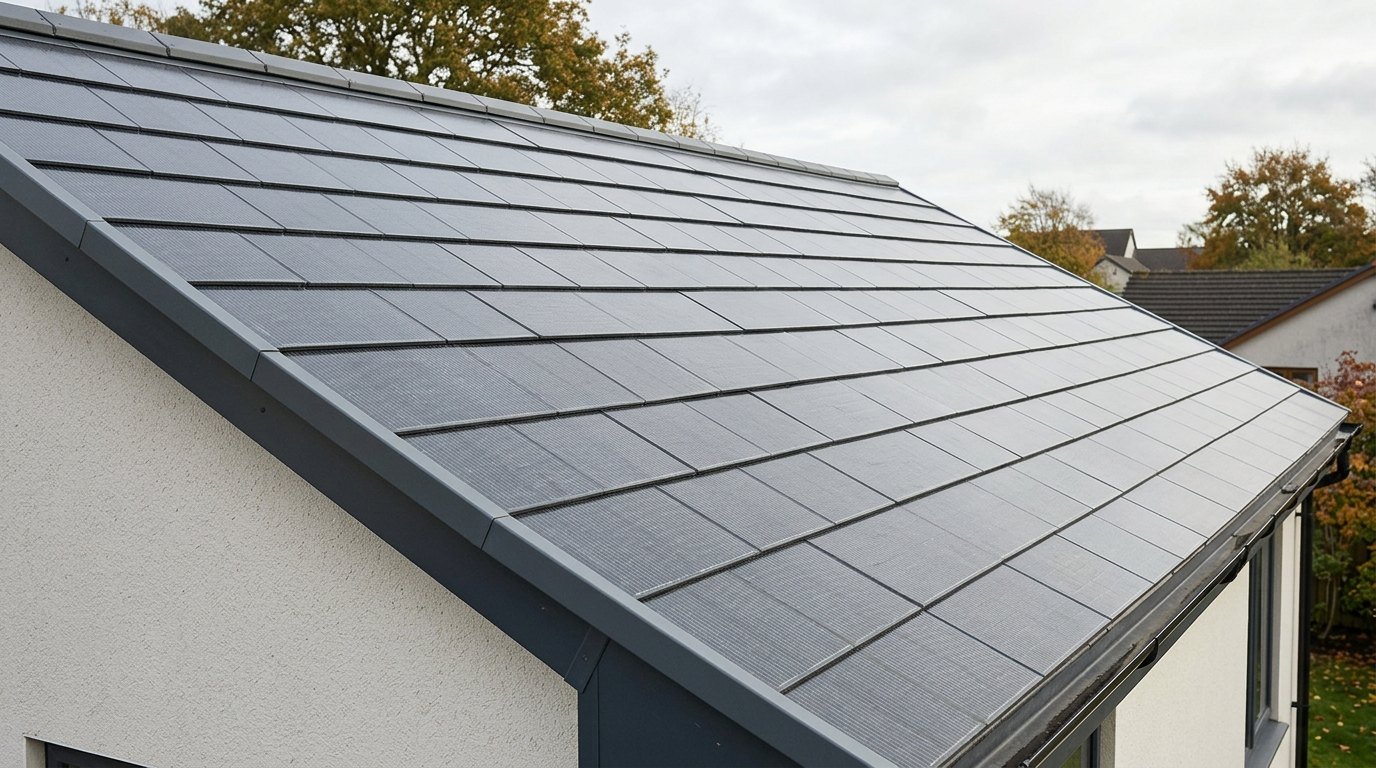
The tile product has been pulled from Tesla's website and from installer supply, with the company concluding it was not financially viable.
Commentary & Analysis ·
Verified key facts
- Tesla has discontinued its Solar Roof tile product, Electrek reported on 20 August, with the company concluding internally that it was not economically viable.
- The product has been removed from Tesla's website; the Energy section now lists only Solar Panels, Powerwall and Megapack, and the former Solar Roof page redirects to conventional panels, according to Not a Tesla App.
- Third-party installers have been told they will no longer receive the tiles, per Electrek.
- Tesla unveiled the Solar Roof in October 2016 at a staged event; it was later confirmed that the tiles displayed were non-functional.
- Elon Musk claimed at launch that the product would cost less than a new roof plus conventional solar panels.
- Benzinga reported the shift leaves Tesla's residential solar business focused entirely on conventional panels.
A product removed rather than retired
Tesla has ended its Solar Roof programme without an announcement. Electrek reported on 20 August that the company had discontinued the tile product after concluding internally that it was not economically viable, and that third-party installers had been told they would no longer receive stock.
The evidence is in what the website no longer says. Not a Tesla App reported that the Energy section now lists only Solar Panels, Powerwall and Megapack, and that the former Solar Roof page redirects visitors to conventional panels. A product line that once headlined Tesla's energy ambitions has been deleted from the shop front.
What was promised in 2016
The Solar Roof was introduced in October 2016 at an event on a Los Angeles back lot, staged on a street of houses fitted with the tiles. Elon Musk's central claim was economic rather than technical: that a Solar Roof would cost less than a conventional new roof plus separately installed solar panels, before the value of the electricity generated was counted.
It later emerged that the tiles shown that evening were non-functional mock-ups. The launch has since become one of the most cited examples of a demonstration that shaped expectations well ahead of the engineering, and it took place weeks before Tesla shareholders voted on the acquisition of SolarCity.
The product did eventually ship, and versions three and four of the tile were genuine working hardware installed on real houses. But the volumes never approached the scale implied by the launch, and the version numbers themselves record a decade of redesign in search of a cost structure that would let the original promise hold.
Why the economics never closed
Three costs proved intractable. The tiles were expensive to manufacture at the volumes Tesla achieved. Installation demanded specialist training that few roofing crews possessed, which constrained supply and lengthened lead times. And the competing product got dramatically cheaper: conventional panels fell in price steeply over the same decade, widening rather than narrowing the gap the Solar Roof needed to close.
Customers experienced the result as long waits and revised quotations, including a well-publicised round of price increases applied to signed contracts. Each of those frictions reduced the addressable market for a product that only worked financially at scale.
What Tesla keeps
The decision leaves Tesla's residential energy offer built around conventional rooftop panels paired with the Powerwall home battery, with Megapack serving grid-scale customers. Benzinga reported the shift as a pivot to conventional solar rather than a withdrawal from energy generation.
That is a defensible commercial position. Tesla's energy storage business has been the faster-growing and higher-margin part of the division, and it does not depend on solving a roofing-trade labour problem. Storage also sells into utility procurement, where volumes are set by grid planning rather than by household appetite for a premium roof.
It is also where the demand is. Grid-scale batteries are being bought to firm intermittent generation and, increasingly, to serve the data centre build-out now reshaping American electricity demand. A company choosing between a bespoke roofing product and a queue of utility customers is not making a difficult decision.
The homeowners already living under one
Discontinuation raises an immediate question for existing customers: what happens to warranty claims, replacement tiles and repairs on installations that will remain on roofs for decades. Tesla has not published a support commitment alongside the removal, and Not a Tesla App noted the absence of any formal statement.
Roof-integrated products are unusually exposed to this problem. A failed conventional panel can be swapped for any comparable unit; a failed structural tile must match the system it sits in. Without a guaranteed spares channel, owners face repairs that only the manufacturer can supply.
Insurers will take an interest too. A roof whose replacement components are no longer in production is harder to underwrite after storm damage, and homeowners in hail-prone states may find the question raised at renewal rather than at the point of claim. None of that is unmanageable if Tesla commits to a spares supply, and all of it becomes difficult if it does not.
A pattern in Tesla's product line
The Solar Roof joins a set of Tesla initiatives announced with unusual fanfare and wound down quietly, and it follows the same arc as the SolarCity acquisition it was partly staged to support: a strategic promise about distributed generation that ultimately mattered less to the company's finances than vehicles and batteries.
Gizmodo and OC3D both framed the ending as overdue rather than surprising, noting that installation volumes had been minimal for years relative to the attention the product received.
The absence of an announcement is itself part of the pattern. Products that launch on a stage tend to end with a page redirect, and the asymmetry is not accidental: a public discontinuation invites questions about the original claims, while a quiet one leaves customers and installers to work out what has happened from what is missing.
Whether a spare-tile guarantee follows
The practical test now is whether Tesla publishes a support and spares commitment for existing Solar Roof owners, and for how many years. That single disclosure determines whether a discontinued premium roof remains a maintainable asset or becomes a liability at the next hailstorm.
It also sets a precedent the wider building-integrated photovoltaics sector will read closely, because every competitor selling a roof-integrated product is asking homeowners to accept the same dependency on a single manufacturer's continued existence.
Sources
- Electrek - Tesla discontinues its Solar Roof tiles, not economically viable
- Not a Tesla App - Tesla's Solar Roof Is Being Discontinued After 10 Years
- Benzinga - Tesla Pulls Plug On Solar Roof Tiles, Pivots To Conventional Solar Panels
- Gizmodo - Tesla Is Pulling the Plug on Its Solar Roof Tiles
- OC3D - Tesla axes its solar roof tile product line
You may also like to read
Nevada Clears Tesla, Waymo and Uber to Put Up to 8,000 Robotaxis on Clark County Roads
The state transportation authority voted unanimously for three commercial permits, weeks after capping Tesla's Las Vegas fleet at ten vehicles.

Starship Flight 13 set to deploy the first Starlink V3 satellites in orbit-critical test
SpaceX targets 16 July for Starship's thirteenth test flight, the first to carry real Starlink V3 satellites and a fresh trial of booster recovery over the Gulf.

Walmart Will Accept Apple Pay and Google Pay From 24 August, Ending a Decade of Resistance
Tap to Pay reaches every US Walmart and Sam's Club by the end of 2026, retiring one of the last major holdouts against contactless wallets.
Marvell Hands Google an Option on $12.2 Billion of Its Own Shares in an Expanded Custom-Chip Deal
The warrant vests against purchasing milestones running to fiscal 2033 and could be worth around $120 billion in chip orders to Marvell.