Nevada Clears Tesla, Waymo and Uber to Put Up to 8,000 Robotaxis on Clark County Roads
The state transportation authority voted unanimously for three commercial permits, weeks after capping Tesla's Las Vegas fleet at ten vehicles.
Commentary & Analysis ·
Verified key facts
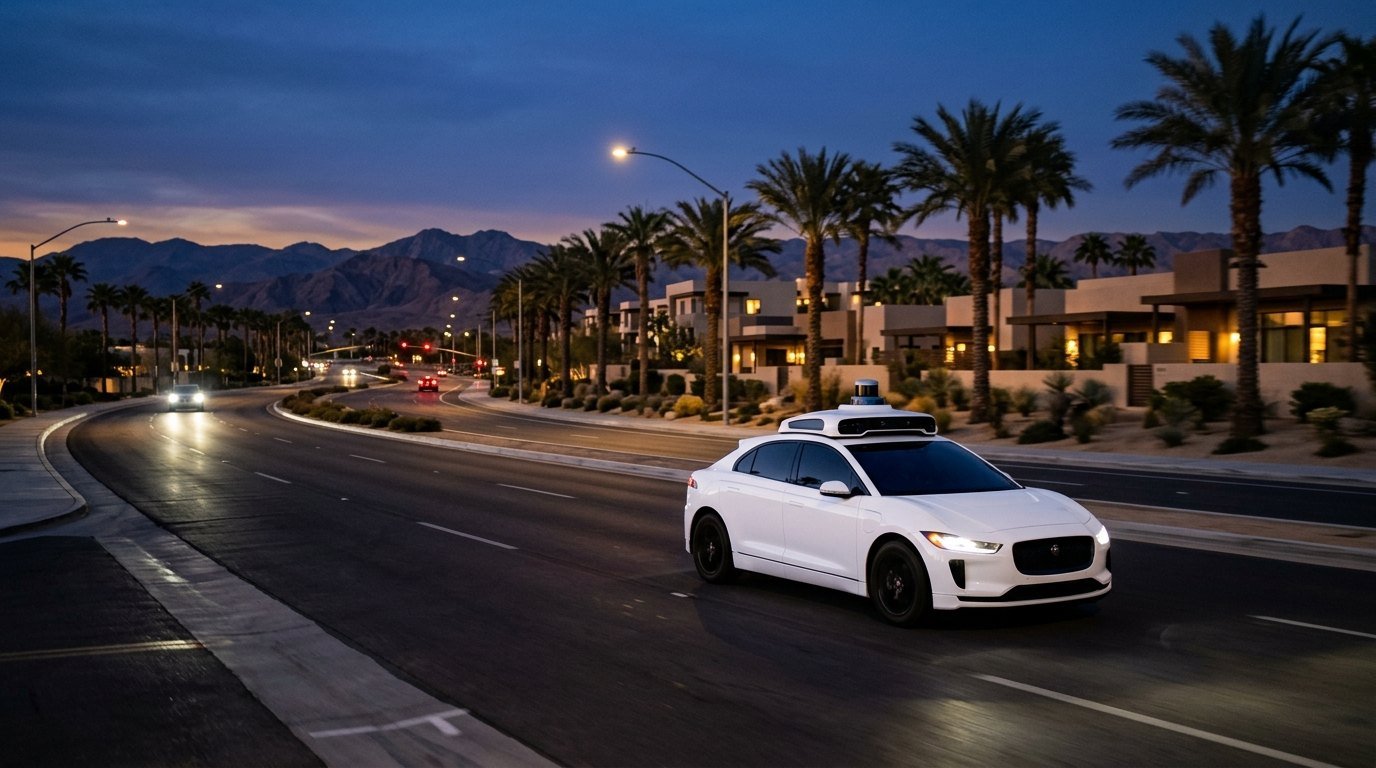
- The Nevada Transportation Authority voted unanimously on Thursday 20 August to approve three commercial robotaxi permits for Clark County, TechCrunch reported
- The permits allow up to 8,000 robotaxis to be deployed across the county over the next twelve months, according to TechCrunch
- Tesla's permit covers up to 5,000 vehicles, Waymo's up to 1,000 and Uber's up to 1,000 through partnerships with Motional and Zoox, TechCrunch reported
- Zoox separately holds an autonomous vehicle network company permit allowing 100 vehicles of its own, per TechCrunch
- Eric Early, Tesla's Cybercab chief engineer, told the authority that 5,000 has always been a ceiling and that Tesla does not expect to deploy that many within a year, as reported by TechCrunch
- In late July the same authority granted Tesla a robotaxi permit capped at ten vehicles, limited to 45mph and confined to the Las Vegas Strip corridor, with airport pickups prohibited, Electrek and Axios reported
- The Livery Operators Association and taxi companies opposed the approvals, citing oversaturation and congestion in the Golden Triangle area, TechCrunch reported
- Engadget reported that the decision allows Uber, Tesla and Waymo to begin charging for autonomous rides in the state
Three Permits, One Unanimous Vote
The Nevada Transportation Authority approved three commercial robotaxi permits on Thursday, TechCrunch reported, in a unanimous vote that opens Clark County to paid driverless ride-hailing at a scale no American jurisdiction has yet authorised in a single decision.
Taken together, the permits allow up to 8,000 autonomous vehicles to be deployed across the county over the next twelve months. Clark County contains Las Vegas, its resort corridor and Harry Reid International Airport, which makes it one of the densest concentrations of short paid journeys anywhere in the United States.
Engadget reported that the practical effect is commercial: the companies may now charge for autonomous rides in Nevada rather than operating supervised pilots.
Who Got What
The allocation is heavily weighted towards one company. TechCrunch reported that Tesla's permit covers up to 5,000 robotaxis, Waymo's up to 1,000, and Uber's up to 1,000 delivered through its partnerships with Motional and Zoox.
Zoox, the Amazon-owned developer of a purpose-built vehicle with no steering wheel, also holds its own autonomous vehicle network company permit allowing 100 vehicles, which sits alongside rather than inside the Uber allocation.
That structure means two different business models are being licensed at once: Tesla and Waymo running their own fleets directly, and Uber acting as a demand aggregator for vehicles built and operated by other companies.
A Reversal From Ten Vehicles to Five Thousand
The size of Tesla's approval is most striking against what preceded it. In late July the same authority granted the company a robotaxi permit capped at ten vehicles, a decision Axios reported under the observation that Tesla had asked for 5,000 and received ten.
Electrek reported the conditions attached to that first permit: a 45mph speed limit, operation confined to the Las Vegas Strip corridor, and a prohibition on picking up passengers at Harry Reid International Airport. Those constraints made the permit closer to a supervised trial than a commercial service.
Thursday's vote replaced that framework within a matter of weeks. The authority has not published a detailed rationale for the change of scale, which is the central unanswered question about the decision.
Tesla Manages Expectations
Tesla itself moved to lower expectations about what 5,000 means in practice. Eric Early, the company's Cybercab chief engineer, told the authority that the figure has always been a ceiling for us, and that he did not think Tesla would be in a position by this time next year to deploy 5,000 vehicles, according to TechCrunch.
That is a meaningful caveat. A permit ceiling is a regulatory maximum, not a production commitment, and the constraint on Tesla's robotaxi ambitions has consistently been vehicle availability and software validation rather than permission.
It also changes how the 8,000 headline should be read. The number describes what regulators have allowed, not what will appear on Las Vegas streets in the next year.
The Taxi Industry Objects
The approvals were opposed. TechCrunch reported that the Livery Operators Association and established taxi companies argued against them on the grounds of oversaturation and traffic congestion, particularly in the Golden Triangle, the dense hotel and casino district where a large share of Las Vegas journeys begin and end.
The congestion argument is not obviously self-serving. Adding several thousand vehicles to a road network in which a significant proportion of driving is already short-distance and circulating raises questions about kerbside capacity, pick-up points and the effect of vehicles repositioning empty between fares.
The commercial argument is more straightforward. Licensed taxi and limousine operators face fixed costs, driver wages and medallion-style regulatory obligations that autonomous fleets do not, and a fleet cap eight times the size of some existing operators is an existential rather than a competitive concern.
Why Las Vegas Is the Chosen Ground
Nevada has been a permissive jurisdiction for autonomous testing for more than a decade, and Las Vegas has physical characteristics that suit driverless systems well: a wide grid, generous lane widths, minimal snow or ice, and enormous volumes of short trips between a small number of very high-demand destinations.
The city also offers a customer base disproportionately made up of visitors, who have no established relationship with a local taxi operator and are more likely to use whichever application is presented to them on arrival.
The offsetting difficulty is pedestrian density. The Strip generates crossing behaviour that is hard to model, and the airport approach roads have complex, frequently changing traffic management, which is why the airport pickup restriction in the July permit was significant.
Weather is the other variable that flatters Las Vegas. Autonomous systems degrade in heavy rain and snow, both of which are largely absent from Clark County, so a fleet validated there proves less about performance in Chicago or Boston than the vehicle count alone suggests.
The First Twelve Months of Deployment Data
The permits run for twelve months, which sets a clear point of review. Three measurements will matter most: how many vehicles each company actually puts into service against its ceiling, whether the authority publishes disengagement and collision data, and whether the airport pickup restriction is lifted for the expanded fleets.
Early's comments suggest Tesla's real deployment will be a fraction of 5,000, which means Waymo, operating a mature system with a smaller cap, may put more genuinely driverless vehicles on Clark County roads than the company with five times the allowance. The motoring specialists at our sister site TrueMotion Auto keep a city-by-city tally of where Waymo, Tesla, Zoox and the other operators actually stand.
The regulatory question is whether Nevada attaches reporting conditions to a renewal. Without published incident data, the only evidence available after a year will be whatever the operators choose to release.
Sources
- TechCrunch - Tesla, Uber, and Waymo all get the OK to operate thousands of robotaxis in Nevada
- Engadget - Nevada allows Uber, Tesla and Waymo to start paid robotaxi service
- Axios - Tesla sought permit for 5,000 robotaxis in Las Vegas. It got 10
- Electrek - Nevada caps Tesla's Vegas Robotaxi fleet at 10 - it asked for 5,000
You may also like to read
Apple Is Negotiating Nine-Figure News Deals to Feed Its Gemini-Powered Siri
The company has proposed paying publishers each time their reporting is used, a departure from the fixed licence fees that have defined AI content deals.
NBA 2K HQ Launches as 2K's New Companion App, Retiring MyNBA2K and Opening the MyPLAYER Builder Early
The free app arrives five days before NBA 2K27's early access, letting players build and upload their MyPLAYER from a phone for the first time.
Marvell Hands Google an Option on $12.2 Billion of Its Own Shares in an Expanded Custom-Chip Deal
The warrant vests against purchasing milestones running to fiscal 2033 and could be worth around $120 billion in chip orders to Marvell.
Meta Goes on Trial in Oakland Over Claims It Designed Facebook and Instagram to Hook Children
Four attorneys general are leading a case built on infinite scroll, the like button and recommendation algorithms, with Mark Zuckerberg expected to testify.