South Sudan Peace Monitors Warn Civilian Deaths and Political Delays Threaten the Transition
Ceasefire monitors and the UN mission reported rising civilian harm and urged faster progress on security and elections, as leaders pledged support for the deal.
Commentary & Analysis ·
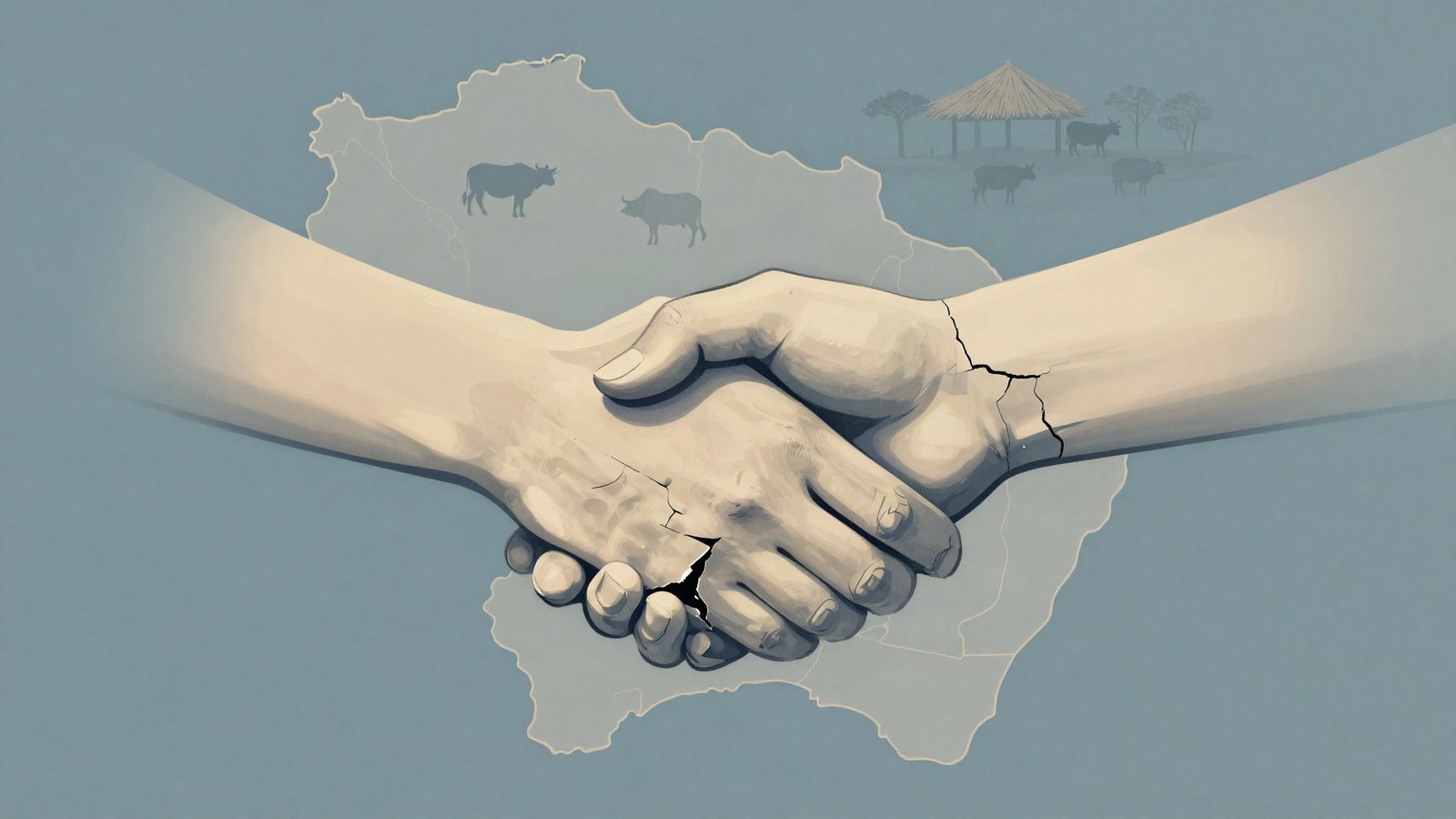
Verified key facts
- Ceasefire monitors and UNMISS reported rising civilian harm and urged implementation of security arrangements and elections planning.
- The peace agreement remains formally alive, but violence, political delays and weak implementation continue.
- Leaders reaffirmed peace commitments while monitors warned that violations and delays were eroding trust.
- IGAD, the African Union and UN missions continue mediation and monitoring.
- Monitors warn that political fragmentation and spillover from Sudan could trigger renewed national war.
Warnings from those tasked with watching
The bodies charged with monitoring South Sudan's peace process have issued a fresh warning that the country's transition is under strain. According to the ceasefire monitoring mission and the United Nations Mission in South Sudan, known as UNMISS, civilian harm has been rising. Both have pressed the parties to implement outstanding security arrangements. They have also urged the government to move ahead with planning for elections.
The agreement that ended the country's civil war remains formally in place. But monitors say the gap between commitments on paper and conditions on the ground is widening. They point to continued violence, repeated political delays and uneven implementation of key provisions. Their assessment stops short of declaring the deal dead. Instead, it frames the moment as one in which trust is being steadily eroded.
A peace deal still standing, but strained
South Sudan's transitional framework was designed to bring former rivals into a shared government. It also aimed to unify their armed forces and steer the country toward elections. Progress on several of those goals has been slow. Monitors point in particular to the unification of forces, a process meant to fold rival fighters into a single national army, as an area where delays have persisted.
Alongside the political stalemate, monitors have documented local clashes, disputes over detentions and other frictions that undercut confidence in the process. The principal actors named in the reporting are the South Sudan government, opposition forces, the ceasefire monitoring body CTSAMVM and UNMISS. Each has a role in either advancing or observing a transition that remains formally intact but visibly fragile.
Competing messages from leaders and monitors
Political leaders have again reaffirmed their commitment to peace, according to the reporting available. Monitors, however, warned that violations and delays were undermining the trust the agreement depends on. The two messages sit uneasily together. On one side are public pledges of unity; on the other, technical assessments of stalled implementation.
This tension is characteristic of transitions that stall without formally collapsing. Reaffirmations of commitment can be genuine expressions of intent. Warnings from monitors can reflect measurable shortfalls in delivery. From the outside, it is difficult to weigh the two, and the reporting does not resolve which will prove decisive. What is clear from the monitors' language is a concern that time and confidence are running short.
The unification of forces sits at the heart of the security arrangements. It is intended to replace competing armies with a single institution loyal to the state rather than to individual leaders. Progress has been halting, and monitors treat it as a bellwether for the wider process. Where rival forces remain separate, the risk of renewed clashes persists, and communities cannot be sure which armed actors hold sway in their area. That uncertainty, they say, feeds the insecurity documented in recent reports.
Life for civilians during the delay
For ordinary South Sudanese, the consequences of the impasse are immediate. Communities face killings, cattle raids, displacement and hunger, according to humanitarian and monitoring reports. Aid access has been blocked in places. Cattle raiding, a long-standing feature of local conflict, is cited among the drivers of insecurity that continue despite the national agreement.
Blocked humanitarian access compounds these hardships, leaving some populations beyond the reach of relief operations. The combination of localised violence and restricted aid means the human cost of the transition's slow pace is not evenly distributed. It falls hardest on communities already vulnerable to displacement and food insecurity. Monitors have urged the parties to address these protection concerns as part of implementing the agreement.
Regional mediators and the shadow of Sudan
The regional bloc IGAD, the African Union and UN missions continue to mediate and monitor the process. Together they maintain the external scaffolding around South Sudan's transition. Their involvement reflects both the international investment in the peace deal and the recognition that the country's stability has implications beyond its borders.
Among the risks monitors flag most prominently is the possibility that political fragmentation at home could combine with spillover from the conflict in neighbouring Sudan. That combination, they warn, could trigger renewed national war. The two countries are deeply interconnected, and instability in one can reverberate in the other. That regional dimension raises the stakes of the current delays, turning a domestic implementation problem into a potential source of wider disruption.
Whether the transition regains momentum
Monitors and observers say several signals will indicate whether the transition can regain momentum. These include the electoral timetable and whether it holds, the release of detainees, progress on unifying the rival forces and the content of forthcoming ceasefire reports. Each is a concrete test of whether reaffirmed commitments translate into action.
For now, the monitoring bodies have delivered a measured but pointed message. The agreement survives, but its survival cannot be taken for granted. The window to demonstrate genuine implementation, they suggest, is not open indefinitely. Their reports will remain a central reference point for anyone tracking whether South Sudan's peace holds, and whether the transition can move from pledges toward delivery.
Sources
- CTSAMVM official site
- UNMISS official site
You may also like to read

Israeli Strikes Continue in Gaza Despite Momentum Behind the Peace Plan
Israeli strikes killed Palestinians over the weekend as a disarmament framework was debated, exposing the gap between diplomacy on paper and fighting on the ground.

South Kivu Highlands Fighting Continues Despite Regional and US-Brokered Agreements
Clashes over strategic highland positions near Minembwe show that agreements brokered by regional and US mediators have yet to reach the fighters on the ground.
Cabo Delgado Attacks Displace Tens of Thousands as Insurgency Spreads to New Districts
Renewed assaults in northern Mozambique uprooted tens of thousands between May and July, testing gains that government and allied forces had claimed in the region.
Israel clears international stabilisation force for Gaza as disarmament dispute persists
Israel's security cabinet approved legal measures for a stabilisation force, but Hamas disarmament and aid access remain unresolved.