Cabo Delgado Attacks Displace Tens of Thousands as Insurgency Spreads to New Districts
Renewed assaults in northern Mozambique uprooted tens of thousands between May and July, testing gains that government and allied forces had claimed in the region.
Commentary & Analysis ·
Verified key facts
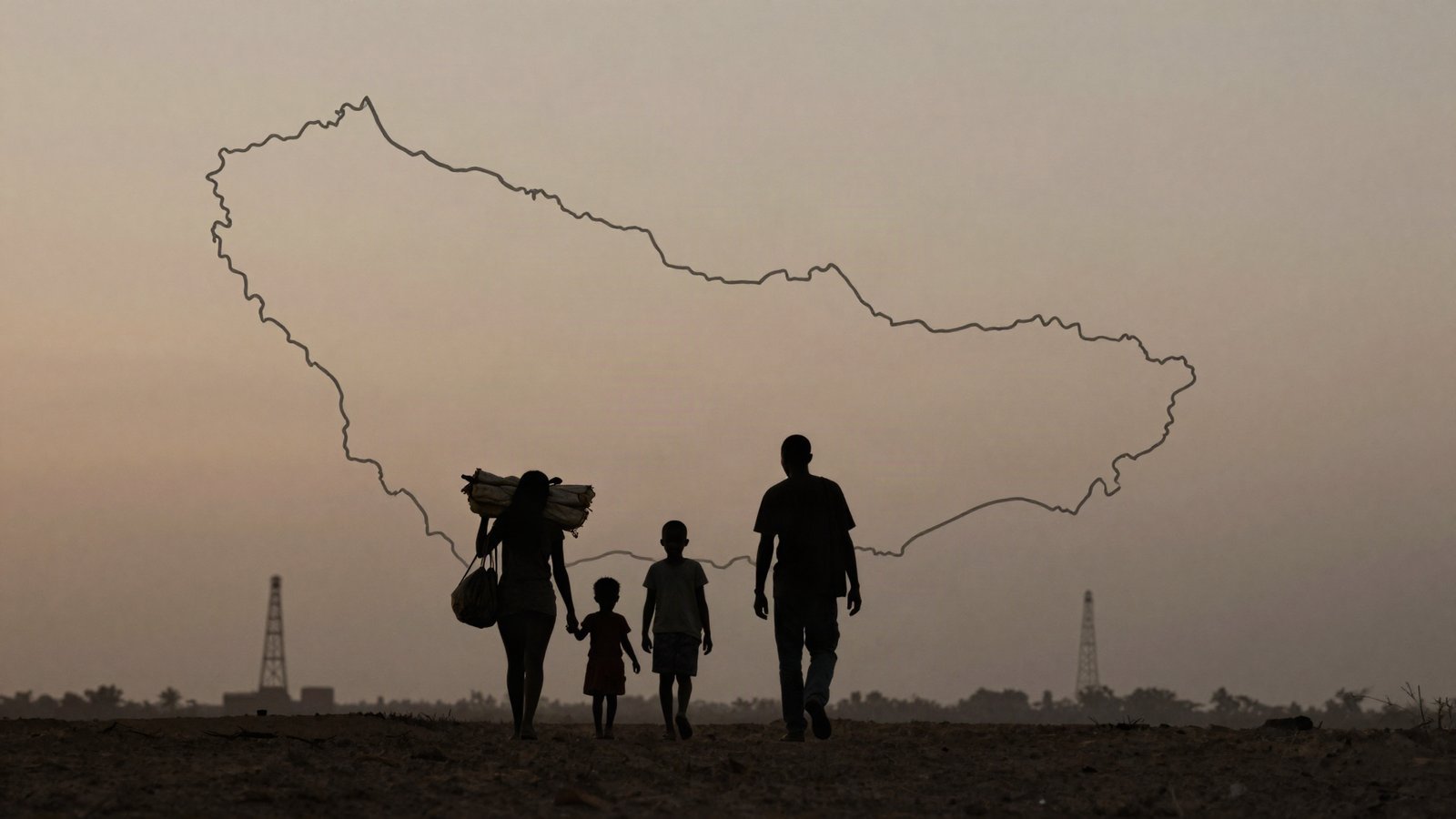
- Armed groups intensified attacks between May and July, displacing tens of thousands, most of them women and children.
- Renewed attacks in Ancuabe and other districts reversed gains previously claimed by Mozambican and allied forces.
- The government says stabilisation is progressing, while humanitarian agencies report repeated displacement and protection risks.
- Rwanda and regional partners continue to support security operations as donors focus on gas projects and aid.
- Violence near mining and gas corridors could draw further foreign involvement.
A fresh round of violence in Mozambique's northern Cabo Delgado province has pushed tens of thousands of people from their homes, according to humanitarian monitoring bodies. The displacement unsettles the fragile sense of recovery that officials had promoted in recent years. The renewed attacks, concentrated between May and July, spread into districts such as Ancuabe. Those areas had previously been described as more secure, complicating the picture of a conflict often assumed to be winding down.
The insurgency in Cabo Delgado has drawn in Mozambican government forces, Rwandan troops and other regional partners, arrayed against fighters linked to the Islamic State network. Reporting from the area remains difficult, and many figures cannot be independently verified. What monitoring groups agree on is that displacement is rising once again. Civilians, they say, are bearing the heaviest share of the disruption.
A conflict that refuses to settle
Cabo Delgado has been the centre of an armed insurgency for several years, marked by attacks on villages, mining sites and infrastructure. A multinational security response, including forces from Rwanda and regional bodies, had claimed to push insurgents back from key towns. It also claimed to have reopened access to some areas. Those claims underpinned official statements that the province was stabilising and that displaced families could begin to return.
The latest attacks challenge that narrative. According to humanitarian trackers, armed groups struck across several districts, moving into areas that had seen relative calm. The government maintains that stabilisation is progressing and that security operations continue to clear insurgent positions. Aid agencies, by contrast, describe a pattern of repeated displacement. The same families, they report, are forced to flee more than once, unable to rebuild between waves of violence.
The province lies in a remote corner of the country, where roads are poor and services thin. That geography has long shaped the conflict, making it hard for the state to sustain a presence and hard for aid groups to reach affected communities. It also complicates efforts to verify what is happening. When violence flares in distant villages, news can be slow to emerge, and the scale of harm may only become clear once displaced people arrive in larger towns seeking help.
How the parties have acted
By the accounts gathered from monitoring organisations, insurgents attacked villages, mines and infrastructure. Security forces, in turn, carried out clearing operations intended to regain control. The principals here are Mozambican forces, Rwandan troops, Islamic State-linked insurgents and the civilian population caught between them.
The competing descriptions of the fighting are hard to reconcile from the outside. The government frames its operations as steady progress toward stability. Humanitarian agencies, focused on the movement of people rather than territory, report that protection risks are climbing. Both perspectives can hold at once. Forces may retake ground even as the population endures fresh harm, and the reporting available does not allow a definitive tally of casualties or territory.
The toll on civilians
Aid organisations say the newly displaced are overwhelmingly women and children. Many arrive in host communities that are already stretched. According to these agencies, families need food, shelter, identity documents and psychosocial support. Repeated flight strips them of the belongings and paperwork that make recovery possible. Host communities, often poor themselves, are described as overwhelmed by the scale of arrivals.
The loss of documents is a recurring theme in humanitarian assessments. Without identity papers, displaced people can struggle to access services, register for aid or move freely. The strain on host areas raises the risk of tension over scarce resources such as water, land and food. Access to some districts remains limited, which in turn constrains how much outside help can reach those who need it.
Regional stakes and outside interests
The conflict sits close to major mining and natural gas corridors, giving it an economic dimension that extends well beyond the province. Rwanda and regional partners have supported security operations. International donors, meanwhile, have focused attention on the large gas projects and on humanitarian aid. That combination of security cooperation and commercial interest means events in Cabo Delgado are watched closely by governments and companies with stakes in the region's resources.
Analysts cited in humanitarian and policy reporting warn that violence near these extractive projects could attract further foreign intervention. That might come in the form of additional security deployments or heightened diplomatic engagement. The presence of valuable resources can both motivate stabilisation efforts and raise the stakes of failure, since attacks on infrastructure carry economic as well as human costs. It also gives outside actors a durable interest in the province's security.
A surge, or a shift?
Observers say the coming weeks will test whether the renewed attacks mark a temporary surge or a broader reversal. Key indicators include updated displacement figures and the level of humanitarian access to districts such as Palma and Ancuabe. The security situation around the extractive projects that anchor the region's economy will also be closely followed.
For now, the most reliable signal is the movement of people. Each new wave of displacement suggests that, whatever is claimed about territorial control, communities in Cabo Delgado do not yet feel safe enough to stay. Until that changes, humanitarian agencies say the priority remains meeting families' immediate needs. Many have been forced to flee more than once, from a conflict that has proved stubbornly difficult to end.
Sources
- ACAPS - Mozambique situation
- CFR - Mozambique conflict tracker
You may also like to read
M23 Says It Has Integrated Thousands of New Fighters as Eastern Congo Peace Deal Falters
The M23 movement says it has trained and integrated more than 9,000 fighters, a claim that raises doubts about disarmament as an eastern Congo peace deal struggles.

South Kivu Highlands Fighting Continues Despite Regional and US-Brokered Agreements
Clashes over strategic highland positions near Minembwe show that agreements brokered by regional and US mediators have yet to reach the fighters on the ground.

South Sudan Peace Monitors Warn Civilian Deaths and Political Delays Threaten the Transition
Ceasefire monitors and the UN mission reported rising civilian harm and urged faster progress on security and elections, as leaders pledged support for the deal.
Sudan's Front Line Shifts to Kordofan and Blue Nile After the Country's De Facto Partition
With the capital no longer the focal point, fighting has moved to the regions linking Sudan's rival eastern and western zones, deepening a de facto partition.