JNIM fuel blockade strains Mali's capital as Sahel insurgency widens
An al-Qaeda-linked blockade on fuel convoys has driven shortages and school closures in Mali, as violence spreads across Burkina Faso and Niger.
Commentary & Analysis ·
Verified key facts
- JNIM, an al-Qaeda affiliate, has enforced a blockade on fuel imports to Mali since September 2025, burning tanker trucks on highways into the capital, according to Al Jazeera and the BBC.
- Mali suspended schools and universities nationwide during the crisis, and fuel prices in Bamako rose sharply, the BBC and Al Jazeera reported.
- The army has escorted convoys of more than a thousand tankers into Bamako since late 2025, and in January 2026 named a general to lead the response, according to reporting cited by regional analysts.
- JNIM claimed a June attack on Niamey's airport in which Nigerien authorities said 11 soldiers and two civilians were killed, illustrating the insurgency's regional reach.
A blockade aimed at the economy
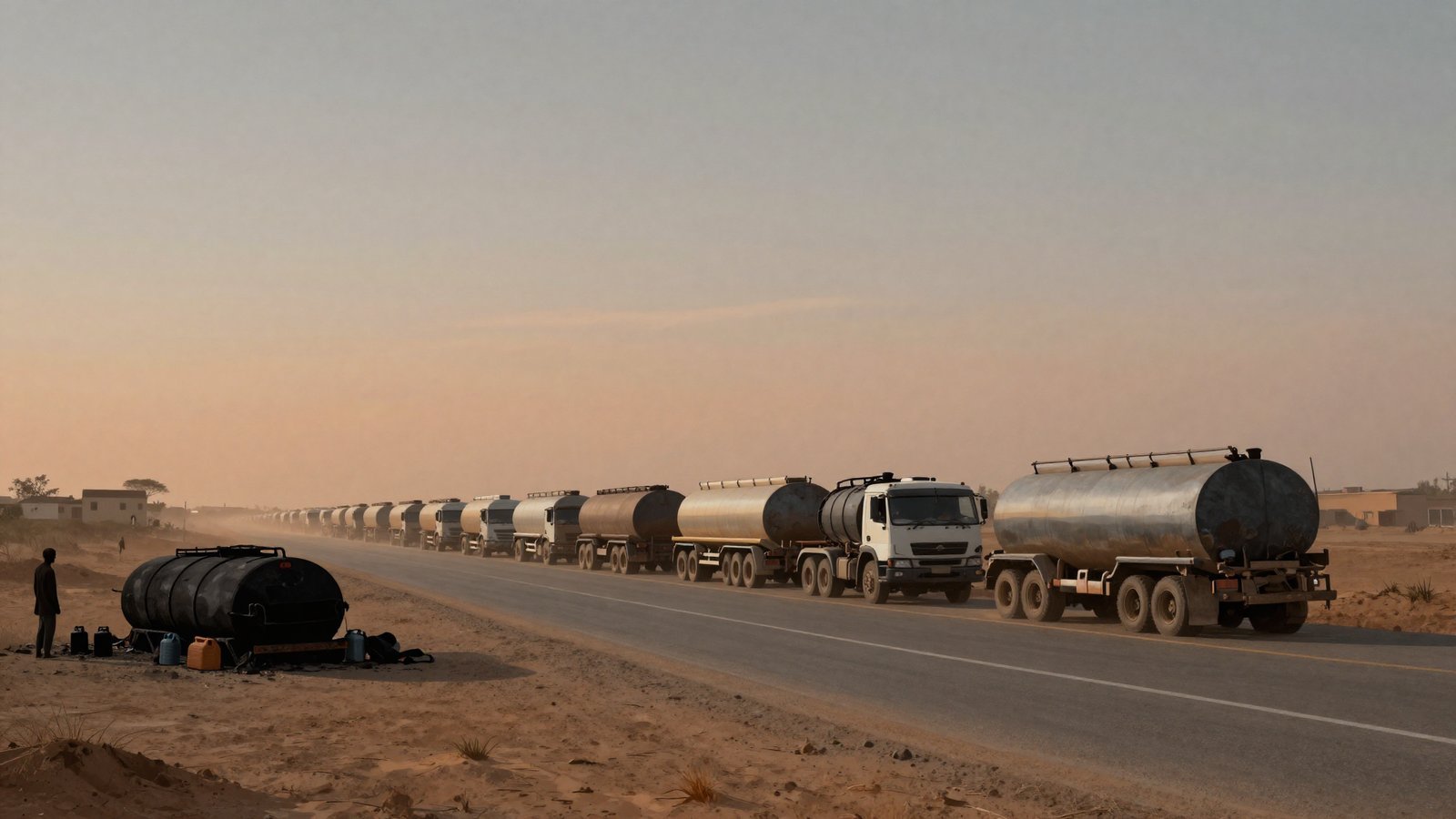
Mali's insurgency has shifted from raids on remote outposts toward pressure on the national economy. Since September 2025, the al-Qaeda-affiliated group Jama'at Nusrat al-Islam wal-Muslimin (JNIM) has enforced a blockade on fuel entering the landlocked country. Fighters have attacked and burned tanker trucks on the highways that supply Bamako.
The tactic targets a vulnerability. Mali imports fuel overland from coastal neighbours. By choking those routes, the group has caused shortages that ripple through transport, power supply and daily life, according to reporting by Al Jazeera and the BBC.
How the crisis has unfolded
The blockade extended to cities including Kayes and Nioro du Sahel, near the Senegal and Mauritania borders. JNIM banned fuel imports from several neighbouring states. As supplies dwindled, the government suspended schools and universities nationwide during the worst shortages, the BBC reported.
Prices climbed steeply. News outlets reported fuel costs in Bamako rising several-fold during the squeeze. Neighbourhoods experienced prolonged power cuts, with some areas receiving only a few hours of electricity a day. These figures come from local reporting and aid sources, and vary by district and date.
- JNIM has burned hundreds of tanker trucks on routes into Mali since the blockade began, according to reporting cited by analysts.
- The army has escorted convoys of more than a thousand tankers into Bamako since late 2025.
- In January 2026, the junta appointed a general to oversee what local media call the fuel war.
A wider regional insurgency
The blockade is one strand of a broader conflict across the central Sahel. Populations in Mali, Burkina Faso and Niger face armed groups linked to al-Qaeda and to the Islamic State Sahel Province. The three states are governed by military authorities that took power in a series of coups.
Violence has spread and, at times, crossed borders. JNIM claimed an attack on Niamey's international airport in June 2026. Nigerien authorities said 11 members of the security forces and two civilians were killed, and that 22 assailants died. The group has also carried out coordinated assaults in western and central Mali.
Earlier in 2026, JNIM and the Tuareg separatist Azawad Liberation Front launched coordinated attacks across central and northern Mali, according to reporting cited by analysts. In one series of strikes, several senior military officials were reported killed. The insurgency has also imposed blockades on transport routes beyond the fuel corridors. Each of these claims rests on a mix of official statements and local accounts that are hard to verify.
What the sides want
JNIM says it seeks to impose its rule and to pressure governments it opposes, using blockades and attacks to weaken state authority. The group frames its campaign in religious and anti-government terms. Its methods, which restrict civilian movement and supplies, are widely condemned by humanitarian bodies.
The military governments say they are defending national sovereignty and fighting terrorism. They have expelled former Western partners and turned to new security arrangements, including cooperation among themselves through a regional alliance. The effectiveness of these shifts is contested by outside analysts. Officials in the three states say security is improving; independent monitors report that attacks and displacement have continued to rise.
Humanitarian toll
The human cost falls heavily on civilians. Aid agencies report that fighting and blockades have displaced large numbers of people across the three countries and disrupted markets, farming and access to basic services. Humanitarian organisations say insecurity limits their ability to reach those in need.
The fuel crisis compounds existing hardship. Shortages raise the cost of food and water transport, and power cuts affect hospitals and businesses. Relief officials warn that a prolonged blockade could push vulnerable communities further toward crisis, though precise figures are hard to verify.
In Kayes and Nioro du Sahel, residents have reported being unable to leave under the blockade, aid sources say. Water and power services in some towns have been disrupted, with local reports attributing outages to sabotage. Humanitarian groups say the layering of restrictions makes it harder to reach communities that were already exposed to earlier waves of violence.
Regional and international response
The UN Security Council has continued to monitor the Sahel, and its July 2026 forecast noted the deteriorating security and humanitarian trends. Neighbouring coastal states worry the insurgency could spread southward. Diplomatic engagement has been complicated by the military governments' break with several traditional partners.
Regional bodies have struggled to shape a unified response. The three Sahel states have distanced themselves from the West African bloc ECOWAS, forming their own confederation. Analysts say coordination gaps have hampered efforts to counter cross-border attacks.
Can Bamako keep fuel moving?
The near-term question is whether Bamako can keep fuel flowing under military escort, and at what cost. The blockade has shown JNIM's capacity to pressure the state without seizing the capital. Analysts warn the tactic could be tried elsewhere in the region. For residents, the immediate reality is uncertainty over fuel, power and prices, with no clear end to the standoff.
Sources
- BBC News
- Al Jazeera
- Security Council Report
- PBS NewsHour
You may also like to read
Jihadist Violence Escalates in Burkina Faso and Niger as Juntas Deepen Russian Ties
JNIM and Islamic State affiliates have increased attacks in Niger and Burkina Faso, reports say, as the AES states coordinate responses and deepen ties with Russia.
An Unusual Alignment: JNIM and Tuareg Separatists Coordinate Attacks in Mali
JNIM and the Azawad Liberation Front have reportedly coordinated attacks across Mali, an unusual alignment that pressures the junta and its Russian partners.
Balochistan Insurgency Escalates With Attacks on Police, Soldiers and Transport Routes
Baloch insurgents killed abducted police and soldiers while Pakistani forces reported killing dozens of militants, in attacks and sweeps across the province.
Cabo Delgado Attacks Displace Tens of Thousands as Insurgency Spreads to New Districts
Renewed assaults in northern Mozambique uprooted tens of thousands between May and July, testing gains that government and allied forces had claimed in the region.