An Unusual Alignment: JNIM and Tuareg Separatists Coordinate Attacks in Mali
JNIM and the Azawad Liberation Front have reportedly coordinated attacks across Mali, an unusual alignment that pressures the junta and its Russian partners.
Commentary & Analysis ·
Verified key facts
- JNIM and the Azawad Liberation Front reportedly coordinated attacks and ambushes across Mali.
- The alignment increased pressure on the military government and its Russian partners.
- The alliance targeted bases, convoys and strategic northern routes, according to the account.
- Government forces are reported to have used airstrikes and Russian support.
- The government called the attackers terrorists; separatists said they were fighting central domination.
An alliance of convenience
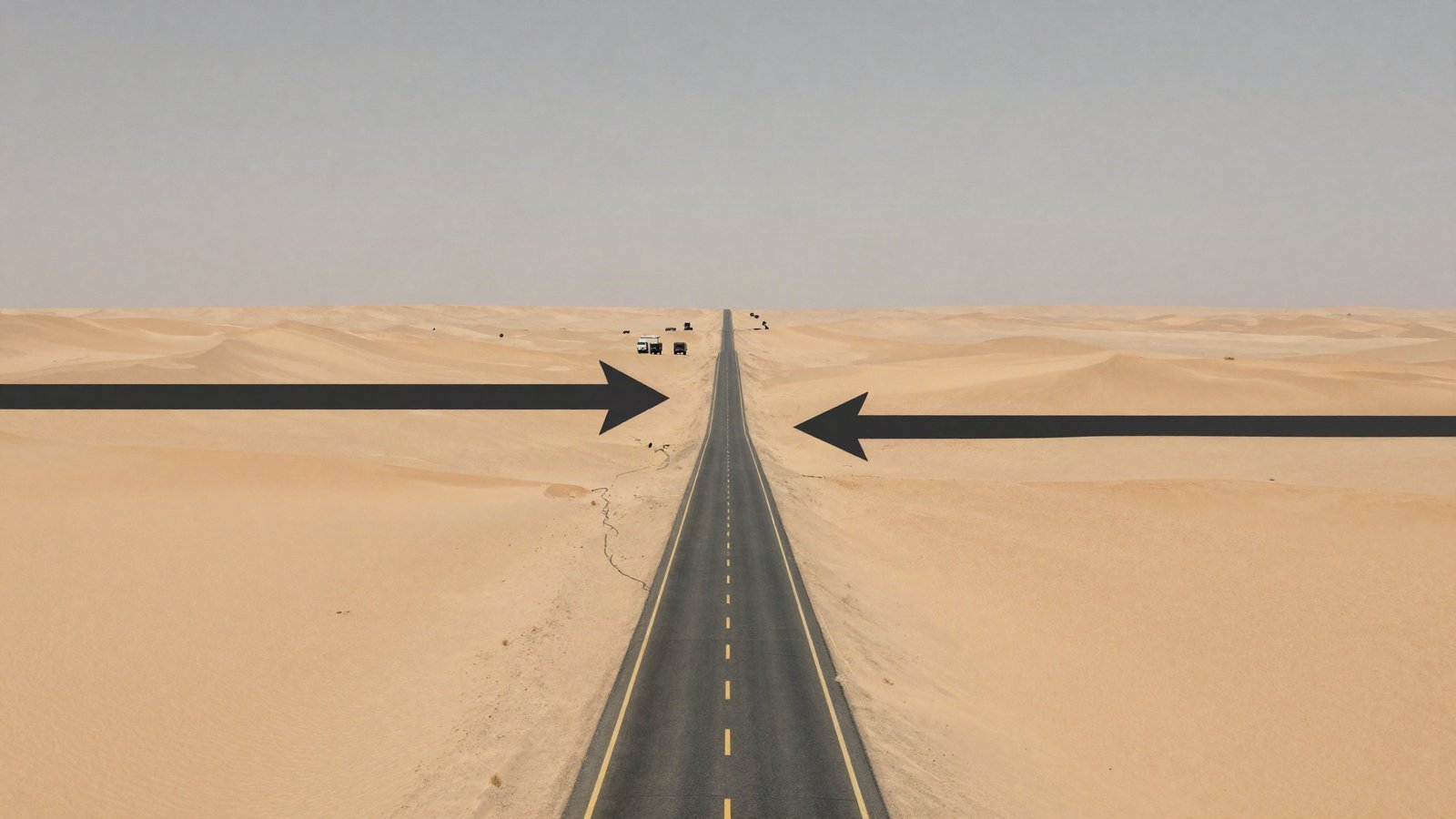
Mali's conflict has taken an unusual turn. According to reports, the jihadist group JNIM and the Tuareg-led Azawad Liberation Front have coordinated attacks and ambushes across the country. The two have very different goals, which makes their operational alignment striking and, by the reporting's account, a significant new pressure on the military government.
Such coordination is notable precisely because the parties are not natural partners. One pursues Islamist rule; the other seeks autonomy for a region it calls Azawad. That they would align their operations, even temporarily, points to a shared immediate interest in weakening the state, whatever their longer-term differences.
Who the actors are
JNIM is an al-Qaeda-linked coalition that has operated across the Sahel for years, pursuing an Islamist agenda through insurgency. The Azawad Liberation Front, referred to in available reporting as the FLA, represents separatist currents in northern Mali that have long sought self-rule. Against them stands the Malian army, supported by Russian partners available reporting identifies as Africa Corps.
These actors have clashed with the state and, at times, with one another over many years. The current alignment does not erase those histories. Regional analysts stress that the alliance may prove temporary, held together by opportunity rather than by any lasting agreement between fundamentally opposed movements.
How the campaign is being fought
According to the account, the alliance targeted bases, convoys and strategic northern routes. Those are the arteries of state control in a vast and sparsely governed territory. Ambushes on convoys and pressure on key routes can isolate garrisons and disrupt the movement of supplies and reinforcements.
The government has responded with airstrikes and Russian support, contemporaneous reporting states. Air power gives the state a reach that ground forces alone cannot match, while external partners add capability. The result is a contest between insurgent mobility and state firepower, played out across northern Mali's difficult terrain.
Competing justifications
The government has labelled the attackers terrorists, a framing that casts the entire alliance as a security threat to be defeated. That is the state's position, presented here as its characterisation rather than as a neutral description of the parties involved.
The other side offers different justifications. The separatists say they are fighting central domination, framing their struggle as one for regional self-determination. JNIM, by contrast, pursues Islamist rule. These competing narratives sit uneasily together within the same military campaign, and this report attributes each claim to its source without endorsing any.
The pressure on civilians
Civilians bear much of the cost. Contemporaneous reporting notes that they face road blockades, reprisals, food shortages and ethnic targeting. When key routes are contested, markets and aid deliveries suffer, and communities can be cut off from supplies they depend on to survive.
Ethnic targeting is a particular danger in this environment. The overlap of jihadist, separatist and state actors, each associated with different communities, raises the risk that violence will fall along ethnic lines. Reprisals against civilians accused of supporting one side or another can deepen divisions that outlast the current fighting.
A diplomatic vacuum
Regional diplomacy offers little cushion. Mali's break with the Economic Community of West African States and with Western partners has left it with fewer channels for outside mediation. The reporting describes regional diplomacy as weak, which narrows the options for de-escalation and puts more weight on military outcomes.
That isolation has strategic consequences. Without strong external mediation, the conflict is more likely to be settled, if at all, on the battlefield. The government's reliance on Russian support fills part of the gap left by departed partners, but it does not substitute for the diplomatic pathways that have narrowed.
The stakes and what to watch
Analysts tracking the conflict warn that, even if the alliance is temporary, it raises the risk of state fragmentation and of pressure building toward the capital, Bamako. A coordinated insurgency that controls key routes can squeeze the state's ability to govern its own territory, with consequences that extend well beyond the north.
The signals to watch are concrete. Observers will follow the fate of northern garrisons, the security of fuel routes, the deployment of Africa Corps forces and any divisions that emerge between JNIM and the FLA. Fractures within the alliance could ease the pressure as quickly as the alignment created it.
Fuel routes deserve particular attention. In a landlocked country with long supply lines, control of the roads that carry fuel and goods can decide the fate of towns far from any battlefield. Blockades and ambushes along these routes have a reach that ordinary clashes do not, touching markets, hospitals and daily life across wide areas.
The deeper uncertainty concerns how long two such different movements can act together. Their goals point in opposite directions, and past history offers little basis for trust between them. An alliance built on a shared enemy can unravel once that enemy is weakened. That is why the government will watch for signs of strain as closely as for signs of coordination.
For now, the alignment stands as a serious challenge to a government already isolated diplomatically and reliant on external military support. Whether it marks a turning point or a passing convergence will depend on decisions made by all sides in the weeks ahead. Much will rest on whether the state can protect the routes and garrisons that hold its territory together.
Sources
- AP - What to know about Mali conflict
- CFR - Violent extremism in Sahel
- Guardian - Mali airstrikes and rebel alliance
You may also like to read
JNIM fuel blockade strains Mali's capital as Sahel insurgency widens
An al-Qaeda-linked blockade on fuel convoys has driven shortages and school closures in Mali, as violence spreads across Burkina Faso and Niger.

Jihadist Violence Escalates in Burkina Faso and Niger as Juntas Deepen Russian Ties
JNIM and Islamic State affiliates have increased attacks in Niger and Burkina Faso, reports say, as the AES states coordinate responses and deepen ties with Russia.
Balochistan Insurgency Escalates With Attacks on Police, Soldiers and Transport Routes
Baloch insurgents killed abducted police and soldiers while Pakistani forces reported killing dozens of militants, in attacks and sweeps across the province.
Cabo Delgado Attacks Displace Tens of Thousands as Insurgency Spreads to New Districts
Renewed assaults in northern Mozambique uprooted tens of thousands between May and July, testing gains that government and allied forces had claimed in the region.