Balochistan Insurgency Escalates With Attacks on Police, Soldiers and Transport Routes
Baloch insurgents killed abducted police and soldiers while Pakistani forces reported killing dozens of militants, in attacks and sweeps across the province.
Commentary & Analysis ·
Verified key facts
- Baloch insurgents killed abducted police and soldiers, while Pakistani forces reported killing dozens of militants.
- A wave of attacks and counter-operations pointed to growing separatist capability.
- Pakistan accused insurgents of foreign backing, while separatists cite resource exploitation and political repression.
- Security personnel, civilians and families of abducted officers suffered severe losses.
- The conflict intersects with China-Pakistan projects, Afghanistan and regional rivalry.
A surge in violence
A wave of attacks and counter-operations has swept Pakistan's Balochistan province, according to the reporting available. Observers describe it as pointing to growing separatist capability. Baloch insurgents killed abducted police and soldiers. Pakistani forces, in turn, reported killing dozens of militants in response. The exchanges marked an intensification of a long-running conflict.
The figures on both sides come from the parties themselves and from the reporting drawn on here. Independent verification of casualty counts in the province is difficult. What the accounts convey is a period of heightened activity. Insurgents mounted attacks and executions, while the state conducted sweeps intended to counter them.
How the fighting unfolded
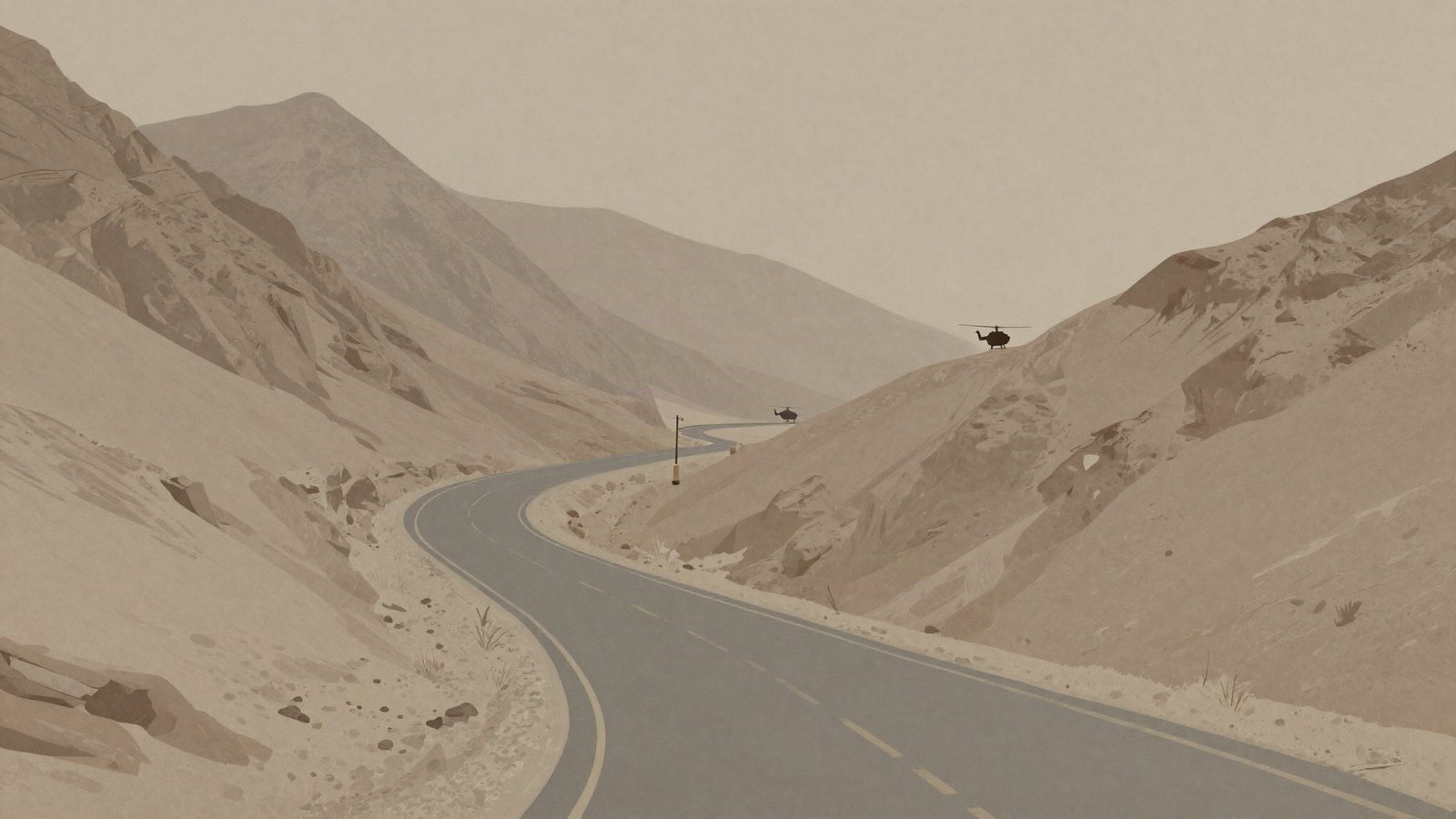
The attacks attributed to insurgents included ambushes, assaults on police posts and executions, according to the reporting. In response, the state used helicopters and ground sweeps to pursue militants across the province. This pattern reflects the asymmetric character of the conflict. Mobile insurgent strikes are met by heavier state operations.
The principal actors are the Baloch Liberation Army and other groups, the Pakistan military, police and civilians. The BLA is among the most prominent of the separatist organisations operating in the province. The reference to other groups indicates a broader insurgent landscape. The targeting of transport routes points to an effort to disrupt movement and infrastructure alongside attacks on personnel.
Balochistan is Pakistan's largest province by area and among its least developed. It is rich in natural resources, yet many of its residents report seeing little benefit from that wealth. This gap between resources and development sits at the centre of the grievances that separatist groups invoke. The province's strategic location, bordering both Afghanistan and Iran and hosting major infrastructure, adds to its significance for the state. That combination of underdevelopment, resource wealth and strategic value has made Balochistan a persistent flashpoint over many years.
The insurgency itself is not new. It has flared in successive waves, each shaped by the political conditions of its time. The reporting describes the current phase as marked by growing capability, reflected in the scale and coordination of recent attacks. Whether that represents a lasting shift or a temporary surge is difficult to judge from the outside. What the accounts make clear is that the province remains contested, with neither the state nor the insurgents able to impose a decisive outcome.
Rival explanations
The two sides account for the conflict in fundamentally different terms. Pakistan accused the insurgents of foreign backing, framing the violence as externally sponsored rather than home-grown. Separatists, by contrast, cite resource exploitation and political repression as the drivers of their campaign. They present it as a response to grievances over how the province is governed and its wealth distributed.
These competing explanations shape how each side justifies its actions. The claim of foreign backing casts the state's operations as a defence against outside interference. The separatists' emphasis on exploitation and repression frames their attacks as resistance. The reporting presents both positions without resolving them. The underlying disputes over resources and political rights remain central to the conflict's persistence.
The human cost
Security personnel, civilians and the families of abducted officers suffered severe losses in the violence, according to the reporting. The reference to abducted officers points to a particularly harrowing dimension. Those taken captive were later killed, leaving their families to absorb the consequences.
The inclusion of civilians among those harmed underscores that the conflict's toll extends beyond the combatants. In a province marked by long-standing grievances, the losses on multiple sides feed into a cycle of hardship. The reporting notes that families of abducted officers were among those who suffered most severely. It is a reminder of how the violence reaches into households well beyond the immediate sites of the fighting.
A conflict with regional threads
The Balochistan conflict does not sit in isolation. According to the reporting, it intersects with China-Pakistan projects, with Afghanistan and with broader regional rivalry. The province hosts significant infrastructure investment. That has made related projects a point of sensitivity in the security picture and a factor in how the conflict is understood.
These regional threads add layers to a conflict that is already complex. The intersection with major economic projects gives the insurgency an international dimension. Connections to Afghanistan and wider rivalry situate it within a broader set of pressures on Pakistan's security. The result is a conflict whose local roots are entangled with external interests and neighbouring dynamics.
Risks and indicators ahead
Analysts warn that collective punishment and enforced disappearances can increase recruitment and alienation among the Baloch population. That could deepen the conflict rather than containing it. The concern is that heavy-handed responses may generate the very grievances that sustain the insurgency, in a self-reinforcing pattern.
Observers point to several indicators worth watching. These include independent casualty data, the status of missing-person cases, attacks on infrastructure and any movement toward political dialogue. Missing-person cases in particular have been a persistent source of grievance in the province. For now, the reporting describes escalation rather than de-escalation, with the underlying disputes over resources, rights and representation still unresolved.
Sources
- AP - Pakistani forces kill 75 insurgents
- Washington Post/AP - 18 police and 11 soldiers killed
You may also like to read
Deadly Unrest in Pakistan-Administered Kashmir Deepens India-Pakistan Tensions
Protests, a crackdown and phased elections created a new flashpoint in Pakistan-administered Kashmir, as rights groups and authorities gave clashing accounts.

Suicide Bomber Kills at Least 14 at Anti-Militant Rally in Pakistan's Swat Valley
A suicide bomber struck an anti-militant rally in Kabal, killing civilians and police who had gathered to demand protection from a resurgence of militancy.

UN Says Months of Afghanistan-Pakistan Fighting Killed Nearly 500 Afghan Civilians
A UN mission said nearly 500 Afghan civilians were killed and more than 1,200 wounded from October to June, findings Pakistan rejected as it cited self-defence.
Cabo Delgado Attacks Displace Tens of Thousands as Insurgency Spreads to New Districts
Renewed assaults in northern Mozambique uprooted tens of thousands between May and July, testing gains that government and allied forces had claimed in the region.