Are Your Jalapeños Recalled? What the 431-Case Salmonella Outbreak Now Covers
Recalled Sinaloa jalapeños have triggered downstream recalls across major US retailers as the linked Salmonella outbreak reaches 431 cases.
Commentary & Analysis ·
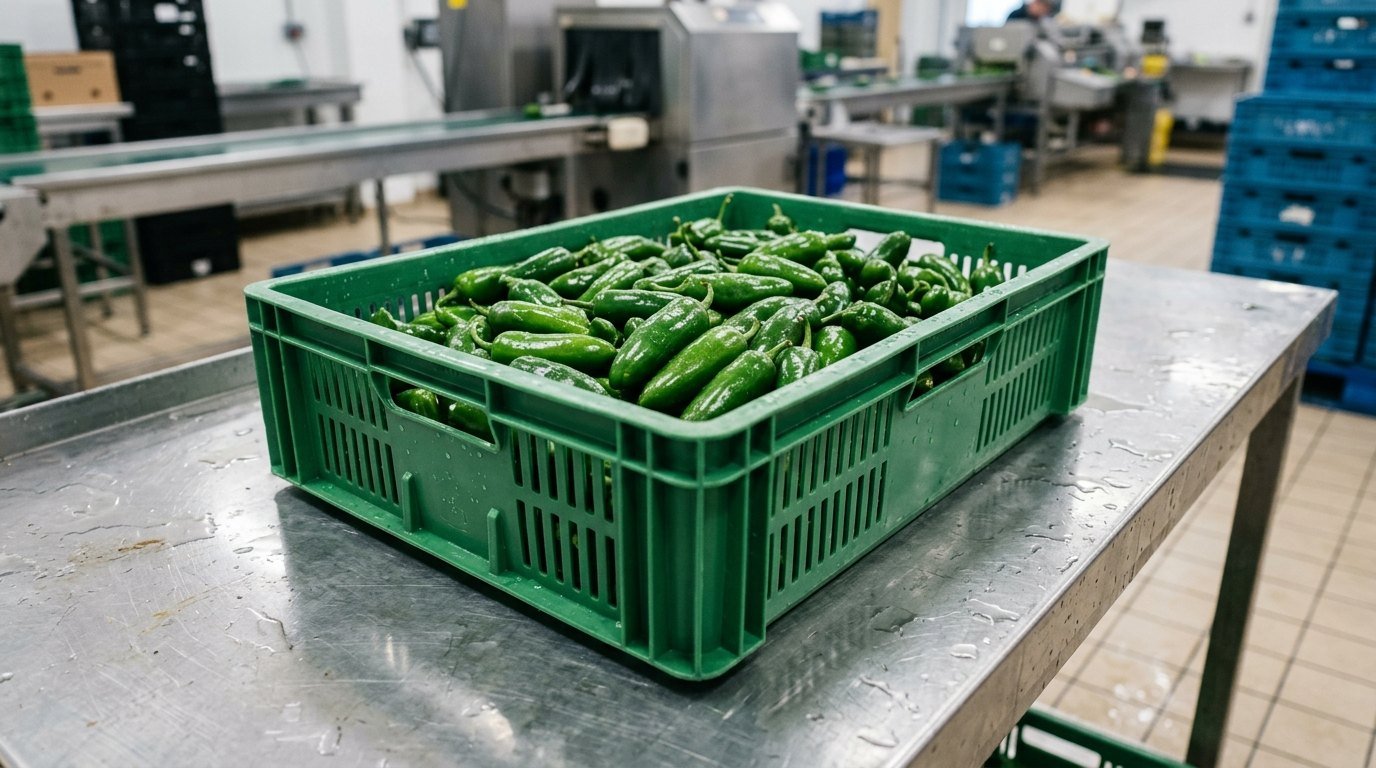
If you have jalapeños in the fridge or a tub of salsa on the shelf, you want to know whether yours are on the list. Most are not, and the two maps in this story are not the same map: 431 illnesses across 32 states, and recalled products shipped to distribution centres in 26. Here's which products and dates the FDA names, and what it is telling you to do with them.
Verified key facts
- FDA: The Salmonella Javiana outbreak linked to jalapeños from Sinaloa, Mexico had reached 431 illnesses in 32 states, with 57 hospitalisations and no deaths.
- FDA: Coast Citrus Distributors first initiated a limited jalapeño recall on 22 July and agreed on 5 August to recall remaining implicated product.
- FDA / Taylor Fresh Foods: Taylor recalled finished products sent to retail distribution centres in 26 states, including products for Hannaford, Kroger, Stop & Shop, Target, Trader Joe’s, Walmart and Whole Foods.
- FDA: The Taylor products carried Best If Used By dates up to and including 16 August, and Taylor said it had moved to alternative suppliers.
- FDA active-investigations table: A separate Salmonella Oranienburg investigation involving an unidentified product rose from 97 to 99 cases and is not the jalapeño outbreak.
The number 26 describes distribution, not the size of the outbreak
The latest jalapeño recall has two different maps that should not be confused. The Food and Drug Administration says the Salmonella Javiana outbreak linked to fresh jalapeños from Sinaloa, Mexico has reached 431 illnesses across 32 states, including 57 hospitalisations and no reported deaths. Separately, Taylor Fresh Foods recalled products made with the implicated peppers after sending them to retail distribution centres in 26 states. That second network includes products destined for stores such as Hannaford, Kroger, Stop & Shop, Target, Trader Joe's, Walmart and Whole Foods. The distinction is crucial. A distribution centre receiving recalled food does not mean every state on that list has an outbreak case, and an outbreak case can arise outside Taylor's 26-state network through restaurants, wholesalers or other downstream users. The FDA's current advisory treats the supply chain and the epidemiological case map as related but different evidence.
Coast Citrus is the upstream link investigators traced to Sinaloa
The FDA says its traceback identified a common grower in Sinaloa that supplied Coast Citrus Distributors as the likely source behind the outbreak. Coast Citrus first initiated a limited recall of bulk jalapeños on 22 July and, on 5 August, agreed to recall the remaining implicated peppers. That upstream action matters because the product had already moved into several channels before the full recall. Wholesalers sold fresh peppers to restaurants and food-service businesses; manufacturers used jalapeños as ingredients in salsa, guacamole, dressings, prepared meals and other finished products; retailers then received those downstream items under different brand names. A consumer looking only for the words Coast Citrus could therefore miss a recalled product made elsewhere. The FDA's major-recall page is designed to solve that problem by linking the downstream companies back to the same source pepper.
Taylor’s 26-state network shows how one ingredient multiplies recalls
Taylor Fresh Foods illustrates the complexity of ingredient-driven food recalls. The FDA's 10 August update says Taylor recalled multiple products containing the jalapeños, with distribution centres in Alabama, Arkansas, Florida, Georgia, Illinois, Indiana, Kansas, Kentucky, Louisiana, Massachusetts, Maine, Michigan, Minnesota, Missouri, Mississippi, Nebraska, New Hampshire, New York, Ohio, Oklahoma, South Carolina, Tennessee, Texas, Vermont, Wisconsin and West Virginia. Retail names associated with products included Hannaford, Kroger, Stop & Shop, Target, Trader Joe's, Walmart and Whole Foods. The breadth does not mean every jalapeño in those chains was unsafe. It means specific finished products contained a recalled input. Taylor said it was no longer sourcing from the grower and would fill orders from alternatives, an important containment step because it prevents the recall from expanding through newly produced stock.
Restaurants were central to the epidemiological signal
The FDA says 203 of 224 people interviewed reported eating at a Mexican-style restaurant before becoming ill, a striking 91% exposure pattern. Chipotle and QDOBA were among restaurants that had received peppers imported by Coast Citrus. Both changed course before the latest update: Chipotle switched the supplier for affected stores beginning 20 July, while QDOBA stopped using jalapeños on 28 July. The FDA now says it does not consider those establishments to present an ongoing risk from the implicated peppers because the product was removed. This distinction prevents an outbreak article from becoming a permanent warning about a restaurant brand after its supply changed. It also shows how epidemiology and commercial records reinforce one another: repeated restaurant exposures pointed investigators towards a common ingredient, and traceback records then narrowed the source to Sinaloa jalapeños.
The 431 cases belong to Salmonella Javiana, not every active Salmonella inquiry
The FDA is simultaneously managing other foodborne-illness investigations, and one line in its active-investigations table can easily be misread as part of this story. A separate Salmonella Oranienburg investigation, reference 1387, rose from 97 to 99 cases and still has no identified product. It is not the jalapeño-linked Salmonella Javiana outbreak. Keeping those investigations separate matters for both accuracy and consumer behaviour. A person should not infer that Oranienburg cases were caused by Mexican peppers, nor that a jalapeño recall explains every Salmonella alert. The same principle distinguishes this article from earlier outbreaks involving alfalfa sprouts or iceberg lettuce. Food-safety agencies often investigate several clusters at once, each with a different organism, case definition, traceback route and recall status. The pathogen name and FDA reference number are the identifiers that keep those threads from being merged.
The consumer action is product-specific and date-specific
The FDA advises consumers, restaurants and retailers not to eat, sell or serve recalled jalapeños or recalled products containing them. For Taylor's affected finished products, the agency says Best If Used By dates ran through 16 August. Whole Foods issued a separate recall covering selected salsas, guacamole, pico de gallo and prepared foods with specified Best By dates, while other firms recalled dressings and prepared products. Because many of those dates have passed, the main household risk increasingly shifts from ordinary fresh stock to products that may still be in refrigerators or freezers and to food-service inventory. Consumers should check the actual recall entry rather than discard all jalapeños. The FDA also tells businesses to clean and sanitise surfaces and containers that touched recalled peppers, addressing cross-contamination after the ingredient itself has been removed.
The 431-case count and 16 August shelf-life line define this recall phase
The outbreak's current scale is 431 reported illnesses in 32 states, with onset dates extending through 2 August, according to the FDA's 21 August update. The agency warns that reported counts can lag because people become ill, seek care, are tested and then linked through public-health systems over time. At the same time, the Taylor products carried dates only through 16 August, meaning the commercial recall is moving into a different phase from the epidemiological count. Investigators may still add illnesses that occurred weeks earlier even as affected products disappear from normal sale. For readers, the useful markers are therefore the 431-case Javiana tally, the specific Coast Citrus supply chain and the product-by-product recall dates. The separate 99-case Oranienburg inquiry should remain exactly that: separate until the FDA identifies its source.
Sources
- FDA - jalapeño outbreak advisory (www.fda.gov)
- FDA - major product recalls (www.fda.gov)
- FDA - Taylor Fresh Foods recall (www.fda.gov)
- FDA - active outbreak investigations (www.fda.gov)
- Note: The outbreak has cases in 32 states; the 26-state figure refers to Taylor Fresh Foods retail distribution centres. The Salmonella Oranienburg investigation is a separate event.
You may also like to read
Two Salmonella Outbreaks Widen Across the US: 19 Million Eggs at the Highest Recall Level and Jalapeño Cases Pass 430
The FDA gave the Midwest Poultry egg recall its most serious classification as a separate jalapeño-linked outbreak reached 431 cases in 32 states.
US Cyclospora Outbreak Nears 7,000 Cases as Officials Eye Salad Greens
A parasite that causes prolonged diarrhoea has spread across 34 US states, with Michigan hardest hit and investigators examining lettuce as a suspect.
An Alfalfa Sprout Outbreak Sickens 55 People Across 15 States With E. coli and Salmonella
Four people have been admitted to hospital, and four patients were infected with several pathogens at once, in an outbreak traced to a Minnesota grower.
The Cyclospora Outbreak Traced to Recalled Iceberg Lettuce Reaches 10,930 Illnesses and Two Deaths
CDC counts 454 hospitalisations across 17 states, with both deaths in Michigan, in one of the largest parasitic foodborne outbreaks on record.