The Cyclospora Outbreak Traced to Recalled Iceberg Lettuce Reaches 10,930 Illnesses and Two Deaths
CDC counts 454 hospitalisations across 17 states, with both deaths in Michigan, in one of the largest parasitic foodborne outbreaks on record.
Commentary & Analysis ·
Verified key facts
- The Cyclospora outbreak linked to iceberg lettuce has reached 10,930 illnesses across 17 states, according to the CDC's most recent update on 20 August
- At least 454 people have been admitted to hospital and two have died, both in Michigan and both with underlying health conditions, the CDC reported
- The most recent illness onset recorded in the outbreak was 3 August 2026
- Taylor Farms de Mexico recalled all iceberg lettuce sourced from central Mexico, from both foodservice and retail, on 17 July 2026
- The recall covered Marketside-brand retail product sold at Walmart with best-if-used-by dates from 18 July to 3 August, distributed in 31 states
- The FDA traced lettuce served at some Taco Bell locations back to Taylor Farms de Mexico, and 90% of interviewed patients reported eating iceberg lettuce
- No product sample has tested positive for the parasite; the case rests on traceback and patient interviews rather than laboratory confirmation in food
- The CDC issued its initial Health Alert Network advisory on 14 July and broadened the outbreak definition on 5 August to include retail purchases
The Scale of the Count
The Cyclospora outbreak traced to recalled iceberg lettuce has now reached 10,930 confirmed illnesses across 17 states, with 454 people admitted to hospital and two dead, according to the CDC's update of 20 August.
Both deaths were in Michigan, in people with underlying health conditions. Fatalities from cyclosporiasis are rare, which is part of what makes the figure notable: the disease is debilitating rather than typically lethal, and deaths generally reflect the vulnerability of the patient rather than the severity of the parasite.
Seventeen states carry confirmed cases, among them Michigan, Ohio, Illinois, Indiana, Pennsylvania, North Carolina, Missouri, Massachusetts and Maine, based on the CDC's published list.
What Cyclospora Does
Cyclospora cayetanensis is a single-celled parasite, not a bacterium, and that distinction shapes everything about the outbreak. Infection produces watery diarrhoea, cramping, loss of appetite and pronounced fatigue that can persist for weeks and recur after apparent recovery.
It does not respond to the antibiotics used for bacterial food poisoning. Treatment is a specific course of trimethoprim-sulfamethoxazole, which means diagnosis matters more than it does for illnesses that resolve on their own regardless of what is prescribed.
The incubation period is roughly a week, considerably longer than for salmonella or E. coli. That delay is why parasitic outbreaks are typically identified late and why case counts continue rising well after the implicated product has left the supply chain.
The Product and the Recall
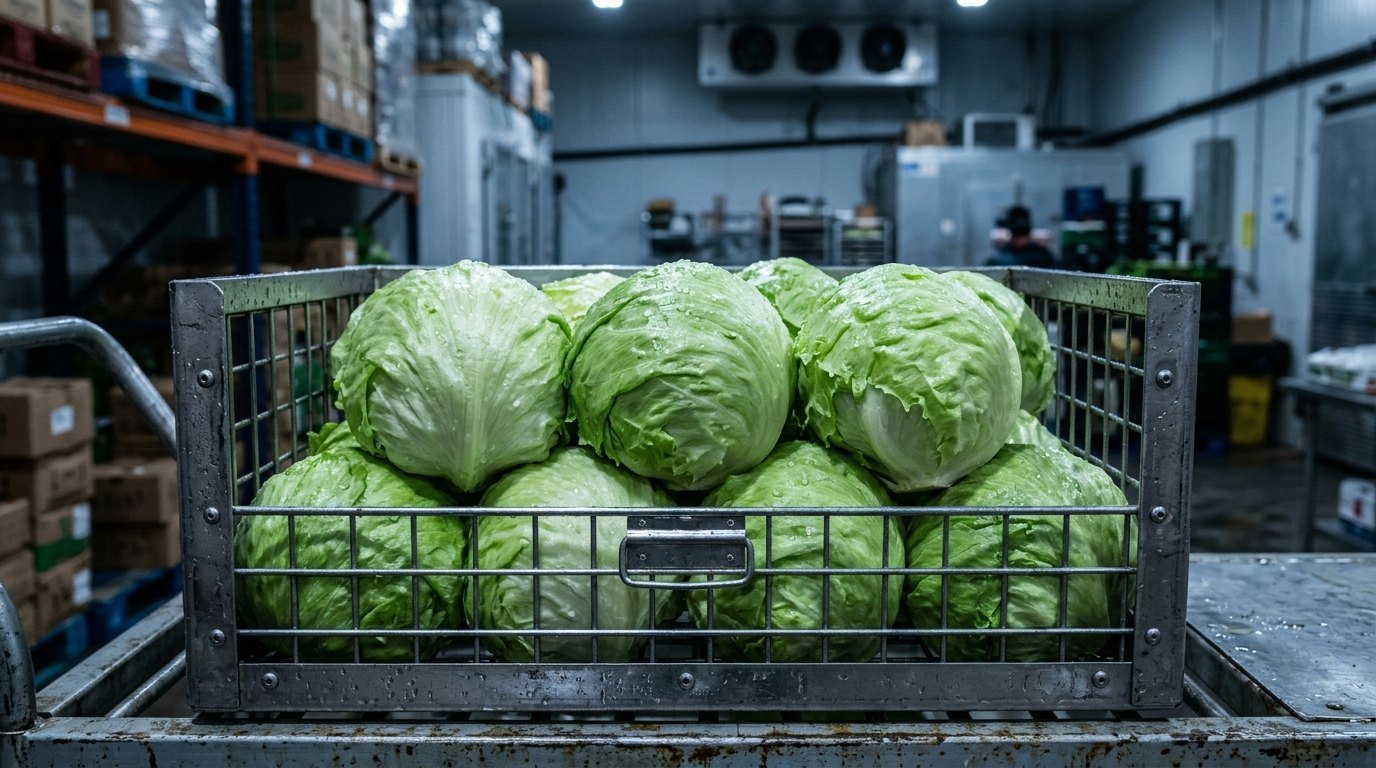
Taylor Farms de Mexico recalled all iceberg lettuce sourced from central Mexico on 17 July 2026, covering both foodservice and retail channels.
On the retail side, the recall reached Marketside-brand product sold at Walmart, with best-if-used-by dates running from 18 July to 3 August, distributed across 31 states. The foodservice side is the larger part of the problem, because processed iceberg lettuce reaches consumers through restaurant kitchens where no packaging date is ever seen.
The FDA's traceback identified lettuce served at some Taco Bell locations as originating with Taylor Farms de Mexico, and reported that 90% of interviewed patients said they had eaten iceberg lettuce before falling ill.
A Case Built Without a Positive Sample
One feature of this investigation deserves emphasis: no product sample has tested positive for Cyclospora. The link between the lettuce and the illnesses rests on epidemiological interviews and supply chain traceback rather than on laboratory confirmation in food.
That is normal for this parasite and not a weakness in the finding. Cyclospora is difficult to detect in produce, present at low concentrations, and by the time an outbreak is identified the implicated lots have generally been eaten or discarded. Waiting for a positive sample would mean never acting.
It does, however, limit what can be learned about the contamination route. Without a positive sample there is no way to establish whether the parasite entered through irrigation water, a specific field, or a step in processing.
How the Investigation Widened
The CDC issued its initial Health Alert Network advisory on 14 July, and the lettuce link and recall followed within days. On 5 August the agency broadened the outbreak definition to include people who had bought the product at retail rather than only those who had eaten at restaurants.
Broadening a case definition mid-investigation increases the count without necessarily meaning the outbreak grew, because cases that already existed become countable. Some of the increase in the 20 August figure reflects that change rather than new exposure.
The last recorded illness onset was 3 August, which is the more informative date. If it holds, exposure ended around the time the recalled product cleared kitchens and refrigerators.
Why the True Number Is Higher
Confirmed counts in a parasitic outbreak understate the real total by a wide margin. Diagnosis requires a stool test that specifically looks for Cyclospora, which is not part of a standard gastrointestinal panel in every laboratory, and it requires a patient unwell enough to seek care in the first place.
Anyone who had a week of severe diarrhoea in July, did not see a doctor, and recovered without a diagnosis is not in the 10,930. Public health researchers routinely apply substantial multipliers to laboratory-confirmed foodborne case counts for exactly this reason.
The hospitalisation figure of 454 is therefore the more reliable indicator of severity, because seriously ill patients are far more likely to be tested and counted.
The same reasoning cuts the other way on geography. Seventeen states carry confirmed cases, but the recalled product was distributed to 31, and the difference is at least partly a measure of which state laboratories routinely test for this parasite rather than of where contaminated lettuce was actually eaten.
That matters for anyone still holding product. Cyclospora is not destroyed by washing, and unlike bacterial contamination it cannot be managed by handling at home, which is why the recall rather than consumer precaution was the operative intervention.
Whether the 3 August Onset Date Holds
The measurement that will determine whether this outbreak is over is the last illness onset date. It currently stands at 3 August. Given an incubation period of about a week and the reporting lag inherent in parasitic diagnosis, cases with later onsets could still be added over the coming weeks.
If no onsets after early August appear, the recall worked and the exposure window closed with it. If they do appear, it would indicate either that recalled product remained in circulation or that the contamination source extends beyond the lots identified.
The unresolved question either way is causation. Until the FDA can say how central Mexican iceberg lettuce became contaminated, the same route remains available for the next growing season.
Sources
- CDC - Cyclospora Outbreak Linked to Iceberg Lettuce, investigation update
- FDA - Investigation of Multistate Outbreak of Cyclospora Illnesses: Iceberg Lettuce (July 2026)
- NBC News - Cyclosporiasis outbreak has expanded to six more states
- Food Poisoning Bulletin - 2026 Cyclospora Outbreak Tracker: Taco Bell and Taylor Farms Lettuce
You may also like to read

US Cyclospora Outbreak Nears 7,000 Cases as Officials Eye Salad Greens
A parasite that causes prolonged diarrhoea has spread across 34 US states, with Michigan hardest hit and investigators examining lettuce as a suspect.
Congo's Ebola Outbreak Becomes the Deadliest in the Country's History, With 2,325 Deaths Across Six Provinces
The Bundibugyo virus epidemic has passed the toll of the 2018-2020 outbreak and now reaches 54 health zones, with the WHO warning it is outpacing relief.

Two Salmonella Outbreaks Widen Across the US: 19 Million Eggs at the Highest Recall Level and Jalapeño Cases Pass 430
The FDA gave the Midwest Poultry egg recall its most serious classification as a separate jalapeño-linked outbreak reached 431 cases in 32 states.

FDA Raises Publix GreenWise Frozen Blueberry Recall to Its Highest Risk Level Over E. coli
Four GreenWise frozen berry products are now a Class I recall after 12 E. coli infections in Florida and Georgia, four of them requiring hospital care.