Hormuz Traffic Slows to Six Ships a Day as Owners Wait for a Clear Signal the Strait Is Open
Insurers and shipowners are declining to treat a nominal reopening as a real one, and the transit count keeps falling.
Commentary & Analysis ·
Verified key facts
- Six commodity vessels crossed the Strait of Hormuz on Tuesday, down from nine the previous day and below the ten-day daily average of eleven, according to Reuters reporting carried by US News.
- Most shipowners are still avoiding the waterway because there has been no clear signalling that the wartime blockade has genuinely ended, per Reuters and Baird Maritime.
- Shipping companies and insurance underwriters are taking a wait-and-see approach to both the strait and the wider ceasefire, according to Baird Maritime.
- A proposed arrangement between Iran and Oman giving Tehran a role over ships entering the Persian Gulf is not easily workable because of US sanctions and restrictive insurance clauses on payments, industry sources told Reuters.
- Oil prices struggled for direction on Monday as US-Iran talks stalled and Hormuz shipping slowed, according to CNBC.
- Al Jazeera reported in June that the strait's reopening left open the question of how safe passage would actually be assured.
Six ships on Tuesday
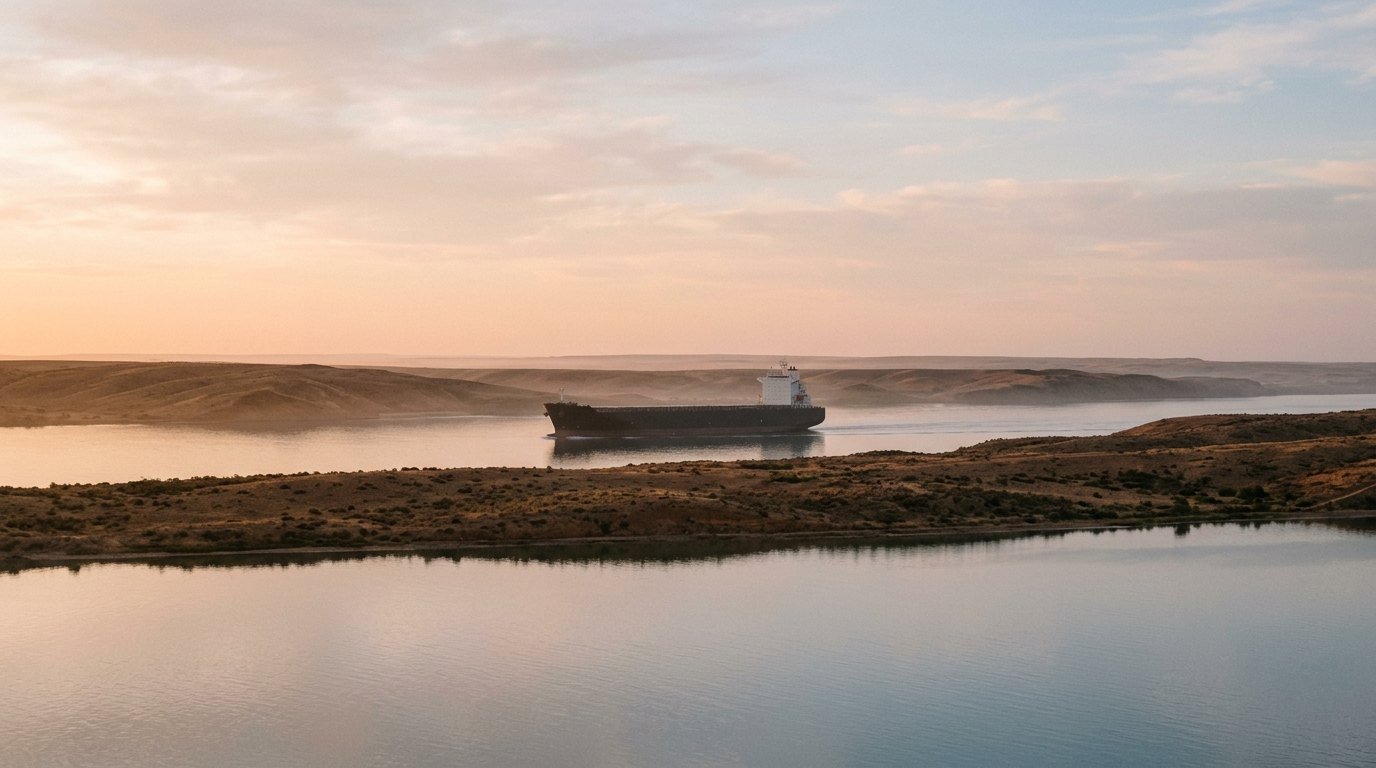
The clearest measure of how little confidence has returned to the Strait of Hormuz is a daily count. Six commodity vessels crossed the waterway on Tuesday, down from nine the day before, and below a ten-day daily average of eleven, according to Reuters reporting carried by US News.
None of those numbers resembles normality. The strait is the route for a substantial share of the world's seaborne crude and liquefied natural gas, and in ordinary conditions it handles many multiples of that traffic. A daily count in single figures is not a slow week; it is a waterway that has been nominally reopened and is still being treated as closed.
A reopening nobody has confirmed
The blockade imposed during the war with Iran has been lifted in principle. What has not followed is the sequence of official assurances that commercial shipping requires before it will move: a clear statement of who controls transit, what escorting arrangements exist, and what happens to a vessel that is challenged mid-passage.
Reuters reported that most shipowners are avoiding the strait precisely because of the absence of that clear signalling. Baird Maritime characterised the position as a trickle rather than a resumption. In shipping, ambiguity is not a neutral state; a master who cannot answer a question about legal transit rights will generally not take the ship in.
Insurance is the binding constraint
The decisive actors here are not the shipowners but their underwriters. Baird Maritime reported that shipping companies and insurance underwriters alike are taking a wait-and-see approach before deeming transit through Hormuz, and the wider ceasefire, sufficiently stable to price.
The mechanism is unglamorous and absolute. A vessel without valid war-risk cover cannot sail against most charter parties, cannot satisfy its financiers, and in many cases cannot lawfully carry the cargo at all. The mere possibility of residual mines in a waterway is enough to stop traffic, because no underwriter will write the risk at a price a trade can bear.
That is also why the transit count moves before any official announcement does. Underwriters reprice on evidence rather than on communiques, and the evidence they need is a run of uneventful passages by other people's ships. A market that has been closed for months therefore reopens slowly and from the bottom, with the operators who can absorb the largest premiums going first and the rest following only once rates fall.
The Iran-Oman proposal and why it stalls
One proposed route out of the impasse has been an arrangement between Iran and Oman that would give Tehran a formal role over ships entering the Persian Gulf through the strait. On paper it offers what the market has been asking for: a single, identifiable authority that can guarantee passage.
Industry sources told Reuters that it is not easily workable. American sanctions restrict what payments can be made to Iranian entities, and insurance policies carry restrictive clauses on exactly those payments. An arrangement that requires a sanctioned counterparty to be paid for safe passage is one most underwriters cannot legally support, whatever its practical merits.
What the slowdown does to cargo owners
The costs of the impasse fall unevenly. Crude and gas exporters in the Gulf face the most direct exposure, but the wider effect is on anything that moves in a container or a bulk carrier through the same water: fertiliser, petrochemical feedstock, aluminium, and the manufactured goods that depend on them.
Buyers respond by paying for certainty rather than for speed. Longer routings, higher freight rates and inventory held closer to the point of use are all rational answers to a waterway that might reopen properly next month or might not. Each of those answers adds cost that eventually reaches an end price.
The costs also compound in a way a single freight quote conceals. A vessel that takes a longer route is unavailable for its next fixture for longer, which tightens the pool of available tonnage everywhere else. That is how a bottleneck in one strait raises rates on routes that never go near it, and it is why shipping economists watch Hormuz even when their own cargo does not pass through it.
The talks that would change the picture
The variable that would move the transit count fastest is diplomatic rather than nautical. CNBC reported on Monday that oil prices struggled for direction as talks between Washington and Tehran stalled and Hormuz shipping slowed, the two facts feeding each other in the way markets usually price geopolitical risk.
Al Jazeera, writing when the strait first reopened in June, framed the central question as whether safe passage could be assured rather than merely announced. Two months later that question is still the one underwriters are asking, and it has still not been answered in a document anyone can underwrite against.
Daily transits against the eleven-ship average
The single most useful indicator in the weeks ahead is the one already being published: the number of commodity vessels transiting each day, measured against the ten-day average. A sustained move above eleven would suggest underwriters have begun to reprice. A drift further below six would suggest the opposite.
Two other markers matter alongside it. The first is whether war-risk premiums for Gulf transits are quoted at all, rather than declined. The second is whether the Iran-Oman proposal is redrafted into something that does not require a sanctioned payment. Until one of those changes, the strait will remain open on paper and shut in practice.
Sources
- Reuters via US News - Hormuz Traffic Slows as Uncertainty Over Waterway Persists
- Baird Maritime - Hormuz traffic slows to a trickle as full reopening remains uncertain
- CNBC - Oil struggles for direction as U.S.-Iran talks stall, Hormuz shipping slows
- Al Jazeera - Strait of Hormuz reopens: But can ships' safety be assured?
You may also like to read
The Multibillion-Dollar Race to Build a Way Around the Strait of Hormuz
Gulf oil producers are advancing seven pipeline projects to move crude around the world's most important chokepoint, with the UAE targeting doubled bypass capacity by mid-2027 and planners aiming to cover most pre-war export volumes by 2028.

Brent nears $86 as US blockade on Iran reignites oil rally and lifts energy giants
Brent crude climbed toward $86 after the US reimposed a naval blockade on Iranian ports, powering Shell, BP and Exxon shares and stoking $100 oil talk.
Strait of Hormuz Disruption Drives Oil Risk and a Global Naval Response
Iranian actions and threats sharply cut shipping through the world's key oil chokepoint, as the US and partners escorted vessels and sought guaranteed passage.

Iberdrola Buys Control of Finland's Biggest Power Grid in EUR5bn Caruna Deal
Spain's Iberdrola agreed to buy an 80% stake in Finnish distributor Caruna for EUR2bn, valuing the grid at about EUR5bn including debt.