Historic Storm Batters Chile, Killing 13 and Cutting Power Widely
A powerful winter storm swept across Chile, killing at least 13 people, cutting power to hundreds of thousands and destroying homes.
Commentary & Analysis ·
Verified key facts
- A severe storm hit Chile from 15 July 2026, affecting 10 of the country's 16 regions.
- Authorities reported at least 13 dead and seven missing, with dozens of homes destroyed.
- Power outages peaked at roughly 658,000 customers, later easing to about 497,000.
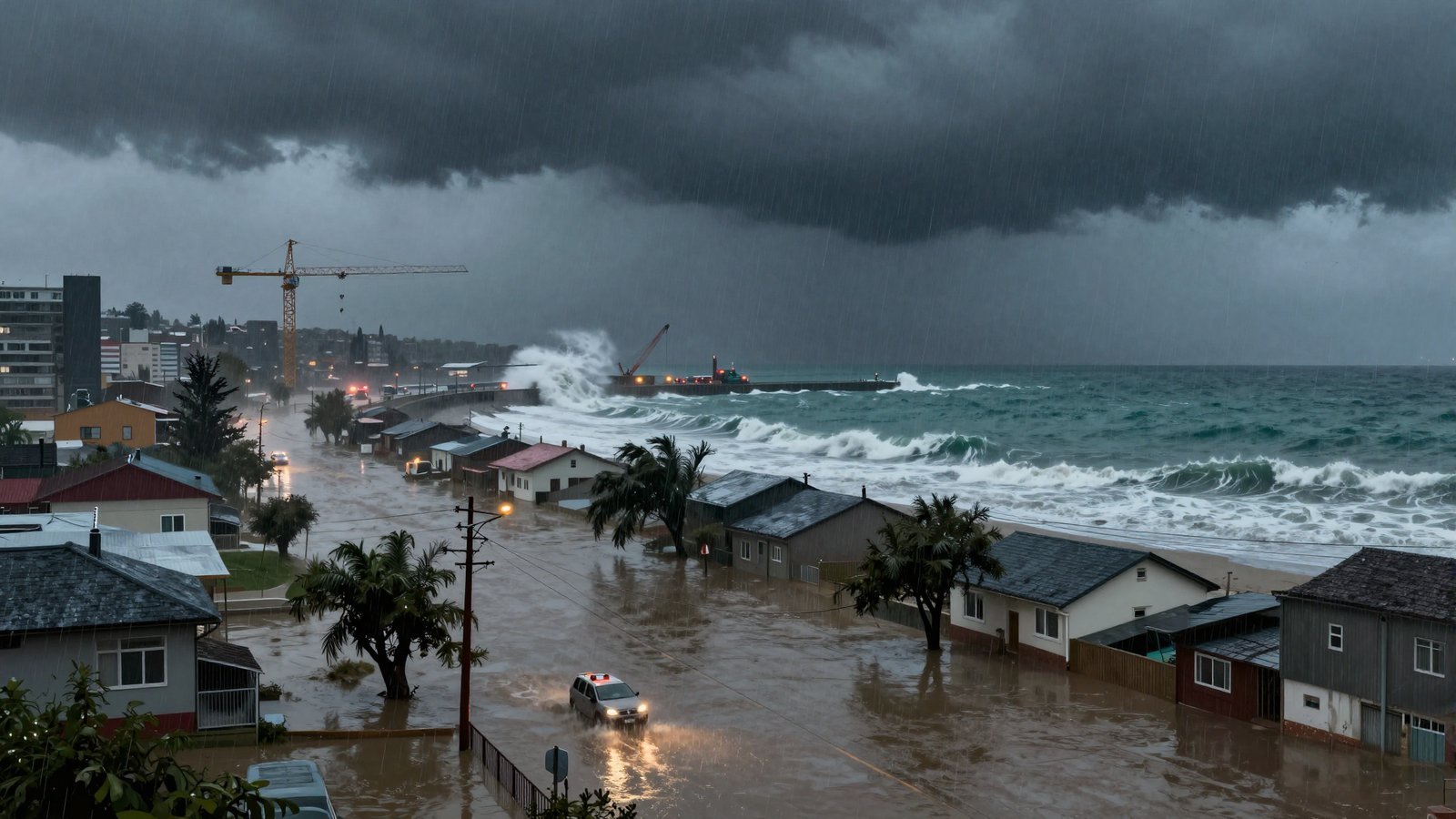
- Wind gusts of up to 160 km/h toppled power lines, trees and a construction crane in Coquimbo.
- The government said it would seek sanctions against electricity distributors.
What happened
A powerful winter storm battered much of Chile from 15 July, bringing flooding, high winds and prolonged power cuts. Authorities said heavy rains left at least 13 people dead and seven missing across the affected regions.
The frontal system struck 10 of Chile's 16 regions, flooding streets, swelling rivers and generating heavy coastal swells that grounded vessels. Reporting cited 2,281 people displaced, 81 homes destroyed and more than 2,700 homes with major damage.
Wind gusts reaching up to 160 kilometres per hour toppled power lines, trees and a large construction crane in the northern city of Coquimbo. The damage cut electricity to large numbers of households as crews struggled to keep pace.
The storm arrived in stages, with reporting noting a further frontal system forecast after the initial blow. Red alerts for flash floods remained active across several regions as rivers continued to rise and saturated ground gave way.
Power crisis and public anger
The storm knocked out power to hundreds of thousands of customers. Reporting said outages peaked at around 658,000 customers before easing to roughly 497,000 by Thursday evening, with the La Araucania region among the worst affected.
Sustained outages fuelled public frustration, especially in areas left without electricity for extended periods. The government said it would seek sanctions against electricity distributors over the failures.
Repeated blackouts have become a politically sensitive issue in Chile following earlier outage crises. Authorities have faced criticism that distributors were slow to restore service and inadequately prepared for extreme weather that experts warn is becoming more common.
- Ten of Chile's 16 regions felt the storm's impact.
- Floodwaters and mudslides cut off some communities.
- Coastal swells grounded vessels and damaged infrastructure.
State of emergency
Authorities declared emergency measures as the storm cut off towns and isolated communities behind flooded roads and mud. Reporting described large numbers of residents left stranded in vulnerable areas as rivers rose.
Emergency crews carried out rescues and precautionary evacuations, particularly in low-lying and landslide-prone zones. Officials urged residents to avoid flooded roads and to heed warnings as further rain was forecast.
Reporting highlighted how the storm exposed deep inequalities, with poorer neighbourhoods and informal housing among the hardest hit. Homes on unstable ground or near swollen watercourses suffered disproportionate damage during the downpours.
The scale of displacement strained shelters and municipal services in affected areas. Local authorities worked with national agencies to house those forced out and to assess which structures were safe to return to once the water fell.
A pattern of extreme weather
The storm was linked to a strong frontal system arriving during Chile's winter, when Pacific weather can bring intense rain to central and southern regions. Reporting connected the severity to broader climate patterns influencing the season.
Chile has faced a run of extreme events in recent years, from wildfires to blackouts and destructive storms. Each episode tests the resilience of infrastructure and the capacity of emergency services to respond quickly.
The country's long, narrow geography spans many climate zones, exposing it to a wide range of hazards. That diversity complicates disaster planning, as regions face very different risks from drought and fire to flooding and coastal storms.
Why it matters
The disaster exposed weaknesses in the electricity network and highlighted stark differences in how communities weathered the storm. Officials framed the outages as unacceptable and pledged accountability for distributors.
For a country prone to earthquakes and other hazards, repeated weather emergencies add to the strain on disaster planning. The storm renewed debate over investment in resilient infrastructure and reliable power.
The economic cost of the storm was expected to be significant, spanning damaged homes, ruined infrastructure and lost productivity. Agricultural areas hit by flooding faced particular losses during a critical period for some crops.
Reliable electricity has become central to daily life, powering heating, communications and essential services. Extended outages during a winter storm therefore carry consequences that reach well beyond inconvenience, especially for older and isolated residents.
Restoring power across the south
Crews worked to restore power and clear roads as the immediate danger eased, while authorities monitored forecasts for further systems. Search efforts continued for those reported missing.
The government's move to pursue sanctions against distributors set up a reckoning over responsibility for the prolonged outages. Regulators were expected to examine how the network failed during peak demand.
Recovery efforts were likely to stretch across weeks as communities repaired homes and cleared debris. Municipal and national authorities faced the task of assessing damage, delivering aid and restoring services to the hardest-hit areas.
The search for those still missing added urgency to the response in the immediate aftermath. Rescue teams pressed on in difficult conditions, while families of the missing waited for news amid the wider recovery effort.
Officials also faced calls to review building standards and land-use rules in flood-prone areas. Repeated disasters have strengthened arguments for steering development away from the most exposed sites and improving drainage in vulnerable neighbourhoods.
Longer term, the storm is likely to sharpen pressure for upgrades to Chile's grid and flood defences. As extreme weather grows more frequent, officials face rising expectations to prepare communities for the next event.
Sources
- Business Recorder - Chile rains leave 13 dead, 7 missing, authorities say (Jul 2026)
- The Jerusalem Post - Heavy rains cause floods, leaving 13 dead in Chile (Jul 2026)
- Bloomberg - Chile bracing for intense storm as floods, power outages loom (15 Jul 2026)
You may also like to read
At Least 50 Killed and 700,000 Displaced by Floods in India's Assam
Monsoon floods along the Brahmaputra have killed at least 50 people and displaced 700,000 in Assam, submerging hundreds of villages.
Fontainebleau Fire Contained as Macron Pledges to Replant France's Historic Forest
Two fires that burned more than 2,000 hectares of the historic forest near Paris are contained; Macron has pledged a national fund to replant the woodland.
Canadian Wildfire Smoke Chokes the US Northeast as 2026 Fire Season Intensifies
Smoke from hundreds of Canadian wildfires has pushed air quality alerts across the US Northeast and Mid-Atlantic, exposing over 115 million people to bad air.

CJNG Leadership Changes and US Prosecutions Reshape Mexico's Cartel Conflict
The death of a top cartel leader and his brother's US guilty plea have altered the CJNG's leadership picture, but analysts caution the violence is unlikely to end.