Canadian Wildfire Smoke Chokes the US Northeast as 2026 Fire Season Intensifies
Smoke from hundreds of Canadian wildfires has pushed air quality alerts across the US Northeast and Mid-Atlantic, exposing over 115 million people to bad air.
Commentary & Analysis ·
Verified key facts
- Smoke from Canadian wildfires pushed air quality alerts across the US Northeast and Mid-Atlantic, with more than 115 million people potentially exposed, CBS News reported.
- The Washington Post reported on 16 July that smoke would worsen in the Northeast and Mid-Atlantic through Friday.
- Canada recorded 3,137 fires and about 1.4 million hectares burned this season, with 796 active fires as of 9 July, per Public Safety Canada's July update.
- Sixty active fires were burning out of control under full response as of the federal update.
- Ottawa announced $1.25 million for six wildfire preparedness projects, including training for up to 38 Indigenous wildland firefighters.
What happened
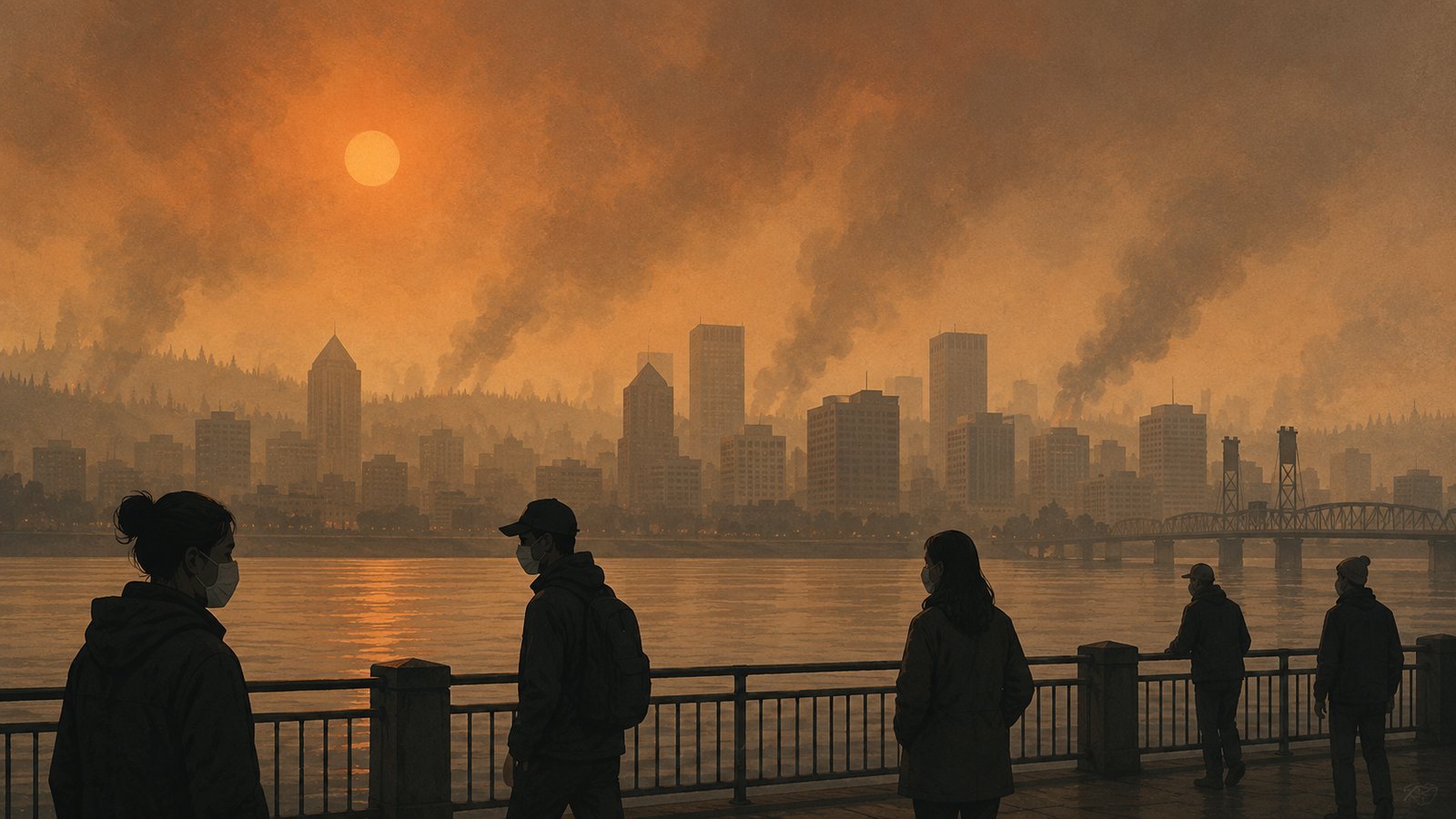
A thick plume of Canadian wildfire smoke spread across the northeastern United States this week, turning summer skies grey and triggering health alerts in major cities. CBS News reported that more than 115 million people faced potentially unhealthy air across the Northeast and Mid-Atlantic. The smoke originates from fires burning in Ontario and neighbouring regions, mixing with plumes from Minnesota.
The Washington Post reported on 16 July that conditions would deteriorate further, with smoke worsening through Friday. Fine particulate readings spiked from upstate New York to the Ohio valley. Local outlets in Cleveland and on Long Island reported hazy skies and elevated pollution readings by Wednesday and Thursday.
In Canada itself, communities near the fire zones face direct threats. Thunder Bay's NetNewsLedger reported dangerous smoke conditions across Northwestern Ontario on 16 July, alongside evacuation alerts for remote communities. CBC's national newscast led with fires threatening lives and choking cities with smoke.
The scale of the 2026 season
Federal figures show a severe, though not record, season underway. Public Safety Canada's July update counted 3,137 fires so far in 2026 and about 1.4 million hectares burned. As of 9 July there were 796 active wildfires nationally, including 60 burning out of control under full response.
The outlook offers little relief. Environment and Climate Change Canada forecasts above-average temperatures across much of the country from July through August, the federal update said. Dry conditions are expected to persist in Manitoba and Northwestern Ontario, the regions feeding much of the current smoke.
- 3,137 fires and roughly 1.4 million hectares burned in Canada so far in 2026.
- 796 active fires as of 9 July, with 60 out of control.
- 115 million+ Americans under potential air quality impacts this week.
Health risks on both sides of the border
Wildfire smoke carries fine particles known as PM2.5, which penetrate deep into the lungs and bloodstream. Health authorities in alert zones advised residents to limit outdoor exertion, close windows and use filtration where available. Children, older adults and people with heart or lung conditions face the highest risk.
RiverheadLOCAL reported high fine-particulate levels across New York on 15 July, prompting state air quality health advisories. Emergency physicians note that smoke events now recur every summer, turning an occasional hazard into a seasonal public health burden. Research since the 2023 smoke crisis links repeated exposure to measurable increases in respiratory admissions.
Ottawa's response
The federal government paired its seasonal update with new preparedness spending. Natural Resources Canada announced a total of $1.25 million for six projects to strengthen wildfire readiness and response capacity. The package includes work with Métis Nations and First Nations on risk mapping, emergency planning and training for up to 38 Indigenous wildland firefighters.
Critics call the sums modest against the scale of the threat. Provincial agencies remain stretched, and Canada again depends on international crews during peak weeks. The 2026 season follows successive years in which burned area far exceeded twentieth-century averages, straining budgets built for a calmer climate.
Economic and political implications
The smoke arrives as Canada's economy already faces headwinds. The Bank of Canada has cut its 2026 growth forecast to 0.7 percent, NetNewsLedger reported, citing trade risks and inflation at 3.2 percent in May. Fire suppression costs, evacuations and lost tourism add another unbudgeted drag on provincial finances.
Cross-border smoke is also becoming a diplomatic irritant. American politicians in affected states have periodically demanded Canadian action on forest management, while scientists counter that warming, not negligence, drives the trend. The recurring plumes give North America a shared, visible stake in each other's climate resilience.
When the front clears the smoke
Forecasters expect the current smoke episode to peak around Friday before a frontal passage improves ventilation, per the Washington Post. The deeper question is August: forecast heat and drought could push Manitoba and Ontario fires into a more destructive phase. Evacuation orders for remote First Nations communities are the earliest indicator to monitor.
Watch also for further federal announcements on firefighting aircraft and Indigenous-led fire management. Each smoke wave that reaches Washington and New York raises the political visibility of a crisis that Canada cannot contain alone.
Sources
- The Washington Post - Wildfire smoke will worsen in the Northeast and Mid-Atlantic through Friday (16 July 2026)
- CBS News - Maps show wildfire smoke forecast, air quality alerts from Canadian and Minnesota fires (July 2026)
- Public Safety Canada - Government of Canada update regarding the 2026 wildfire season, July update (July 2026)
- NetNewsLedger - July 16 news: Ontario wildfires, dangerous smoke, Bank of Canada and global trade risks (16 July 2026)
You may also like to read
Texas Hill Country Faces Flash Flood Emergency a Year After Its Deadliest Deluge
A flash flood emergency covers Kerr County and Uvalde as torrential rain returns to the Texas Hill Country a year after floods that killed more than 130.
Spain Declares National Emergency as Wildfires Spread Near Madrid
Spain declared a national emergency and deployed the army as wildfires near Madrid and Avila forced tens of thousands to flee or shelter.

US Imposes 25% Tariff on Most Brazilian Goods as Section 301 Clock Runs Out
Washington has imposed a 25% Section 301 tariff on most Brazilian goods from 22 July, citing content-moderation orders, IP failures and ethanol barriers.

US Cyclospora Outbreak Nears 7,000 Cases as Officials Eye Salad Greens
A parasite that causes prolonged diarrhoea has spread across 34 US states, with Michigan hardest hit and investigators examining lettuce as a suspect.