Texas Hill Country Faces Flash Flood Emergency a Year After Its Deadliest Deluge
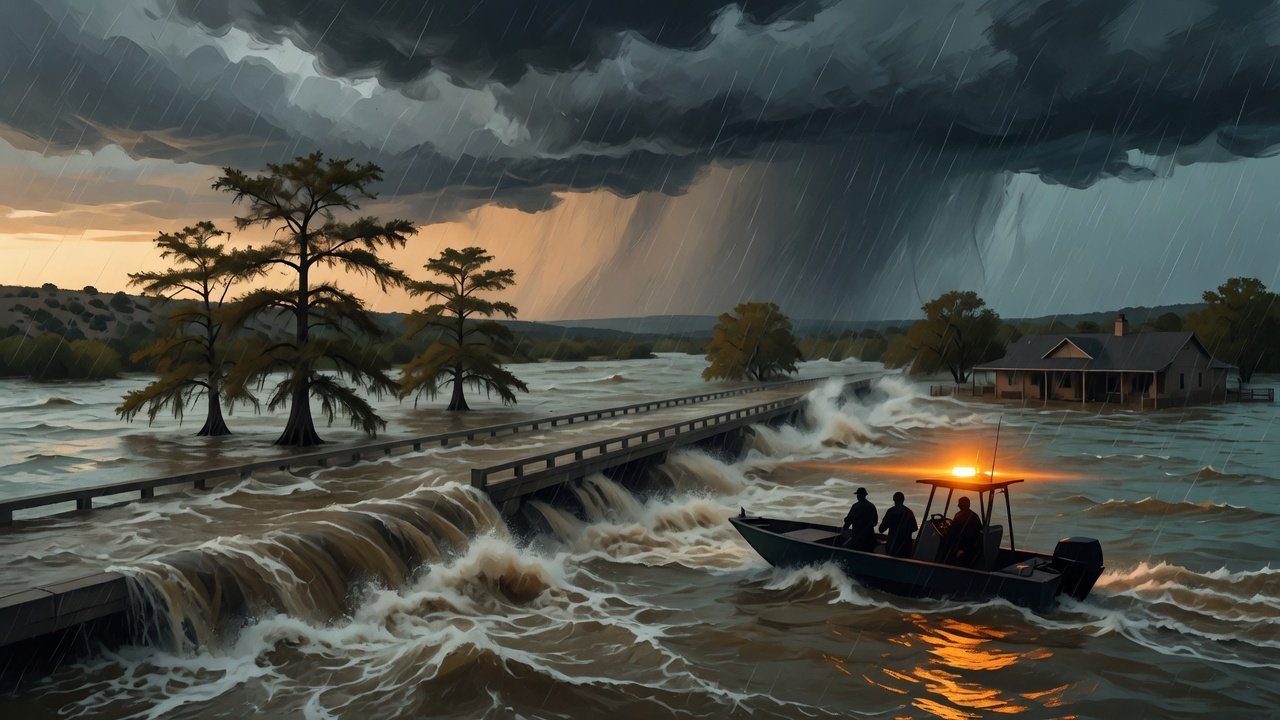
A flash flood emergency covers Kerr County and Uvalde as torrential rain returns to the Texas Hill Country a year after floods that killed more than 130.
Commentary & Analysis ·
Verified key facts
- The National Weather Service issued a flash flood emergency covering more than 45,000 people in Kerr County early on 16 July 2026, CNN reported.
- Governor Greg Abbott said the storm was 'likely going to break records in Texas history', with up to 30 inches of rain possible, per NBC News.
- Storms had already dumped up to a foot of rain, with dozens of high-water rescues; Boerne alone logged 109 calls and 36 water rescues.
- Uvalde and Knippa were placed under flash flood emergencies warning of 'historic and catastrophic' flooding, and a tornado touched down in northwest San Antonio.
- The same region's July 2025 floods killed more than 130 people, including 27 at Camp Mystic on the Guadalupe River.
What happened
Torrential rain returned to the Texas Hill Country this week, triggering the highest level of flood alert in places still grieving last summer's disaster. CNN reported that the National Weather Service issued a flash flood emergency early Thursday for more than 45,000 people in Kerr County. A dangerous flood wave was tracked moving down the Guadalupe River near Center Point, the Texas Tribune reported.
The emergency zone includes the stretch of river where floods on 4 July 2025 killed more than 130 people. Among the dead were 25 girls and two counsellors at Camp Mystic, a summer camp on the Guadalupe's banks. For families along the river, the sirens this week carried an unbearable echo.
Flooding began further south on Tuesday, 14 July. High-water rescues, road closures and shelter openings were reported west of San Antonio after heavy rain swamped the Uvalde area, according to The Watchers and Texas Public Radio. Uvalde and nearby Knippa were placed under flash flood emergencies warning of 'historic and catastrophic' flooding.
A storm forecast to break records
Governor Greg Abbott framed the event in stark terms. The state is 'dealing with and responding to a flood that is likely going to break records in Texas history,' he said, per NBC News. Abbott warned that parts of the state could receive upward of 30 inches of rain before the system clears.
That total would surpass the rainfall surge behind last July's catastrophe. Storms had already dumped up to a foot of rain on rural areas by midweek, NBC News reported. Texas Public Radio quoted forecasters saying the flood risk across a large swath of the state was likely to break records.
The system has produced more than water. The National Weather Service confirmed a tornado touched down Wednesday morning in northwest San Antonio, CNN reported. Travis County and the city of Austin issued disaster declarations on 14 July ahead of the worst rainfall, per Austin's KUT radio.
Rescues across the Hill Country
Emergency crews have worked through successive nights. Authorities in Boerne, northwest of San Antonio, responded to more than 109 calls for service and carried out 36 water rescues, NBC News reported. Dozens of additional high-water rescues were logged across the region as vehicles stalled on flooded crossings.
- 45,000+ people covered by the Kerr County flash flood emergency.
- Up to 30 inches of rain forecast in the worst-hit corridors, per Governor Abbott.
- 36 water rescues in Boerne alone; dozens more across South-Central Texas.
The shadow of July 2025
Last year's flood reshaped how Texas treats river warnings. Kerr County has since added sirens, river gauges and automated alerts, reforms adopted after investigations found warning gaps contributed to the 2025 death toll. This week is the system's first major test, and early evacuations along the Guadalupe suggest lessons were absorbed.
The Hill Country's geography remains unforgiving. Thin soils over limestone shed water into narrow valleys, turning creeks into torrents within minutes. Meteorologists call the region Flash Flood Alley, and warming Gulf air is loading storms there with more moisture than historical norms.
Implications beyond Texas
The back-to-back disasters are fuelling a national argument about weather services and disaster funding. Local officials have leaned heavily on National Weather Service forecasts even as federal agencies face budget and staffing strain. Insurers, already retreating from flood-prone areas, will read a second consecutive July catastrophe as confirmation of shifting risk.
For an international audience, Texas offers a case study in adaptation under pressure. A wealthy state with sophisticated emergency management is still struggling to keep pace with intensifying rainfall extremes. The gap between warning capability and physical exposure is widening in many countries, not just the United States.
The crest moving down the Guadalupe
The immediate concern is the flood crest moving down the Guadalupe and whether levees and low bridges hold. Rain is forecast to continue as the system drifts, keeping saturated ground primed for renewed flash flooding. Casualty reports remained limited as of Thursday morning, but officials cautioned that assessments were incomplete.
Watch for a federal disaster declaration request from Abbott's office and for river gauge records along the Guadalupe and Sabinal. The performance of Kerr County's new siren network will shape flood policy debates in Austin and Washington for months.
Sources
- CNN - Flash flood emergency issued for Camp Mystic disaster area as rivers rise in southern Texas (15-16 July 2026)
- NBC News - Heavy rain drenches South Texas as forecasters warn more storms could bring flash flooding (15 July 2026)
- Texas Tribune - Live updates: Dangerous flood wave moving down Guadalupe River near Center Point (14-16 July 2026)
- Texas Public Radio - Large swath of Texas facing torrential rain, dangerous flood risk likely to 'break records' (15 July 2026)
You may also like to read

Canadian Wildfire Smoke Chokes the US Northeast as 2026 Fire Season Intensifies
Smoke from hundreds of Canadian wildfires has pushed air quality alerts across the US Northeast and Mid-Atlantic, exposing over 115 million people to bad air.

US Imposes 25% Tariff on Most Brazilian Goods as Section 301 Clock Runs Out
Washington has imposed a 25% Section 301 tariff on most Brazilian goods from 22 July, citing content-moderation orders, IP failures and ethanol barriers.

Ecuador's Internal Armed Conflict Strategy Faces New Abuse Allegations and Questions Over US Support
A rights report has challenged the safeguards of Ecuador's militarised anti-gang campaign, alleging abuses and raising questions about the scope of US involvement.

Iraq's Government Faces a Militia Disarmament Test as the Regional War Spills Across Its Territory
Foreign strikes and militia drone attacks pressed Baghdad to assert control, as some Popular Mobilization factions weighed disarmament while others firmly refused.