US and South Korea Cut Ulchi Freedom Shield From Eleven Days to Five After Trump Orders a Reduction
Seoul says it learned of the order only hours before the exercise began, and the counterattack phase has been cancelled outright.
Commentary & Analysis ·
Verified key facts
- Ulchi Freedom Shield began on 17 August and has been cut from eleven days to five, ending on 21 August instead of 27 August, according to the South Korean Joint Chiefs of Staff.
- The second phase of the exercise, covering counterattack operations, has been cancelled and some live-training events converted to simulations, per Al Jazeera and a US Department of Defense official quoted by NBC News.
- Trump ordered the Pentagon to substantially reduce the exercise hours before it began, calling the drills costly and an inappropriate and hostile signal to North Korea, according to NBC News and The Diplomat.
- South Korea's foreign minister, Cho Hyun, said officials in both governments had not known about the order in advance.
- About 28,500 US troops are stationed in South Korea, according to Al Jazeera.
- North Korea denounced the drills on Wednesday, reasserting what it called its right to self-defence.
Five days instead of eleven
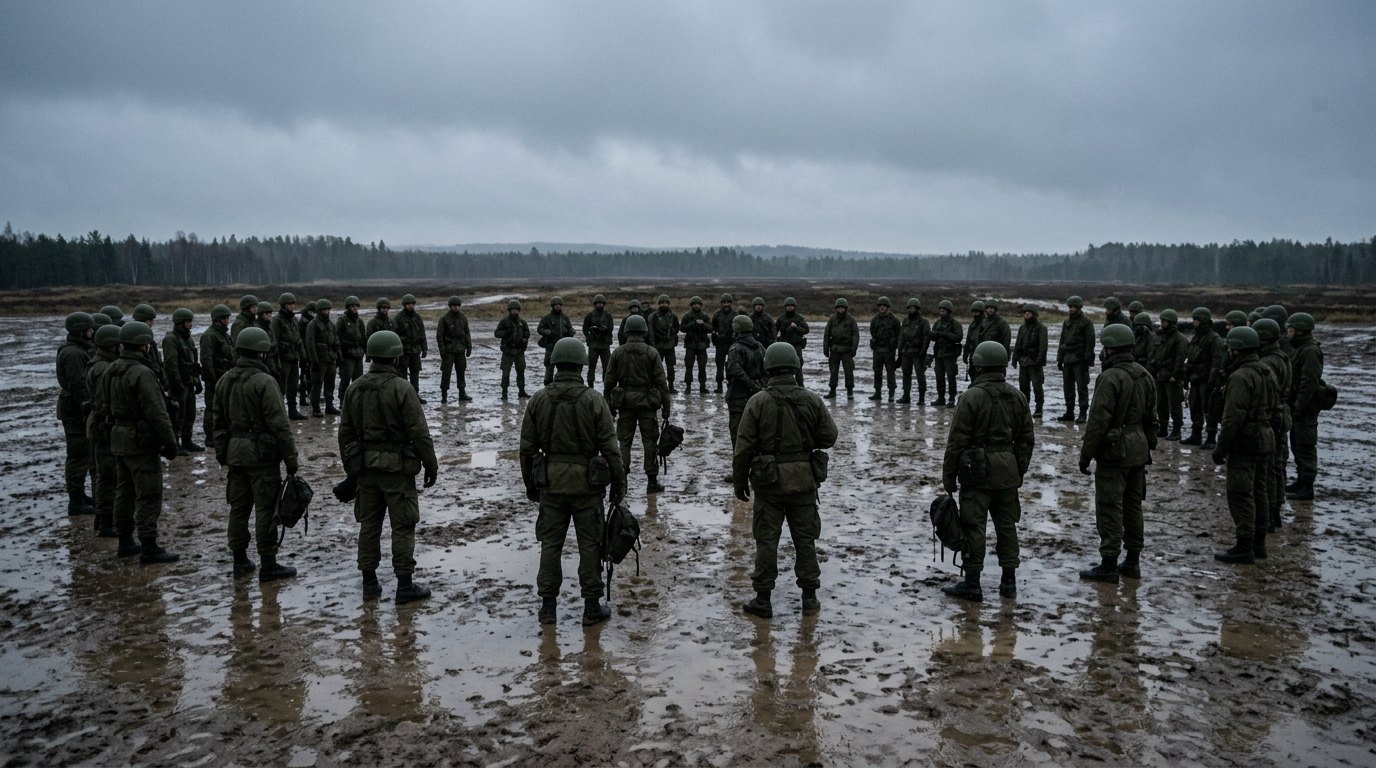
The annual Ulchi Freedom Shield exercise, the largest scheduled military activity the United States and South Korea conduct together, will finish on 21 August rather than 27 August. The South Korean Joint Chiefs of Staff confirmed on Tuesday that the drills, which began on 17 August, had been cut from eleven days to five.
According to the Joint Chiefs, the change to the exercise's duration was agreed at Washington's suggestion. A US Department of Defense official quoted by NBC News confirmed the new end date and said associated live-training events had been reduced, with some cancelled outright and others converted into simulations.
An order that arrived hours before the start
The sequence matters. Hours before the exercise was due to open on 17 August, President Trump ordered the Pentagon to substantially reduce it. The instruction did not arrive through the alliance's normal planning channels, which is why an exercise that had been scheduled, resourced and rehearsed for months was rewritten in the days after it started.
Al Jazeera reported that the adjustment was formalised only once the drills were already under way, and that the South Korean side announced the revised schedule on the second day. Exercises of this scale are built as a sequence, so shortening one already in progress is not the same thing as planning a shorter one.
Fox News, reporting the order, noted that it came against a backdrop of North Korean missile testing rather than a lull in it. That is the awkwardness at the centre of the decision: the reduction was presented as a de-escalatory step, but it was taken in a period when the activity it was meant to answer had not slowed.
What was cut from the exercise
The most consequential removal is the second phase. Ulchi Freedom Shield is conventionally structured in two parts: a defensive phase, in which allied forces absorb and contain an attack, and a counterattack phase, in which they practise retaking ground and restoring the line. Al Jazeera reported that the counterattack phase has been cancelled.
Combined field manoeuvre training has also been scaled back. Simulated command-post work can be compressed with relatively little loss, because the staff decisions being rehearsed are largely software-driven. Live manoeuvre cannot. Moving units, sustaining them and coordinating fires across two national commands is the part of the exercise that cannot be replicated at a screen.
Military.com described the drills as central to the alliance for precisely that reason. Ulchi Freedom Shield is not a demonstration staged for an audience; it is the annual test of whether two forces with different equipment, languages and command cultures can still be interoperable under time pressure. Removing half of it removes the half that is hardest to schedule and hardest to fake.
Seoul says it was not told in advance
South Korea's foreign minister, Cho Hyun, was unusually direct about the process. Our government officials, of course, and the US government officials had not known about it in advance, he said of Trump's order, a formulation that placed officials in Washington alongside those in Seoul as people who found out late.
That is a notable admission from a treaty ally. Roughly 28,500 American troops are stationed in South Korea, and the annual exercise cycle is the principal mechanism by which the two militaries prove they can fight as one force. A unilateral change to it is read on the peninsula as a statement about the alliance, not merely about a training calendar.
Trump's reasons, and the Iran connection
Trump gave two public reasons. He described the drills as costly, and he characterised them as an inappropriate and hostile signal to North Korea, citing what he called his very good relationship with the North Korean leader, Kim Jong Un. NBC News reported that he has also discussed arranging an in-person meeting with Kim, possibly as soon as November.
A third reason was reported rather than stated. According to NBC News and The Diplomat, Trump linked his displeasure to Seoul's refusal to join American action against Iran earlier this year. That connection, if it holds, means an exercise designed around one adversary was shortened as leverage in a dispute about another.
Pyongyang responds, Tokyo watches
North Korea denounced the drills on Wednesday regardless, restating what it calls its right to self-defence against military threats from Washington and Seoul. The reduction did not buy a softer statement, which is the immediate difficulty with framing a training cut as a conciliatory gesture: the gesture has to be reciprocated to count as one.
Japan registered its own concern. The Japanese defence minister, Shinjiro Koizumi, said that cooperation among Japan, the United States and South Korea is critical to the peace and stability of the region, a carefully neutral sentence that nonetheless made clear Tokyo had noticed a change it had not been consulted on.
The 21 August finish and the training that will not be rerun
Ulchi Freedom Shield closes on Friday. What follows is not a gap in the calendar so much as a gap in the record: the counterattack phase is an annual proficiency check, and skipping it means the next opportunity to run it at full scale is a year away, with a partly different set of commanders and units.
The open questions are whether the reduction is treated in Washington as a one-year adjustment or a new baseline, whether the springtime exercise cycle is trimmed in the same way, and whether the meeting with Kim that Trump has floated for November materialises. Seoul's answer to the first of those will shape how much of this week is remembered as a schedule change and how much as a precedent.
Sources
- Al Jazeera - South Korea, US scale back annual military drills after Trump's order
- NBC News - U.S. military drills with South Korea are cut short after surprise Trump order
- UPI - U.S., South Korea scale back joint military drills after Trump order
- The Diplomat - Trump's Exercise Cut Risks Turning South Korea-US Alliance Readiness Into a Bargaining Chip
- Military.com - Drills Cut by Trump Are Central to the US-South Korea Alliance
You may also like to read

Trump Pauses the 50% Canada Tariffs for Three Days as Ottawa and Washington Say a Deal Is Close
The duties on about US$20bn of Canadian goods were suspended less than two hours before they were due to take effect.
Trump Pauses the 50% Canada Tariffs for Three Days as Ottawa and Washington Say a Deal Is Close
The duties on about US$20bn of Canadian goods were suspended less than two hours before they were due to take effect.
Zelenskyy and Trump Talks Fold Sanctions, Weapons and the Iran War Into One Agenda
As Zelenskyy prepared to meet Trump and the US Senate weighed new sanctions, Ukraine diplomacy became entangled with the Iran conflict and pressure on US resources.
China's fourth-ranked leader visits Pyongyang as Beijing works to pull North Korea closer
Wang Huning's talks with Workers' Party official Jo Yong Won follow Xi Jinping's June visit, as Beijing counters Pyongyang's deepening alignment with Russia.