Tokyo and Kanto Shaken by Magnitude 5.9 Quake as 37 Are Injured
A magnitude 5.9 quake under southern Ibaraki injured 37 people and rattled Tokyo, with JMA urging caution for similar shaking this week.
Commentary & Analysis ·
Verified key facts
- Japan Meteorological Agency: The earthquake struck southern Ibaraki Prefecture at about 2am on 23 August, with magnitude 5.9 and a depth of roughly 70km.
- Associated Press: At least 37 people were injured across five prefectures, most of them slightly; one elderly woman in Yokohama suffered a serious hip injury.
- JMA: Seismic intensity lower 5 was recorded in parts of Ibaraki, Saitama and Chiba, while Tokyo’s 23 wards reached intensity 4 and long-period ground-motion category 2.
- Associated Press: The earthquake disrupted some express trains and airport services but produced no tsunami warning and no reported abnormalities at nuclear plants.
- JMA: The agency advised residents to remain alert for earthquakes producing similar strong shaking over roughly the following week.
A deep earthquake jolted the capital in the middle of the night
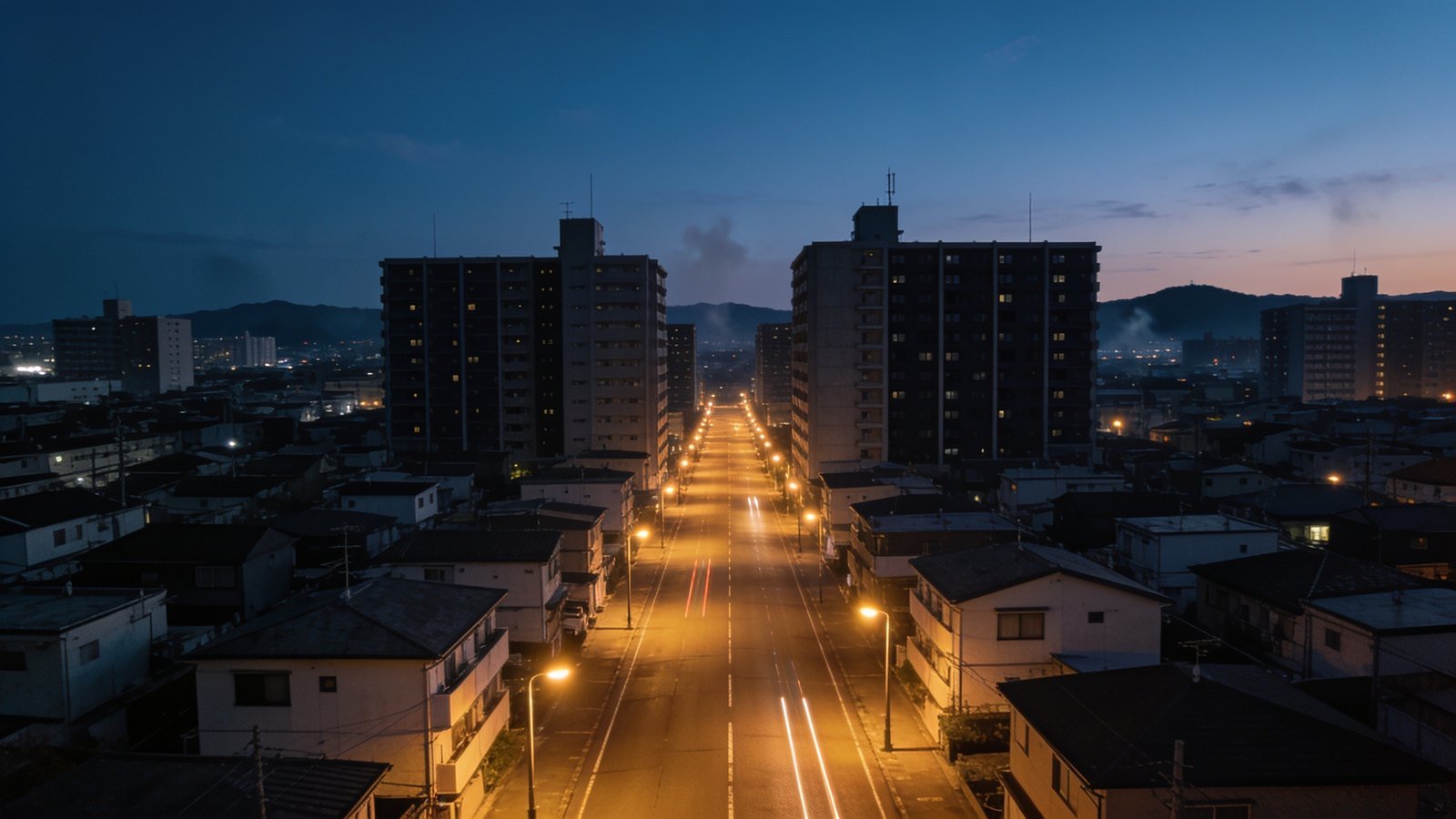
A magnitude 5.9 earthquake beneath southern Ibaraki Prefecture shook a broad sweep of the Kanto region at about 2am on Sunday, waking millions of people from Tokyo to neighbouring prefectures. The Japan Meteorological Agency placed the focus at about 70km below ground, a depth that helps explain why the event was felt across such a large urban area even though the magnitude was moderate by Japanese standards. Associated Press reported at least 37 injuries across five prefectures, with most described as minor and linked to falls or people striking furniture after being startled awake. The event triggered the country’s earthquake early-warning system, interrupted some rail services and sent residents checking shelves, gas lines and family messages in the hours before dawn. No tsunami warning was issued, and utilities and nuclear operators reported no major abnormalities.
Why a 70km-deep quake spread shaking so widely
The geometry matters more than the headline magnitude. A shallow earthquake can concentrate severe shaking close to the fault, while a deeper event can transmit energy over a wider footprint because seismic waves travel through a larger volume of rock before reaching the surface. JMA’s focal-mechanism analysis put this quake around 70km deep, and the National Research Institute for Earth Science and Disaster Resilience independently located it at about 68km. That depth is consistent with the broad pattern of shaking across Kanto. It does not mean depth always makes an earthquake safer: the damage depends on geology, building response, distance and frequency content. In this case, the capital’s dense transport system and high-rise stock meant that even moderate local intensities had practical effects far from the epicentre. The shaking therefore felt disproportionate to a magnitude that, in a remote area, might have drawn far less attention.
The official intensity map is more precise than the first alerts
Japan’s seismic-intensity scale measures observed shaking rather than earthquake size, and the distinction is important. JMA recorded lower 5 at stations in southern Saitama and north-western Chiba, with strong shaking also recorded in Ibaraki. Tokyo’s 23 wards were generally intensity 4, although the city registered long-period ground-motion category 2, a measure relevant to the swaying of taller buildings. The first automated early-warning estimates briefly projected stronger intensities because the system must work before the full rupture is known. JMA’s published warning history shows how those estimates were revised within seconds. That is a feature rather than a failure: an early-warning system trades some precision for speed so trains can slow, lifts can stop at floors and people can protect themselves before the strongest waves arrive. Final observed intensity should therefore be used for post-event reporting.
What JMA’s one-week warning actually tells residents
JMA’s advice to stay alert for similar shaking during the following week is not a prediction that another magnitude 5.9 earthquake will occur. After a significant shock, nearby faults and the same fault zone can produce additional earthquakes as stresses readjust, with the probability generally highest in the first days and declining over time. The practical message is to use the period of elevated uncertainty to secure furniture, keep shoes and torches accessible, charge phones and check household evacuation plans. It is not an instruction to leave Tokyo or treat every small tremor as evidence of a larger event. Japan uses these reminders because injuries after moderate earthquakes often come from falling objects, broken glass and hurried movement rather than structural collapse. The wording is deliberately cautious: preparedness is justified, certainty is not.
Injuries and transport disruption show the urban vulnerability
Associated Press said most of the 37 injuries were minor, including about nine in Saitama and eight in Kanagawa, while one woman in Yokohama sustained a serious hip injury. Express services to Tokyo and Narita Airport were delayed while operators checked track and systems. JMA’s early-warning signal also reached phones across the region, adding to the abrupt awakening. A water pipe broke in Tokyo’s Koto ward and was repaired, another example of how even a non-catastrophic quake can produce localised infrastructure problems. The lesson for a metropolis is not that every moderate earthquake becomes a disaster, but that a city of this scale can accumulate dozens of small incidents at once. Transport inspections, hospital calls, lift checks and utility response all begin simultaneously, testing coordination more than any single structure.
No tsunami and normal nuclear checks narrowed the risk quickly
Two pieces of early information substantially reduced the potential severity. JMA issued no tsunami warning because the earthquake was inland and deep beneath southern Ibaraki rather than a large offshore rupture capable of displacing the seabed. Operators also reported no abnormalities at nuclear facilities in the affected region. Those statements matter because memories of the 2011 Tohoku disaster mean any strong shaking around Tokyo quickly raises questions about cascading hazards. The absence of a tsunami threat allowed emergency agencies to focus on injuries, transport and local infrastructure rather than coastal evacuation. Nuclear checks similarly helped separate this event from a multi-system emergency. That does not make the quake trivial: it makes the response more targeted, and it illustrates why Japanese authorities publish hazard-specific updates so rapidly after shaking begins.
The week after the 23 August Ibaraki earthquake
The most useful measure of the coming days will be whether aftershocks produce renewed intensity 5-class shaking, not whether the region feels smaller tremors. JMA’s catalogue will show how the sequence develops, while transport operators and local governments will continue inspections where necessary. Residents should expect emergency alerts to remain sensitive and should follow JMA rather than viral predictions that assign exact dates or magnitudes to future earthquakes. The 23 August event is also a reminder that Tokyo’s earthquake risk does not come only from the most famous shallow faults. A moderately sized, relatively deep earthquake beneath the surrounding Kanto region can still transmit enough energy to injure people, disrupt trains and set high-rises swaying across the capital. The advisory period is therefore a time for practical readiness, not panic.
Sources
- Japan Meteorological Agency - focal mechanism and hypocentre (www.data.jma.go.jp)
- Japan Meteorological Agency - long-period ground motion observations (www.data.jma.go.jp)
- Japan Meteorological Agency - earthquake early warning history (www.data.jma.go.jp)
- Associated Press - Tokyo region earthquake report (apnews.com)
- NIED Hi-net - southern Ibaraki earthquake data (www.hinet.bosai.go.jp)
- Note: JMA’s final observations place Tokyo’s 23 wards at intensity 4 rather than lower 5; lower 5 was recorded in neighbouring prefectures. Injury totals can still be revised.
You may also like to read
A Magnitude 6.7 Earthquake Shakes Peru's Southern Andes, Rattling Ayacucho, Ica and Arequipa but Sparing Lives
The quake struck 38km northwest of Upahuacho at a depth of 67km, the USGS said, triggering landslides but no immediate reports of deaths or injuries.

Japan moves to treat crypto like stocks, paving the way for Bitcoin ETFs and a 20% tax
Japan's upper house has backed a landmark bill reclassifying digital assets under securities law, cutting crypto taxes from up to 55% to a flat 20%.
Seven Die on the A66 After Wrong-Way Passat Collides With Police Car
Seven people, including two Cleveland Police constables, died after a wrong-way Volkswagen Passat struck a marked police vehicle on the A66.
Iran Says Its Military Doctrine Has Shifted From Defensive to Offensive
Iran’s army says its doctrine has moved towards an offensive posture, a shift that may alter response planning without automatically meaning pre-emption.