Seven Die on the A66 After Wrong-Way Passat Collides With Police Car
Seven people, including two Cleveland Police constables, died after a wrong-way Volkswagen Passat struck a marked police vehicle on the A66.
Commentary & Analysis ·
Verified key facts
- Cleveland Police, as reported by BBC and PA: Seven people died after a Volkswagen Passat travelling the wrong way on the A66 collided with a marked police vehicle at about 3.39am on 22 August.
- Cleveland Police: The two officers killed were PC Matthew Blades, 37, and PC Tom Clough, 38.
- Associated Press: Five people in the Passat also died at the scene; authorities had not publicly named them in the initial statements.
- Independent Office for Police Conduct, as reported by AP and The Independent: The watchdog opened an investigation after a mandatory referral because a police pursuit preceded the collision.
- BBC News: Emergency services mounted a large response and the A66 was closed while collision investigators examined the scene.
A 3.39am collision left no survivors in either vehicle
Seven people were killed in the early hours of Saturday when a Volkswagen Passat travelling the wrong way on the A66 near Middlesbrough collided head-on with a marked Cleveland Police vehicle travelling in the correct direction. Cleveland Police said the crash happened at about 3.39am at South Bank. Two serving constables in the police vehicle and all five people in the Passat were pronounced dead at the scene. The force later named the officers as PC Matthew Blades, 37, and PC Tom Clough, 38. Police had not publicly named the five people in the Passat in their initial announcements, and no details about them have been officially confirmed. Associated Press and BBC News both reported that the crash followed a police pursuit involving the Passat, placing the circumstances before the impact under independent scrutiny.
Blades and Clough are the only victims publicly identified by police
Chief Constable Victoria Fuller described Blades and Clough as brave officers who had been serving and protecting their communities when they died. The naming of police officers often happens quickly because forces can confirm identity through internal records and provide formal family liaison. The same timetable does not apply to members of the public, particularly after a high-energy collision requiring forensic identification and contact with relatives. That is why names, ages and photographs circulating on social media remain unverified and outside the official record. Cleveland Police said the families of those identified were being supported, while Prime Minister Andy Burnham and Home Secretary Shabana Mahmood were among those offering condolences. The public facts at this stage are stark enough: seven people died, two of them serving officers, and five identities remain outside the official public record.
The pursuit is now part of an independent investigation
The Independent Office for Police Conduct opened an investigation after Cleveland Police made a mandatory referral. According to AP and The Independent, officers had identified a suspicious vehicle and a pursuit began before the Passat entered the A66 in the wrong direction. The marked police car involved in the fatal collision was travelling correctly along the dual carriageway. The watchdog’s task is broader than deciding who was at fault at the instant of impact. It will examine decisions, communications, pursuit management, risk assessments, vehicle movements and the sequence of events that placed the vehicles on the same carriageway. That process is standard after the most serious incidents involving police contact and should not be interpreted as a finding of misconduct. The purpose is to establish an evidence-based account independent of the force whose officers died.
Wrong-way dual-carriageway impacts leave almost no margin
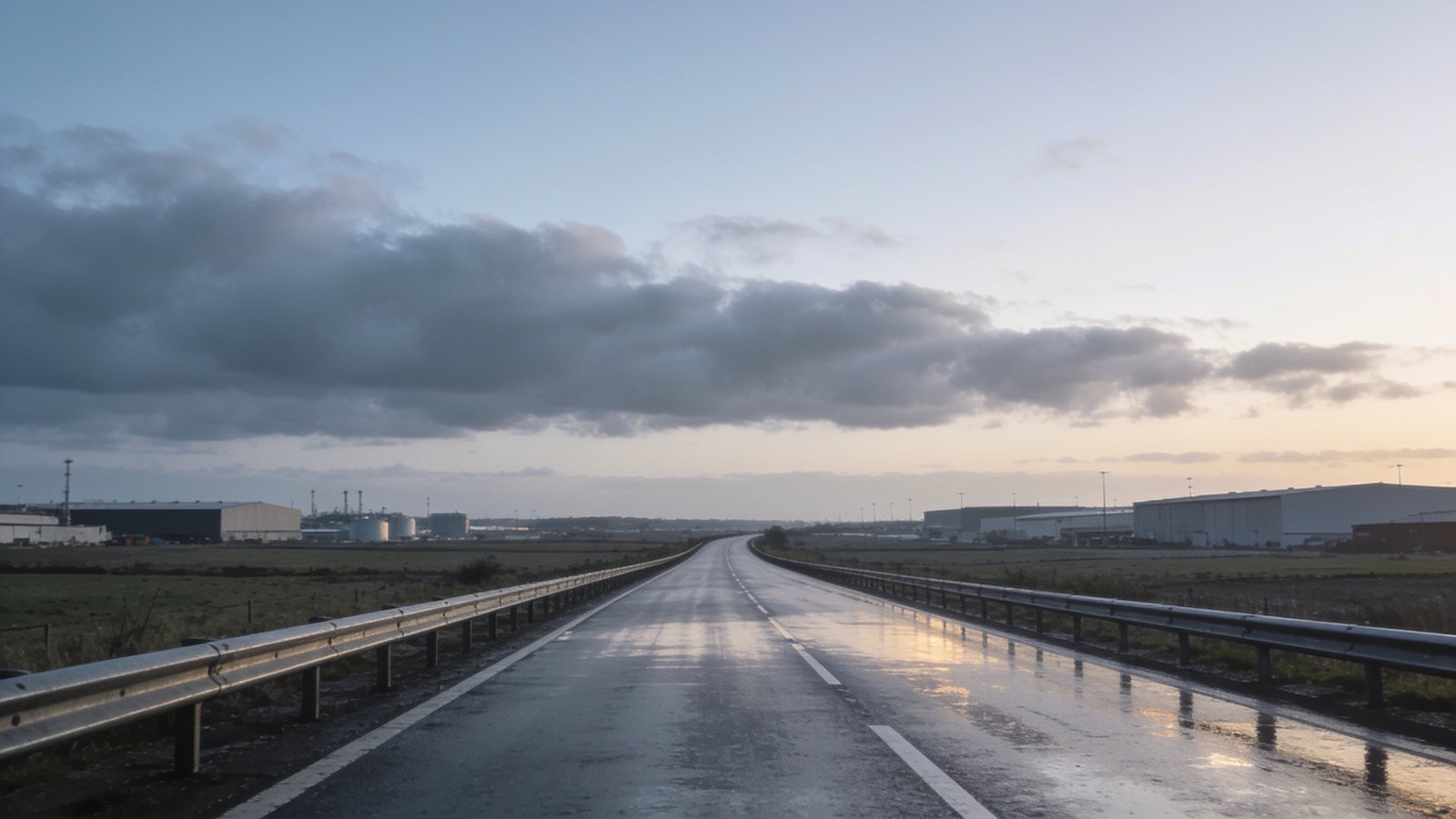
The A66 at South Bank is a divided high-speed road designed on the assumption that traffic streams travel in the same direction on each carriageway. A vehicle entering against that flow converts ordinary closing speeds into something far more destructive. If two vehicles are each moving at motorway-style speeds, the time available for recognition and avoidance collapses. That basic road geometry helps explain why wrong-way collisions are so frequently fatal without requiring speculation about the precise speeds in this case. Investigators will use debris fields, vehicle data, CCTV, road cameras and any available dashcam footage to reconstruct the final seconds. Until those measurements are complete, claims about speed or evasive action would be guesswork. The established fact is the direction conflict itself: the Passat was travelling the wrong way and struck the police vehicle head-on.
The loss has an operational impact on Cleveland Police
Two officer deaths in one incident are not only a personal tragedy but an immediate organisational shock. Colleagues who worked with Blades and Clough must continue policing while grieving, and some may also be witnesses or have been involved in the wider operation. Senior officers have to preserve evidence for the IOPC while supporting staff and bereaved families. Specialist family liaison, occupational health and peer support therefore become part of the response alongside collision investigation. The deaths also affect public confidence because the incident arose during a police pursuit, an area where forces constantly balance the danger posed by a suspect against the risk created by continued pursuit. That balance cannot be judged from a single clip or eyewitness account. The independent investigation exists precisely because the consequences were catastrophic and the decisions deserve full examination.
Road closure and scene work are evidence, not delay
The lengthy closure of the A66 is disruptive to Teesside, but fatal-collision scenes have to be treated as complex evidence sites. Investigators map tyre marks and debris, examine carriageway access points, retrieve camera footage, record vehicle positions and coordinate with forensic teams. Emergency services also need space to work safely on a road built for fast-moving traffic. BBC News reported a substantial emergency response, and images from the scene showed a large police presence across the carriageway. Reopening too early can destroy evidence that later answers essential questions for families and for the watchdog. Local diversions and congestion are therefore secondary to preserving the scene accurately. The public can assist by providing dashcam or phone footage through official police channels rather than posting material online, where it can distress relatives and complicate witness handling.
The IOPC inquiry into the South Bank collision
The next authoritative account will come from the IOPC and Cleveland Police as identification and forensic work progresses. Investigators will need to establish how the pursuit began, how the Passat reached the wrong carriageway, which police vehicles were involved at each stage and what communications were issued before 3.39am. Any eventual findings about police conduct should be based on that full record rather than on the fact that a pursuit occurred. The same restraint applies to the five people who died in the Passat: until police publish information after family notification, their identities and personal details should remain private. For the Cleveland force, the immediate reality is the death of two constables on duty. For the wider public, the key responsibility is to allow the independent investigation to determine how seven lives were lost on one stretch of the A66.
Sources
- Associated Press - A66 collision report (apnews.com)
- BBC News - seven dead after A66 police pursuit crash (www.bbc.co.uk)
- The Independent - what is known about the A66 crash (www.independent.co.uk)
- The Guardian - officers named after A66 collision (www.theguardian.com)
- Independent Office for Police Conduct - news and investigations (www.policeconduct.gov.uk)
- Note: The five people in the Passat have not been identified in initial official public statements. The IOPC investigation is ongoing.
You may also like to read
The Manhunt for Karen Solomon Enters a Third Day After a Veteran Worcester Police Officer Is Found Dead in His Home
Police say the wife of 31-year veteran officer Kurt Solomon is armed and dangerous, as divers, dogs and federal agents scour the area around Coes Pond.
Starmer Bows Out at Final PMQs as Andy Burnham Prepares to Take Over in Downing Street
Keir Starmer told MPs his political journey is over at his final PMQs, as Labour prepares to crown Andy Burnham and reshape the cabinet within days.
Seven Governments Tell Israel to Withdraw the E1 Settlement Tender in the Occupied West Bank
Britain, France, Germany, Italy, the Netherlands, Norway and Canada call the 1,234-home tender unacceptable and warn businesses against bidding.
A Cessna Pilot Is Killed in a Midair Collision With a Pennsylvania State Police Helicopter at Carlisle Airport
A small plane struck a state police Bell 407 during a training flight in central Pennsylvania, killing the plane's pilot and injuring two troopers.