SLB and Hunt Oil Sign Venezuela's First US Production Deals of the Post-Maduro Era
Texas firms signed the first contracts with PDVSA since Maduro's capture, as Caracas courts Houston with fields it says are waiting to be discovered.
Commentary & Analysis ·
Verified key facts
- SLB and Hunt Oil signed contracts with Venezuela's state oil company PDVSA in Houston on Tuesday, Bloomberg reported
- Hunt Oil agreed a hydrocarbons production participation agreement covering two oil fields, while SLB signed a framework agreement for integrated reservoir studies, per Bloomberg
- Venezuela's oil minister Paula Henao told Houston energy leaders the country is 'an entire world waiting to be discovered', according to Yahoo Finance
- More than 500,000 barrels per day of Venezuelan crude are now flowing to US refineries, out of national output of roughly 1.25 million barrels per day, Houston Public Media reported
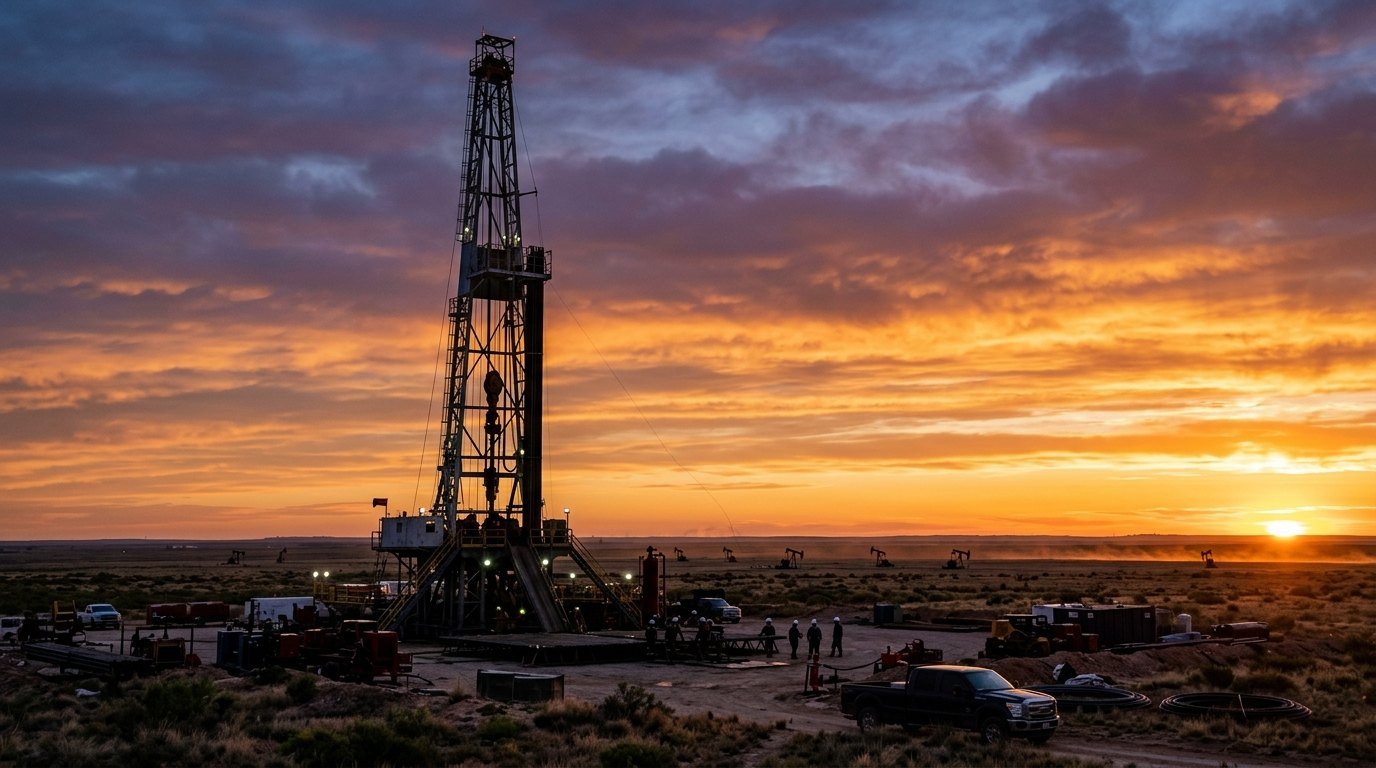
- SLB is preparing to reactivate as many as 15 drilling rigs inside Venezuela, with up to four back in service before the end of 2026, per Bloomberg
Signatures in Houston, consequences in Caracas
Venezuela's state oil company signed its first production agreements with US firms since the fall of Nicolás Maduro on Tuesday, putting pen to paper in Houston with the oilfield services giant SLB and the Dallas-based independent Hunt Oil, Bloomberg reported.
The agreements are modest in scope but heavy in symbolism. Hunt Oil signed a hydrocarbons production participation agreement covering two fields aimed at recovering lost output, while SLB agreed a framework arrangement for integrated reservoir studies — the technical groundwork that precedes serious investment, according to Bloomberg.
For most of the sanctions era, American involvement in Venezuelan oil was confined to Chevron, which operated under a narrow Treasury licence while every other US firm was locked out. Tuesday's signings mark the first genuinely new American entries into the country's upstream in years, and executives across Houston read them as the template for the contracts that will follow.
An oil minister's sales pitch to Texas
The deals were announced by Venezuela's oil minister, Paula Henao, who addressed energy executives at a Houston conference on Tuesday with an unambiguous invitation. The country, she told them, is 'an entire world waiting to be discovered', according to Yahoo Finance.
The choice of venue was itself the message. For a quarter of a century, from Hugo Chávez's expropriations through the sanctions era, Caracas treated Houston's oil establishment as an adversary. A Venezuelan minister courting Texan capital on Texan soil marks the sharpest reversal in hemispheric energy politics in a generation, Houston Public Media noted.
What the deals actually cover
Hunt Oil's participation agreement centres on two mature fields where output has collapsed from years of underinvestment, with the company taking a share of recovered production rather than outright ownership — a structure that lets Caracas insist national resources remain in state hands, per Bloomberg.
SLB's framework agreement is narrower still: reservoir studies that will map what remains recoverable in fields degraded by a decade of neglect. But the company's operational plans reveal the direction of travel. SLB is preparing to reactivate as many as 15 drilling rigs it already holds inside Venezuela, Bloomberg reported, with up to four potentially back in service before the end of 2026.
The barrels already moving north
The contracts formalise a trade that has been rebuilding for months. More than 500,000 barrels per day of Venezuelan crude are now flowing to US refineries, Houston Public Media reported, out of national production of roughly 1.25 million barrels per day.
Gulf Coast refiners prize Venezuela's heavy sour crude, which their units were engineered to process and which became scarce after sanctions rerouted Venezuelan cargoes to China at steep discounts. Restoring the old trade lowers freight costs for both sides and gives Washington a supply lever it has lacked since 2019, Politico reported.
The commercial pull is straightforward. Venezuelan heavy barrels sold to China during the sanctions years went at punishing discounts and on punishing freight; the same crude delivered to the Gulf Coast travels days rather than weeks and lands at refineries built for it. Every barrel rerouted north recovers margin for PDVSA and eases the diet of substitute heavy grades US refiners have scrambled to secure.
The holdouts and the $170bn question
Not every American major is rushing in. ExxonMobil and ConocoPhillips, which won billions in arbitration awards after Chávez seized their assets, are waiting on how the new government treats an estimated $170bn in outstanding debts and claims before committing, according to Tech Times.
How those legacy claims are resolved will shape the recovery's ceiling. Venezuela needs tens of billions of dollars in investment to restore production towards the 3 million barrels per day it pumped at the turn of the century, and the companies with the deepest pockets are precisely those still nursing the largest grievances.
Henao's Houston appearance was, in part, an answer to that hesitancy: a public assurance that the new government intends to honour its obligations and welcome the companies it once expelled. Whether the majors find the assurance bankable will be measured in the deals they do, or decline to do, over the coming year.
A recovery hostage to politics
The commercial opening rests on a political foundation that remains untested. The transition government that followed Maduro's capture earlier this year has moved quickly to normalise energy relations with Washington, but Venezuela's institutions, courts and security services are still being rebuilt, Marketplace reported.
Oilfield veterans of the country counsel patience. Contracts signed in optimistic moments have been rewritten repeatedly across Venezuelan history, and the infrastructure — pipelines, upgraders, export terminals — needs years of repair before paper barrels become real ones.
PDVSA itself is the other constraint. The state company lost a generation of engineers and managers to emigration during the crisis years, and its remaining infrastructure has been cannibalised for parts. Foreign partners can bring capital and technology, but rebuilding the institutional capacity of the company that must operate alongside them is a slower project than any contract signing.
Fifteen idle rigs and a year-end target
The nearest measurable test of the opening is SLB's rig count. If the company returns even four of its fifteen idle rigs to Venezuelan fields by December, as Bloomberg reports it intends, the recovery will have moved from conference-hall rhetoric to steel turning in the ground.
Beyond that lies the harder milestone: whether PDVSA and its new partners can push national output meaningfully above the current 1.25 million barrels per day during 2027. That number, more than any communiqué, will reveal whether Tuesday's signatures in Houston marked a genuine turn or another false dawn in the long saga of Venezuelan oil.
Sources
- Bloomberg - Venezuela Signs Deals With SLB, Hunt in Push to Boost Oil Output
- Houston Public Media - Texas-based oil companies among first to sign contracts with Venezuela
- Yahoo Finance - Venezuela oil minister to U.S. companies: 'It's an entire world waiting to be discovered'
- Politico - US oil producers set to ink production deals with Venezuela
- Marketplace - U.S. oil companies ink production deals with Venezuela
You may also like to read
US and Saudi Arabia sign nuclear pact that could open the door to enrichment
The 30-year agreement could let American firms build an enrichment plant in the kingdom, reviving proliferation fears and setting up a fight in Congress.
Trump Rules Out Extending the Iran Ceasefire as Tehran Signals a Fully Offensive Posture
The temporary truce has expired with no successor deal, and a senior Iranian official says Tehran will now shift to a fully offensive military footing.

EU adopts 21st sanctions package on Russia and freezes oil price cap at $44
The bloc agreed new measures on energy, finance and trade after weeks of talks, with an exemption for Greek shipping of Russian LNG.

EU adopts its 21st sanctions package against Russia, hitting energy, finance and crypto
The bloc froze the oil price cap for a year and tightened measures on LNG, banks and crypto, with parallel restrictions imposed on Belarus.