At the Singapore Food Festival, hawker heritage takes centre stage over fine dining
The Singapore Food Festival returns from 10 to 26 July 2026, putting hawker heritage, night noodle markets and young chefs at the heart of the city.
Commentary & Analysis ·
Verified key facts
- The Singapore Food Festival runs from 10 to 26 July 2026, with city-wide pop-ups and hawker-centre events.
- Programming centres on hawker heritage, revived recipes and story-backed stalls tracing dishes to families and neighbourhoods.
- Highlights include hawker trails, chef collaborations and Night Noodle Markets along the Marina Bay waterfront.
- Entry to the festival village and most pop-ups is free, with a pay-per-dish format from about SGD 5 to 25.
A city that eats together
Singapore is spending mid-July celebrating the food that defines it. The Singapore Food Festival runs from 10 to 26 July 2026. It spreads across hawker centres, waterfronts and neighbourhood pop-ups. The theme is unmistakable this year: hawker heritage comes first.
The festival is less a single venue than a city-wide season. Events roll out over two and a half weeks. Some are ticketed showcases. Many are free to enter, with food sold dish by dish. That mix keeps the celebration open to locals and visitors alike.
The scale is genuinely city-wide. Hawker centres across many neighbourhoods take part. Restaurants and bars run their own tie-in menus. Even the calendar bends around food, with events timed for evenings and weekends. Few cities hand over quite so much of themselves to a single theme.
Timing helps explain the reach. July draws visitors from across the region and beyond. School holidays fill hotels and fuel demand for things to do. A food festival slots neatly into that window. It gives travellers a reason to linger, wander and spend.
Hawker culture in the spotlight
Hawker food sits at the emotional core of the programme. Organisers have leaned into revived recipes and story-backed stalls. Many dishes are traced back to the families and neighbourhoods that shaped them. The aim is to treat street food as living heritage, not nostalgia.
That framing carries official weight. Singapore's hawker culture was inscribed on UNESCO's intangible cultural heritage list in 2020. The festival builds on that recognition. It presents the humble food court as a national institution worth guarding.
The stakes behind the celebration are serious. Hawker stalls run on thin margins and long hours. Rents rise, and younger cooks often look elsewhere. Celebrating the food is partly an effort to keep it alive. A festival cannot fix that alone, but it can shift attention.
Old recipes, new hands
A recurring theme is collaboration across generations. Young local chefs are teaming up with veteran hawkers. Together they remix classics into new plates. The results range from faithful tributes to playful reinventions.
These pairings do more than fill menus. They pass technique from one cook to the next. Rising kitchens gain heritage; older stalls gain fresh attention. It is a quiet answer to a real worry about who will cook these dishes next.
The exchange runs in both directions. Veteran cooks gain apprentices and fresh energy. Young chefs absorb techniques that no cookbook fully captures. Recipes carry memory as much as method. Passing them on keeps a living tradition from freezing into a museum piece.
Night markets by the bay
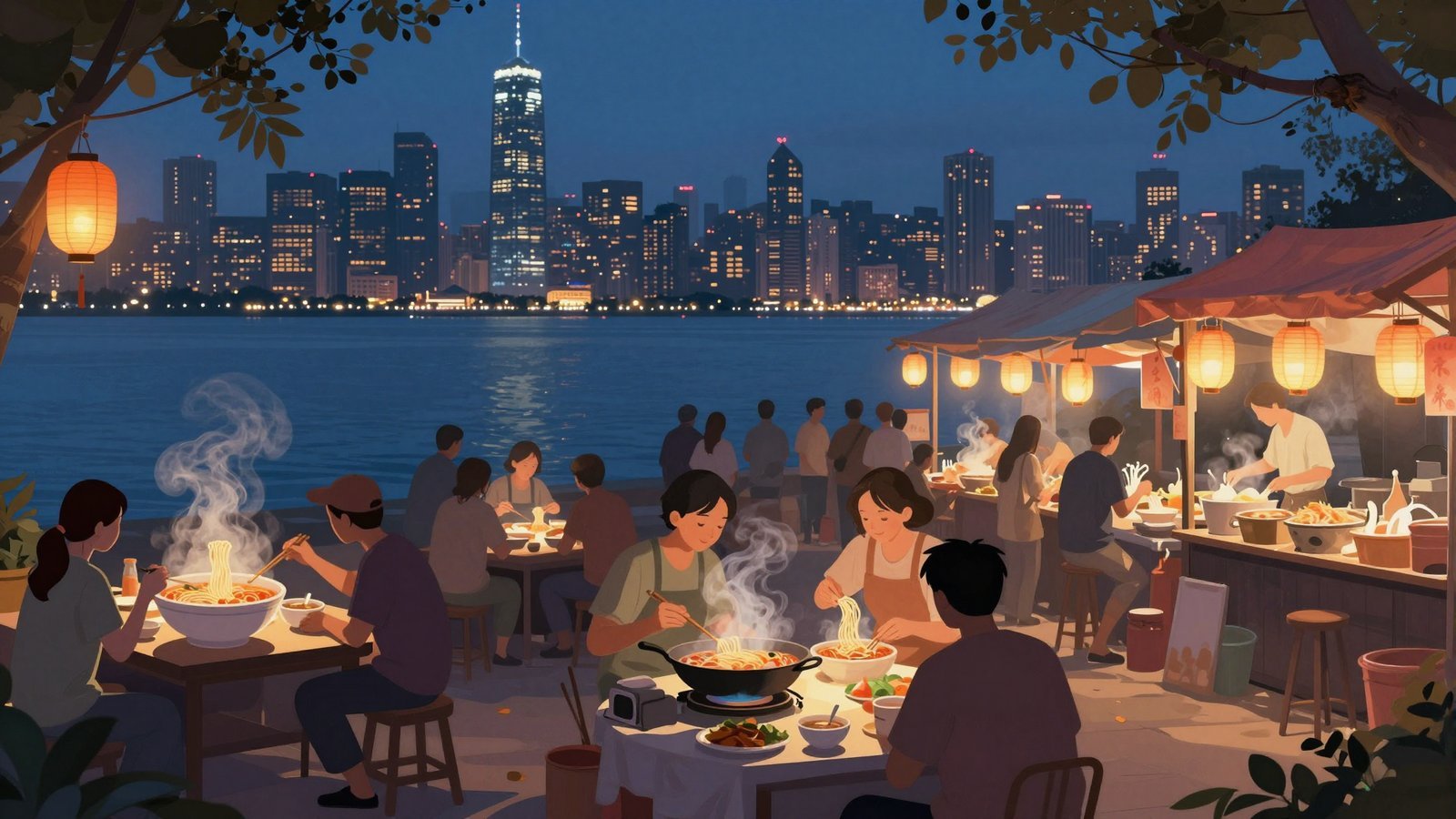
The festival's showpiece is its after-dark side. Night Noodle Markets line the Marina Bay waterfront. Stalls, lights and crowds turn the promenade into an open-air kitchen. It is designed as much for atmosphere as for appetite.
The setting does real work here. A meal eaten beside the water feels different from one under fluorescent lights. Atmosphere turns dinner into an event. Organisers understand that food tourism sells the experience, not only the plate on the table.
Elsewhere, guided trails and themed walks lead visitors through neighbourhoods. Workshops and masterclasses teach traditional preparation. The programme rewards the curious as much as the hungry. Learning how a dish is made becomes part of the experience.
Food-led travel has grown into a major global draw. Visitors increasingly plan trips around what they will eat. Singapore leans into that trend without apology. Its stalls, not its shopping malls, sit at the centre of the pitch this month.
Accessible by design
Cost has been kept deliberately low. Entry to the festival village and most pop-ups is free. Food follows a pay-per-dish model. Prices generally run from about SGD 5 to 25 a plate.
That structure lets visitors graze widely for little outlay. It suits Singapore's tradition of eating in small, frequent bites. It also keeps the festival democratic. Great food here is not gated behind a tasting-menu price.
A heritage worth protecting
The festival arrives against a real anxiety. Singapore's hawker trade faces an ageing workforce. Many celebrated stalls are run by cooks near retirement. When they stop, decades of knowledge can vanish overnight.
Schemes to train new hawkers have had mixed results. The economics remain punishing. Events like this one raise the trade's profile and, organisers hope, its appeal. Whether prestige converts into new recruits is the open question that hangs over the celebration.
Why it travels well
For food-led travellers, the timing is convenient. July is peak season across much of the world. Singapore offers a compact, walkable stage for a culinary trip. The festival gathers the city's strengths into a single stretch of dates.
There is a lesson for other cities in this. Not every destination can build a landmark skyline. Almost every place has a food culture worth sharing. Celebrating it costs less and rings truer than manufactured spectacle. Singapore simply does it with unusual polish.
It also models a wider idea. Cities can build tourism around everyday culture rather than spectacle. Hawker stalls, not just skylines, become the draw. For visitors planning a July escape, the message is simple: come hungry, and eat like a local.
Sources
- Eatbook.sg — Upcoming food events in Singapore for 2026
- Singapore Travel Hub — Singapore Food Festival 2026 dates and location
- Singapore Webzine — Singapore Food Festival standout concepts
You may also like to read
Pamplona Packs Away the Red Scarves: San Fermin 2026 Closes with Two Gorings and Big Crowds
The San Fermin festival ended on 14 July after eight bull runs that left dozens needing treatment, including an 86-year-old Briton, amid heavy participation.

Balochistan Insurgency Escalates With Attacks on Police, Soldiers and Transport Routes
Baloch insurgents killed abducted police and soldiers while Pakistani forces reported killing dozens of militants, in attacks and sweeps across the province.

Deadly Unrest in Pakistan-Administered Kashmir Deepens India-Pakistan Tensions
Protests, a crackdown and phased elections created a new flashpoint in Pakistan-administered Kashmir, as rights groups and authorities gave clashing accounts.

Suicide Bomber Kills at Least 14 at Anti-Militant Rally in Pakistan's Swat Valley
A suicide bomber struck an anti-militant rally in Kabal, killing civilians and police who had gathered to demand protection from a resurgence of militancy.