Mosques Burned and Raids Widen After a Deadly West Bank Clash Near Nablus
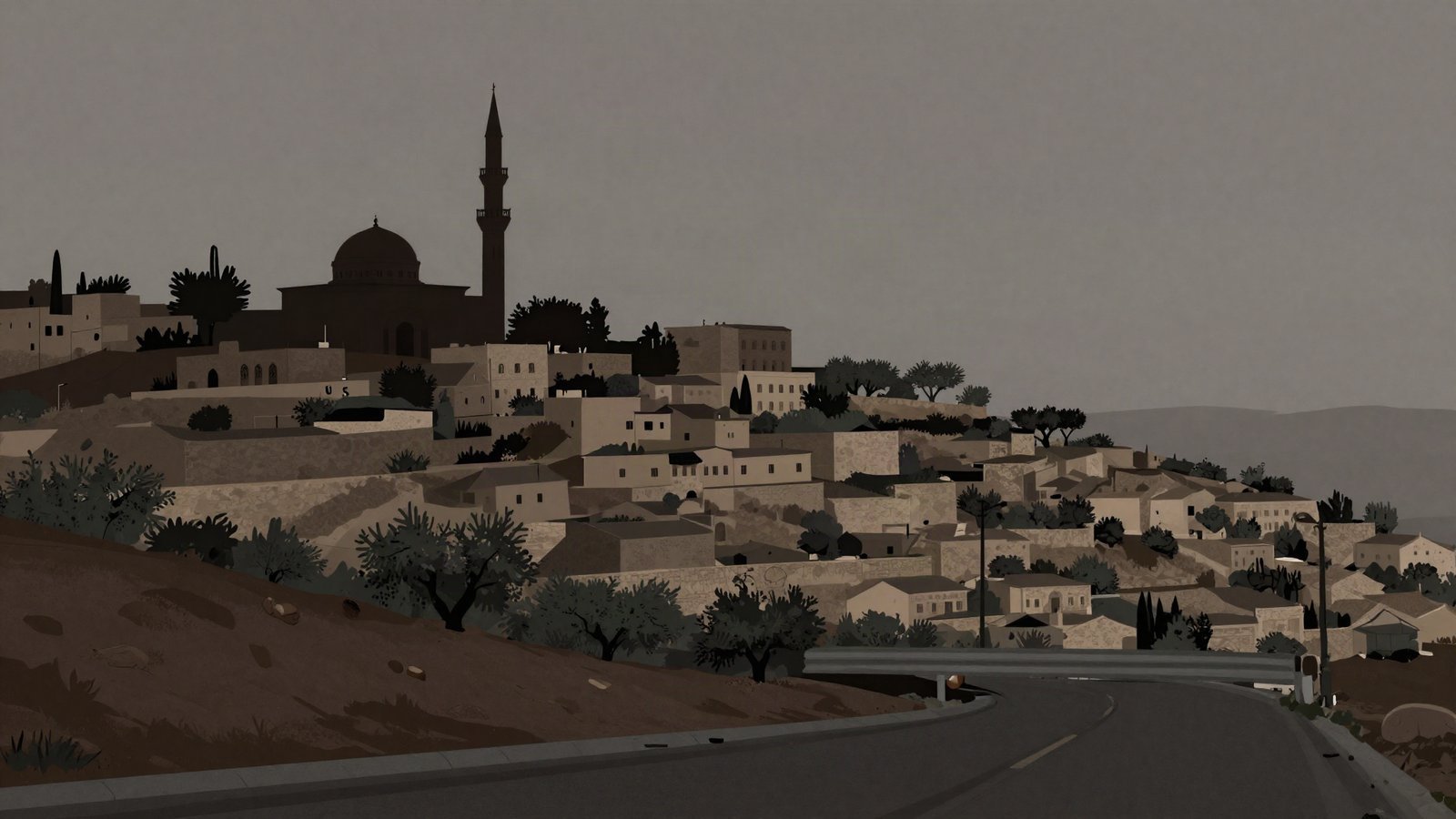
Two mosques were set alight after a clash near Nablus left four Palestinians and two Israeli soldiers dead, as a military operation and mass detentions spread fear.
Commentary & Analysis ·
Verified key facts
- A clash near Nablus left four Palestinians and two Israeli soldiers dead, according to accounts cited in contemporaneous reporting.
- Settlers set fire to two mosques in the aftermath, prompting condemnation from Palestinian officials.
- The Israeli military launched a broad operation, detaining dozens and restricting road movement.
- Palestinian officials accused settlers and the army of collective punishment; Israeli leaders promised strong action.
- Analysts warn retaliatory cycles could widen unrest and complicate Gaza diplomacy.
A single clash sets off a wider crisis
The occupied West Bank saw a sharp escalation this week, drawing together several strands of a long conflict. A clash near Nablus left four Palestinians and two Israeli soldiers dead, according to the accounts summarised in reporting cited by Reuters and others. In the hours that followed, settlers set fire to two mosques, and the Israeli military moved quickly with arrests and movement restrictions.
The sequence combined civilian deaths, damage to religious sites, mass detentions and heightened fear among residents. Each element on its own is familiar to communities across the territory. Taken together within days, they pointed to a phase of violence that local officials and outside observers described as unusually intense.
What the parties are reported to have done
The Israeli military launched a broad operation after the soldiers were killed. According to the documented accounts, forces detained dozens of people and blocked roads across affected areas. Such operations typically involve house searches, checkpoints and the temporary sealing of villages, steps the army frames as necessary to find suspects and deter further attacks.
Separately, settlers were reported to have attacked villages and damaged religious sites, including the two mosques set alight after the Nablus clash. The parties named as central to the events were Israeli settlers, Palestinians, the Israeli military and the Palestinian Authority. The precise circumstances of the original shootout remained the subject of investigation.
Competing accounts from each side
Israeli leaders promised strong action after the soldiers' deaths, casting the military response as a matter of security and deterrence. Officials in that camp have long argued that swift operations are required to prevent repeat attacks and to reassure communities living near flashpoints.
Palestinian officials offered a sharply different reading. They accused settlers and the military of collective punishment, arguing that mass arrests, road closures and arson strike ordinary residents who had no part in the clash. These claims, like the casualty figures, come from parties to the conflict and have not been independently verified in the material available here.
The gap between the two narratives is not new. It shapes how each incident is understood, who is held responsible and what remedies are demanded. It also complicates any external effort to establish an agreed account of events.
The weight on civilians
For residents, the immediate consequences were tangible. According to available reporting, people faced deaths, damaged mosques, blocked roads, arrests and the fear of further raids. Mosques hold particular significance as places of worship and community gathering, so their damage carries meaning beyond the physical loss.
Road closures ripple outward into daily life. They can delay access to work, medical care, schooling and markets. Detentions leave families uncertain about relatives held during sweeps. The cumulative effect is a climate of anxiety that outlasts any single incident.
The West Bank has seen recurring waves of violence over many years, and residents have learned to read the signs of an approaching escalation. Sudden checkpoints, the arrival of additional forces and the closure of a main route often signal a longer operation ahead. This familiarity does little to ease the strain. If anything, it sharpens the sense of dread that accompanies each new incident, because the pattern is well known.
A renewed argument over settlements and law
The events reopened long-running debates in international law and diplomacy over settlements, occupation and annexation. These questions have divided governments for decades and sit at the centre of disputes over the territory's future.
Much of the international community regards settlement expansion in the occupied West Bank as contrary to international law, a position Israel disputes. The latest violence gave that debate fresh urgency, as observers weighed how policy decisions might interact with events on the ground.
The status of the West Bank has been unresolved for decades, and religious sites within it carry deep significance for the communities around them. Attacks on such sites tend to draw wide condemnation because of that meaning. The burning of the two mosques therefore resonated beyond the immediate area, touching on questions of faith, identity and the protection of places of worship during conflict.
Why escalation risks reach beyond the West Bank
Analystsing warned that retaliatory cycles can expand into wider unrest. Each attack risks prompting a response, which in turn invites further reprisal. Once such a loop takes hold, it can be difficult to interrupt without a clear political off-ramp.
There is also a regional dimension. Sustained violence in the West Bank could undermine any diplomacy over Gaza, hardening positions and reducing the space for talks. Instability in one arena tends to raise tensions across the broader landscape of the conflict.
What happens next will depend in part on decisions taken in the coming days by military commanders, settler groups and Palestinian officials, and on whether outside actors press for restraint.
Investigating how the clash began
Several threads bear watching. Investigations into the original shootout may clarify how the clash began and who was involved. The pace of arrests, the handling of detainees and any moves on settlement approvals will signal the direction of official policy.
Accountability for the arson attacks on the two mosques will be a further test. Whether authorities identify and act against those responsible could shape perceptions of impartiality. For now, the territory sits in an uneasy pause, with residents bracing for the possibility of further raids.
Sources
- Reuters via Investing - Mosques burned
- Al Jazeera - Mapping settler violence
- Reuters via GV Wire - Breaking point
You may also like to read
Israel Launches West Bank Crackdown After Deadly Clash Near Nablus
Israel began an aggressive West Bank crackdown after a deadly clash near Nablus, as settler violence spread and hundreds of Palestinians were detained.
Faster Settlement Approvals and Annexation Talk Open a Political Front in the West Bank
Netanyahu said settlement approvals near the clash site would be accelerated as ministers pressed for annexation, opening a political front in the West Bank.
US Launches New Strikes on Iranian Targets After Attack on American Forces
The US struck Iranian targets after saying its forces in Jordan were attacked, as President Trump promised retaliation and Iran vowed to answer the strikes.

Drone Attack at Egypt's Damietta Port Shows the Iran War Reaching New Civilian Infrastructure
Drones struck two gas vessels at Egypt's Damietta port, with no party confirmed responsible, as Cairo condemned the attack and worked to prevent wider escalation.