Faster Settlement Approvals and Annexation Talk Open a Political Front in the West Bank
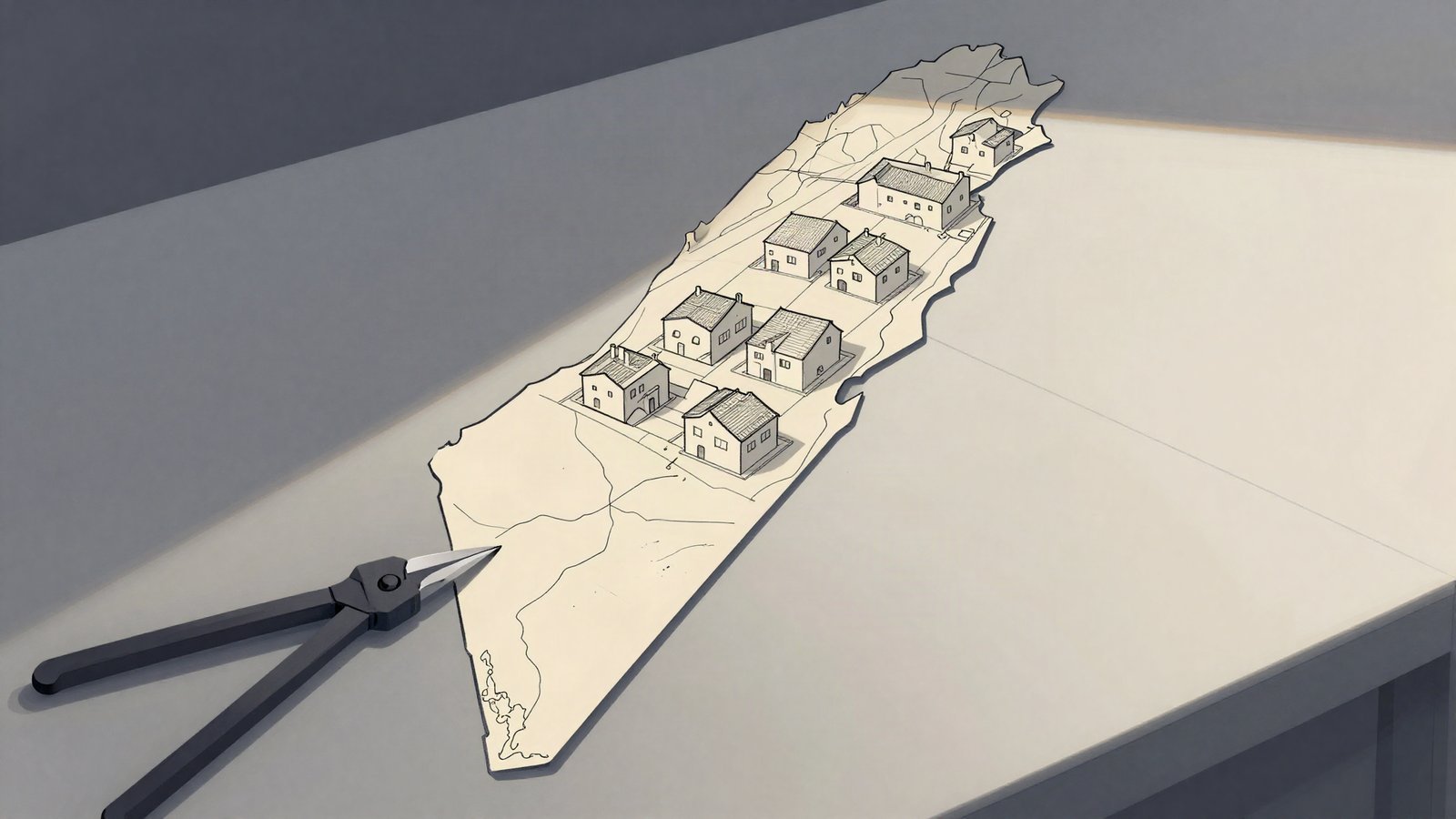
Netanyahu said settlement approvals near the clash site would be accelerated as ministers pressed for annexation, opening a political front in the West Bank.
Commentary & Analysis ·
Verified key facts
- Prime Minister Netanyahu said settlement approvals near the area would be accelerated, according to available reporting.
- Members of his government continued to advocate annexation of West Bank territory.
- Israeli officials framed the steps as security and deterrence; Palestinians said they rewarded settler violence.
- Policy measures reportedly included settlement planning, home-demolition threats and expanded security operations.
- Analysts warn annexation steps could trigger diplomatic sanctions, unrest and legal challenges.
From the ground to the drawing board
The deadly clash in the occupied West Bank did not stay confined to security operations. It quickly acquired a political dimension. According to the published reporting, Israeli political responses included calls for faster settlement construction and stronger territorial control. That shifted part of the response from soldiers on the ground to decisions taken in government offices.
Prime Minister Benjamin Netanyahu said settlement approvals near the affected area would be accelerated. At the same time, members of his government continued to advocate annexation. Together, these signals opened what amounts to a political front alongside the physical one, with potentially longer-lasting consequences.
The policy measures on the table
The reported policy steps went beyond rhetoric. They involved settlement planning, threats of home demolition and expanded security operations. Each carries practical weight for communities in the territory, shaping where people can build, live and move.
Settlement planning determines the allocation of land and the approval of new housing. Home-demolition threats hang over specific structures and neighbourhoods. Expanded security operations extend the reach of checkpoints, patrols and raids. The parties named as central were the Israeli government, settlers, Palestinians and the wider international community.
Two readings of the same decisions
Israeli officials framed the measures as security and deterrence. In that account, faster approvals and firmer territorial control are responses to violence, intended to strengthen the state's position and discourage further attacks.
Palestinians offered the opposite interpretation. They said the steps rewarded settler violence and deepened the occupation. In their view, accelerating construction after a deadly clash sends a signal that violence yields territorial gains. These competing narratives, drawn from parties to the dispute, frame how the same decisions are judged at home and abroad.
The disagreement is not merely about tone. It reflects fundamentally different understandings of who bears responsibility for the cycle of violence and what a just outcome would require.
The timing of the announcement sharpened these reactions. Coming so soon after a deadly clash, the promise of faster approvals was read by critics as a response tied directly to the violence. Supporters countered that firm action was needed precisely because of the attack. This dispute over cause and consequence runs through the entire debate, colouring how each side interprets the government's intentions.
Consequences for daily life
Beyond the political argument, settlement growth carries concrete effects for residents. According to contemporaneous reporting, it can displace communities, restrict movement and increase daily friction. These outcomes accumulate over time, reshaping the geography of the territory.
Displacement uproots families and severs ties to land and livelihood. Movement restrictions lengthen journeys and complicate access to work, services and relatives. Daily friction, meanwhile, raises the risk of confrontations that can escalate without warning. The human cost is measured in disrupted routines as much as in dramatic incidents.
Settlements have grown across the territory over many years, and their expansion has been a persistent point of contention. New construction alters the map, shaping which roads Palestinians can use and where communities can grow. Because these changes are physical and lasting, they are harder to undo than a single security operation. That durability is part of why the announcement drew such sharp reactions from those who oppose it.
A test for international relationships
The settlement question does not stay within the territory's borders. It affects relations with the United States, Europe and Arab states. It also touches the territorial basis of a two-state outcome, long the reference point for international diplomacy in the region.
Much of the international community treats settlement expansion in occupied territory as contrary to international law, a stance Israel rejects. Accelerating approvals therefore risks friction with governments that have invested in a negotiated settlement. For Arab states weighing their own ties with Israel, the moves add a further complication.
Where annexation could lead
The advocacy for annexation raises the stakes considerably. Independent analystsing warned that annexation steps could trigger diplomatic sanctions, unrest and legal challenges. Each of these represents a distinct pathway to greater confrontation.
Diplomatic sanctions could strain partnerships and invite retaliation in international forums. Unrest could follow on the ground, feeding the very cycle the security measures are meant to break. Legal challenges could unfold in courts and international bodies, prolonging disputes for years.
Because annexation would alter the territory's legal status, it would be difficult to reverse. That permanence is part of what makes the debate so charged, and why external actors watch it closely.
For Palestinians, the prospect of annexation touches the core of their national aspirations, since it would formalise control over land they claim for a future state. For Israeli advocates, it represents a long-held goal of securing territory they regard as historically and strategically vital. The gulf between these positions is wide. It helps explain why even the language of annexation, before any formal step, generates such intense debate.
Signals to watch in the weeks ahead
Several indicators will show how far the policy shift extends. Planning approvals and land orders will reveal whether the promised acceleration translates into concrete decisions. Statements from foreign governments will indicate the scale of international reaction.
Any move at the UN Security Council would mark a further escalation of the diplomatic dimension. For now, the combination of settlement acceleration and annexation rhetoric has widened the crisis. It is being fought not only in West Bank villages, but also in planning committees and in the chambers of international diplomacy.
Sources
- Reuters via GV Wire - Netanyahu response
- Al Jazeera - West Bank crackdown
You may also like to read
Mosques Burned and Raids Widen After a Deadly West Bank Clash Near Nablus
Two mosques were set alight after a clash near Nablus left four Palestinians and two Israeli soldiers dead, as a military operation and mass detentions spread fear.
Israel Launches West Bank Crackdown After Deadly Clash Near Nablus
Israel began an aggressive West Bank crackdown after a deadly clash near Nablus, as settler violence spread and hundreds of Palestinians were detained.

US and Saudi Arabia sign nuclear pact that could open the door to enrichment
The 30-year agreement could let American firms build an enrichment plant in the kingdom, reviving proliferation fears and setting up a fight in Congress.

Drone Attack at Egypt's Damietta Port Shows the Iran War Reaching New Civilian Infrastructure
Drones struck two gas vessels at Egypt's Damietta port, with no party confirmed responsible, as Cairo condemned the attack and worked to prevent wider escalation.