San Andreas Fault May Be Slipping Faster Than Assumed, but the New Finding Is Not an Earthquake Countdown
Unpublished San Jose State research suggests the Santa Cruz Mountains San Andreas segment slips faster than estimates, without predicting a specific quake.
Commentary & Analysis ·
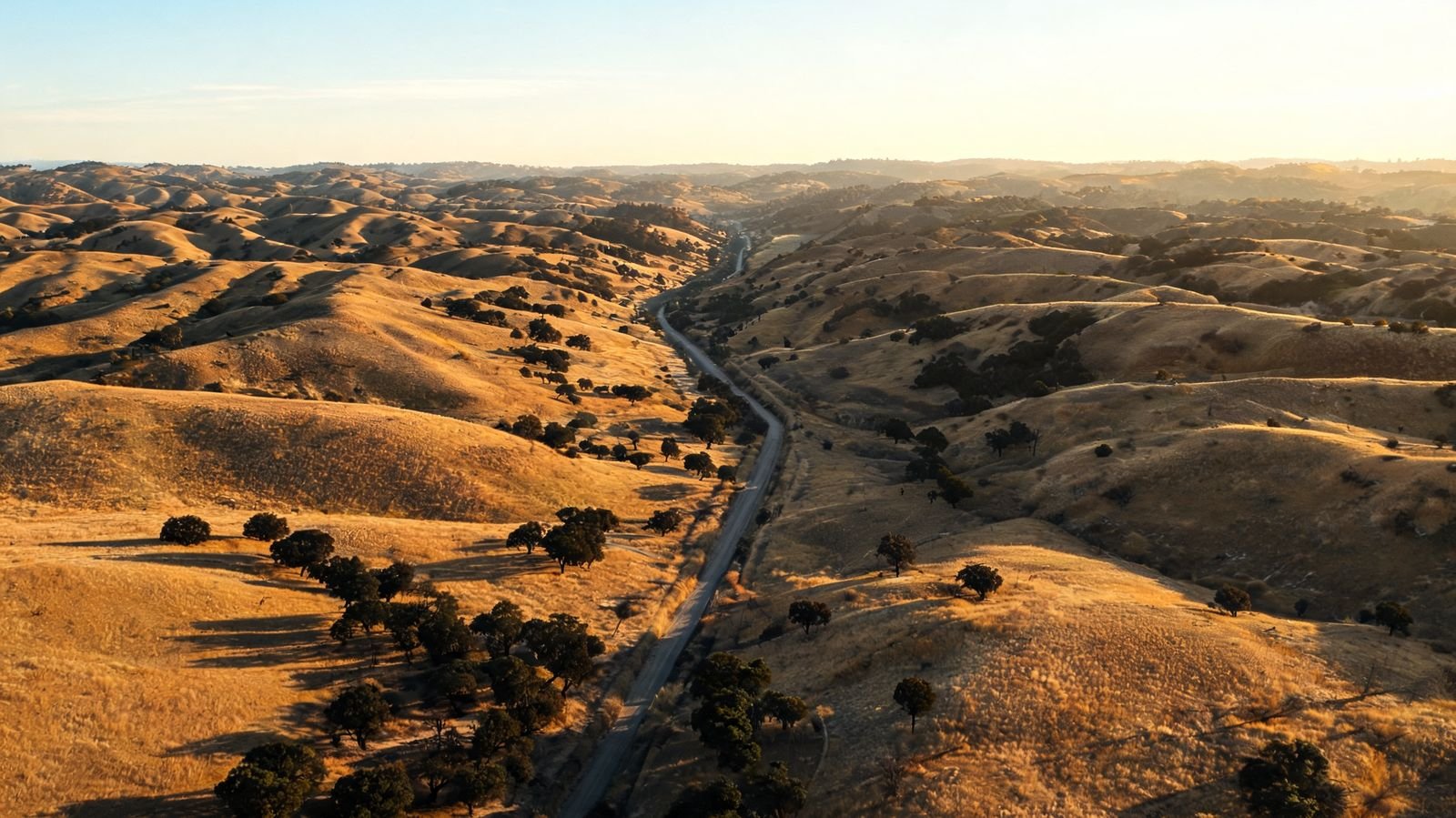
Verified key facts
- San Francisco Chronicle: San Jose State geologist Kim Blisniuk says the Santa Cruz Mountains segment of the northern San Andreas appears to slip faster than earlier estimates.
- ABC7: The measured rate appears similar to the San Andreas farther north rather than slowing sharply through the Santa Cruz Mountains.
- San Francisco Chronicle: The reconstruction uses a roughly 10,000-year geological window, much longer than many earlier local estimates.
- San Francisco Chronicle: The findings have not yet been published or peer-reviewed, and the US Geological Survey declined to comment for that reason.
- Geological conference records: Blisniuk and collaborators have previously reported evidence of roughly 20mm a year slip in the same broader section, providing context for the new long-window work.
The finding concerns a long-term rate, not a fault suddenly speeding up
New work by San Jose State University earthquake geologist Kim Blisniuk suggests that the Santa Cruz Mountains section of the northern San Andreas Fault is slipping faster than some earlier hazard models assumed. The San Francisco Chronicle and ABC7 reported that the rate appears broadly comparable with the San Andreas farther north instead of dropping substantially as the fault approaches the Santa Cruz Mountains. The most important clarification is temporal. Blisniuk is reconstructing movement over roughly 10,000 years. She is not reporting that the fault accelerated in 2026. A slip rate is a long-term estimate of how quickly the two sides of a fault move past one another over many earthquake cycles. A higher estimate changes how scientists think about accumulated motion and recurrence, but it does not create a clock counting down to a specific rupture.
A longer geological window can change the apparent behaviour of a fault
Earlier local studies often relied on evidence spanning around a thousand years or less. Blisniuk’s work extends much further back by analysing displaced landforms in the Santa Cruz Mountains and dating material associated with those offsets. The San Francisco Chronicle described the use of high-resolution drone imagery and beryllium-10 dating, techniques that can reveal how far streams, fans or boulders have been moved by repeated fault motion. A longer record can smooth out short periods that were unusually quiet or active. If ten millennia of evidence show a fairly consistent rate, that suggests the faster motion is a persistent characteristic of the segment rather than a temporary burst. This is why the new research could matter for hazard models even though nothing changed suddenly beneath California this summer.
Faster slip generally means displacement is accumulated more quickly
Faults accommodate motion between tectonic plates. On the San Andreas system, the Pacific and North American plates move horizontally past one another, but that motion is distributed across several faults and may be locked between earthquakes. A higher slip rate means a particular segment is responsible for a larger share of that long-term movement. All else equal, a faster-moving locked fault has to release accumulated displacement more often or in larger events than an equivalent slower one. Blisniuk told the Chronicle that higher-slip faults generally have more frequent earthquakes, while also noting that earthquake magnitude depends on rupture length, depth and other factors. The finding therefore influences probabilities rather than certainties. It says more about the long-term loading budget than about the date of the next event.
The result challenges assumptions about where Bay Area motion is going
One reason the Santa Cruz Mountains rate matters is that geologists have debated how plate motion is partitioned among the San Andreas, Hayward, Calaveras and San Gregorio faults. If the San Andreas slows significantly south of San Francisco, more motion has to be carried elsewhere. Blisniuk’s new interpretation suggests less of that transfer may be occurring than some models assumed. That could change the relative hazard assigned to different parts of the fault network. It does not make the Hayward or Calaveras safe; those faults remain active and dangerous. It changes the bookkeeping of long-term deformation. In a region where infrastructure planning, building codes and insurance models depend on probabilistic hazard maps, even a few millimetres per year in revised slip can influence estimates when projected across centuries.
The work is still unpublished and the USGS is waiting
The San Francisco Chronicle explicitly noted that Blisniuk’s latest findings have not yet been published in a peer-reviewed paper. The US Geological Survey declined to comment on the interpretation for that reason. That is an important scientific boundary, not evidence of disagreement. Peer review allows other specialists to examine dating methods, site selection, uncertainty ranges and whether the measured offsets can be attributed cleanly to the fault. Until that process is complete, the numbers should be treated as provisional research rather than an official revision to USGS hazard maps. The appropriate reporting language is therefore “suggests” or “appears”, not “proves”. The strongest part of the story is that a well-established researcher has extended the observation window and obtained a result that could materially affect hazard understanding if it survives review.
Preparedness does not require a prediction
California earthquake safety is often communicated badly because audiences want a date while scientists work in probabilities. This research does not identify a precursor signal, predict a 2026 rupture or say that stress suddenly increased after the recent magnitude 3.9 Hayward Fault earthquake. It deals with a geological rate averaged across thousands of years. The practical implication is more durable: communities south of the Bay Area should continue to treat the San Andreas as a major source of earthquake risk. Retrofitting, flexible utilities, emergency water, communication plans and strong building codes remain useful whether the next large earthquake occurs soon or decades from now. Better slip-rate estimates improve those preparations by refining the assumptions used in regional hazard calculations.
The peer-reviewed Santa Cruz Mountains slip-rate number to watch
The decisive next step is publication. A peer-reviewed paper should set out the preferred millimetres-per-year rate, confidence intervals, sample ages and how the result compares with earlier Santa Cruz Mountains estimates. Only then can USGS and other hazard modellers assess whether official recurrence probabilities should change. That process may confirm the headline conclusion, narrow it or identify uncertainties that reduce its impact. The public should therefore resist two opposite errors: dismissing the work because it is unpublished, or treating it as a countdown to “the Big One”. The research matters precisely because long-term fault rates are foundational inputs to seismic hazard. Its significance will be measured when the numbers are scrutinised and incorporated into models, not by whether California experiences another earthquake next week.
Sources
- San Francisco Chronicle - San Andreas slip-rate research (www.sfchronicle.com)
- ABC7 News - San Jose State research on San Andreas slip rate (abc7news.com)
- SERC / NAGT - earlier Blisniuk research on Santa Cruz Mountains slip rates (serc.carleton.edu)
- San Jose State University - Department of Geology (www.sjsu.edu)
- US Geological Survey - San Andreas Fault information (www.usgs.gov)
- Note: The latest result is not yet peer-reviewed or published. The USGS declined to comment on the unpublished interpretation, and the finding is not a prediction of a specific earthquake date.
You may also like to read

Brazil Splits a R$2.3 Billion AI Compute Push Across Chinese and US Technology
Brazil is committing about R$2.3bn to AI compute in Rio and Rio Grande do Norte, deliberately sourcing technology across Chinese and US ecosystems.

ChatGPT Can Now Read and Send Apple Messages on Macs - but the Permission Model Is the Real Story
OpenAI’s Apple Messages plugin can read, draft and send Mac messages, putting Full Disk Access and send approvals at the centre of its privacy model.

Nvidia Pays Poolside $6 Billion to License Its Model Factory and Hire 109 Engineers
The third such deal in eight months hands Nvidia a rival's core technology and staff without a purchase, and without the antitrust review a takeover draws.
Anthropic's IPO Prospectus Will Name Public Backlash Against AI as a Risk Factor
Polling now puts opposition to AI data centres at 75 per cent, and the filing is expected to tell investors that hostility could slow the company's growth.