Brazil Splits a R$2.3 Billion AI Compute Push Across Chinese and US Technology
Brazil is committing about R$2.3bn to AI compute in Rio and Rio Grande do Norte, deliberately sourcing technology across Chinese and US ecosystems.
Commentary & Analysis ·
Verified key facts
- Reuters: Brazil announced about R$2.3bn ($444m) of AI-infrastructure investment split across projects involving Chinese and US technology ecosystems.
- Reuters: R$1.3bn is earmarked for a Rio de Janeiro supercomputing project developed with Huawei and iFlytek for general and sector-specific large language models.
- Agência Brasil: A separate federal procurement of just over R$1bn will place a 7,200-petaflop AI supercomputer at the Augusto Severo Science and Technology Park in Macaíba, Rio Grande do Norte.
- UOL: The Rio Grande do Norte machine is expected to use Nvidia chips, while the Rio project centres on cooperation with Huawei and iFlytek.
- Folha de S.Paulo: The broader AI package also includes funding for RISC-V chip research, an algorithmic-transparency centre and a government-controlled Brazilian cloud.
Brazil is buying compute capacity as strategic infrastructure
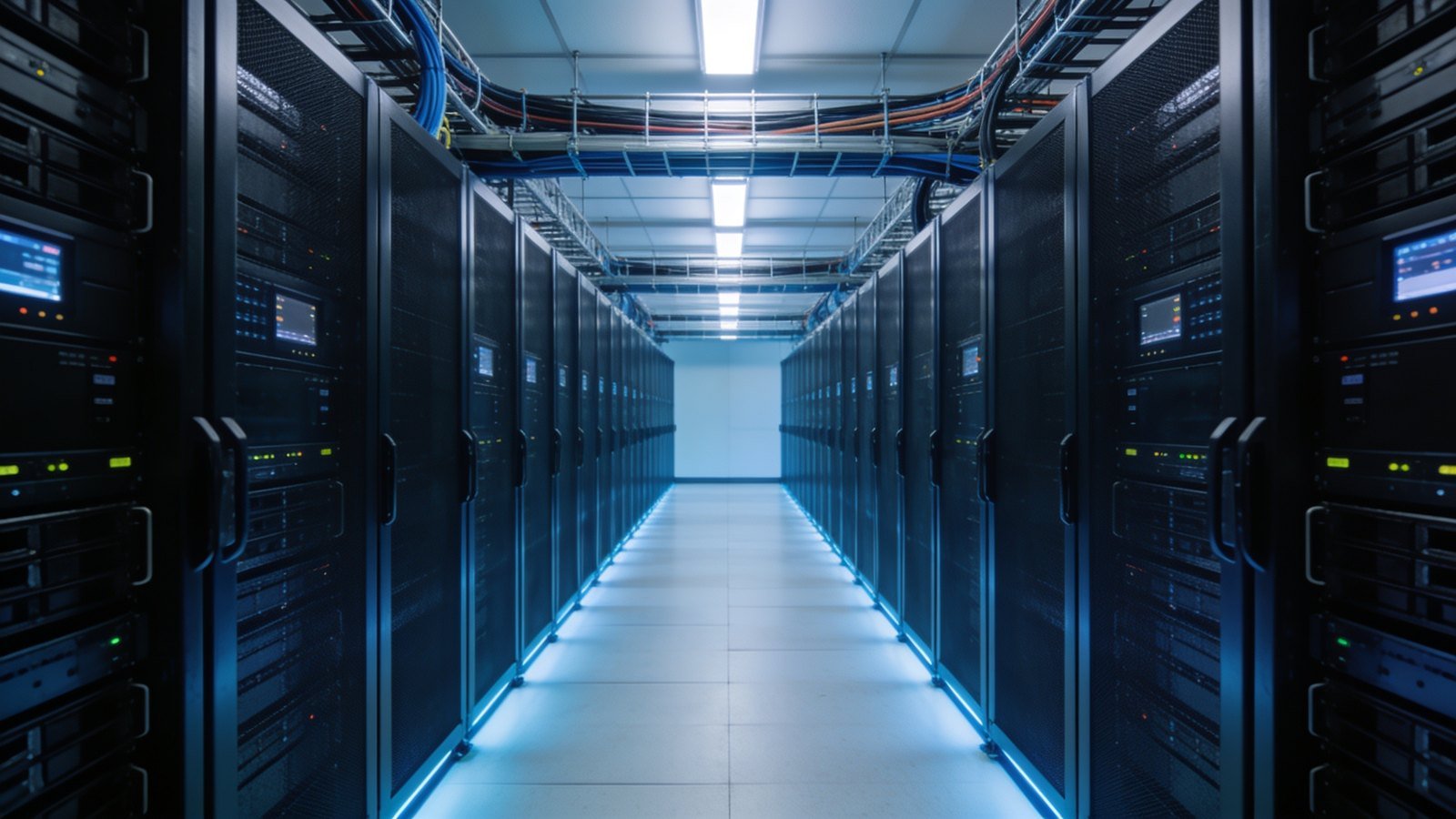
Brazil has put roughly R$2.3 billion, about $444 million, behind two large artificial-intelligence computing projects that it wants to anchor a broader domestic ecosystem. Reuters reported that R$1.3 billion will support a Rio de Janeiro supercomputing initiative developed with China’s Huawei and iFlytek, while around R$1 billion will finance a separate high-performance AI machine in Rio Grande do Norte. The projects are part of a wider federal programme that also includes semiconductor research, training and AI governance. The important feature is not only scale. Brasilia is treating advanced compute in the same strategic category as cloud capacity, energy and communications: infrastructure that determines whether local universities, companies and public agencies can build models themselves or must rent access from foreign platforms. That is the logic of sovereign compute.
The Rio project is designed around Portuguese-language models
Reuters said the Rio infrastructure will be used primarily to develop large language models for general and sector-specific applications. Huawei and iFlytek bring hardware, software and language-technology experience from China, while Brazilian institutions are expected to shape the training priorities. Portuguese is spoken by more than 200 million people but remains less represented in frontier model development than English or Mandarin. A domestic compute base allows researchers to train and fine-tune systems on Brazilian legal, health, agriculture, education and public-service data without sending every workload through foreign commercial clouds. The benefit is not automatic: model quality depends on datasets, talent and governance as much as chips. But control over computing capacity determines which experiments are financially possible and which institutions get access.
Rio Grande do Norte gets the giant machine and a regional-development bet
Agência Brasil says the second project will be installed at the Augusto Severo Science and Technology Park in Macaíba, linked to the Federal University of Rio Grande do Norte. The federal tender is valued at just over R$1 billion and specifies capacity of around 7,200 petaflops, or 7.2 exaflops, for AI workloads. Government officials say they want the system to rank among the world’s ten most powerful machines for AI processing. UOL reported that Nvidia chips are expected to underpin the machine. Placing it in the north-east is also a policy choice: Brasilia wants high-value scientific infrastructure outside the traditional Rio-São Paulo concentration. The economic promise is that compute attracts researchers, suppliers and start-ups around it rather than functioning as an isolated national asset.
The supplier split is geopolitical risk management, not neutrality for its own sake
The projects deliberately touch both Chinese and US technology stacks at a time when Washington and Beijing are competing over semiconductors, cloud infrastructure and AI standards. Reuters framed the programme as an effort to balance relations with both powers. Brazil is not pretending that the systems are technologically independent; Huawei, iFlytek and Nvidia are all foreign suppliers. Instead, the government is avoiding a single-bloc dependency. That can preserve bargaining leverage and access to complementary technologies, but it also creates compliance and interoperability challenges. US export controls on advanced chips can change, while Chinese partnerships may attract security scrutiny. The sovereign-compute strategy therefore depends on diversification being real: if one supplier can still veto upgrades or replacement parts, ownership of the data centre does not equal technological autonomy.
Sovereignty also requires chips, cloud and engineers
Folha de S.Paulo reported that the wider AI package includes R$125 million for open-architecture RISC-V semiconductor work and R$50 million for a national centre on algorithmic transparency and trustworthy AI, alongside plans for a government-controlled “Brazilian cloud”. Those elements matter because a supercomputer is only one layer. Countries that want durable AI capacity need engineers who can optimise models, networking that moves data efficiently, secure cloud environments and at least some domestic ability to design or adapt hardware. Brazil is not about to replicate the full semiconductor supply chain, but RISC-V research can reduce dependence at the design level and train specialists. The broader programme therefore looks less like a single procurement and more like an attempt to build an ecosystem around compute.
Public-sector demand could determine whether the machines stay useful
National supercomputers can become underused prestige assets if researchers cannot secure time on them or if funding for software and staff fades after purchase. Brazil’s plan tries to avoid that by identifying public applications from the start. Portuguese-language foundation models could support health records, environmental monitoring, tax administration and public-service chat systems, while sector models may serve agriculture, mining and industry. The risk is that government becomes both financier and dominant customer without transparent evaluation. Access rules, security standards and pricing for universities and companies will matter. So will energy use: thousands of high-end accelerators require substantial power and cooling. Sovereign compute is valuable only when the machines are continuously used for nationally relevant work rather than treated as rankings trophies.
The tenders that will define Brazil’s multi-bloc AI strategy
The next decisive details are contractual. The Rio Grande do Norte procurement will show which US-origin chips and integrators actually win, what export licences are required and how maintenance is guaranteed. The Rio project will reveal how responsibilities are divided between Huawei, iFlytek and Brazilian institutions, including where data are stored and who controls model weights. Those choices will determine whether Brazil has built a genuine dual-supplier strategy or simply two large foreign dependencies under public ownership. The R$2.3 billion commitment is significant because it buys enough capacity to matter regionally, but the long-term test is governance. Sovereign compute is not measured by the flag outside the data centre; it is measured by who can use the machine, who can upgrade it and who can keep it running when geopolitics changes.
Sources
- Reuters via Investing.com - Brazil AI supercomputer push (www.investing.com)
- Agência Brasil - Rio Grande do Norte AI supercomputer (agenciabrasil.ebc.com.br)
- UOL - AI computer and Chinese partnership (www.uol.com.br)
- Folha de S.Paulo - broader AI package (www1.folha.uol.com.br)
- Reuters via Al Jazeera - Brazil balances US and Chinese tech (www.aljazeera.com)
- Note: The R$2.3bn figure refers to the two core compute projects; Folha reports a broader R$2.5bn package once chip research, governance and other measures are included.
You may also like to read

Anthropic Signs a $9.1 Billion Compute Deal, Forms a Data-Centre Venture and Courts IPO Investors
The Claude maker locked in 191 megawatts of Texas computing capacity for 20 years, launched the Theseus infrastructure venture with Macquarie and GIC, and is meeting investors ahead of a possible autumn listing.
Nvidia Pays Poolside $6 Billion to License Its Model Factory and Hire 109 Engineers
The third such deal in eight months hands Nvidia a rival's core technology and staff without a purchase, and without the antitrust review a takeover draws.

Marvell Hands Google an Option on $12.2 Billion of Its Own Shares in an Expanded Custom-Chip Deal
The warrant vests against purchasing milestones running to fiscal 2033 and could be worth around $120 billion in chip orders to Marvell.

ChatGPT Can Now Read and Send Apple Messages on Macs - but the Permission Model Is the Real Story
OpenAI’s Apple Messages plugin can read, draft and send Mac messages, putting Full Disk Access and send approvals at the centre of its privacy model.