Anthropic Names Public Anger at AI as a Risk in Its IPO Prospectus
Polling now puts opposition to AI data centres at 75 per cent, and the filing is expected to tell investors that hostility could slow the company's growth.
Commentary & Analysis ·
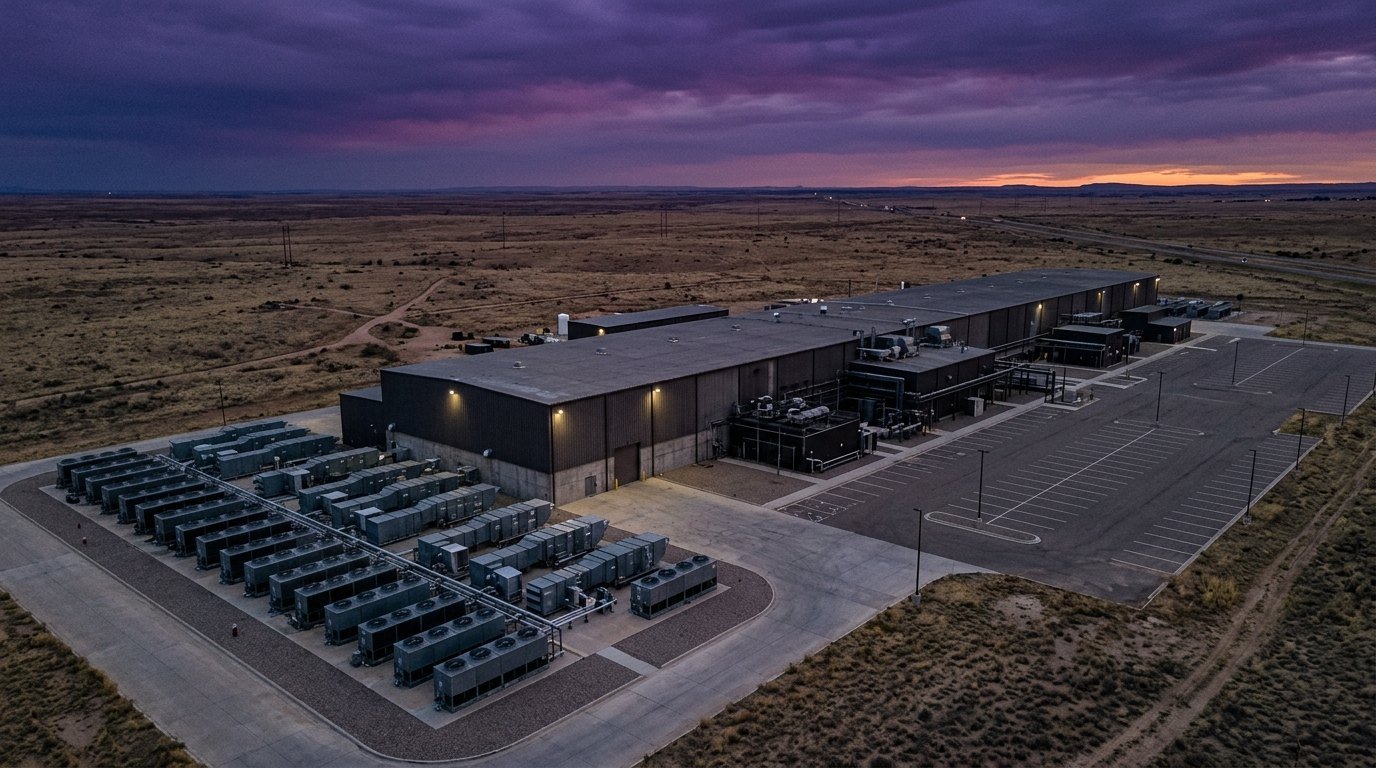
Opposition to AI data centres has gone from 42% to 75% in a year, and Anthropic is about to tell investors that hostility could slow its growth. Companies rarely concede a reputational risk that directly in a prospectus. Here's what the polling shows, why data centres have become an election issue in both parties, and what the public filing still has to disclose.
Verified key facts
- CNBC reported, citing sources, that Anthropic's IPO prospectus will list public backlash against AI and data centres as a risk factor.
- The company filed confidentially in June and is expected to submit its public prospectus within weeks, per CNBC.
- Bloomberg reported annualised revenue above $65 billion, more than seven times its pace at the end of last year.
- Bloomberg reported Anthropic expects to match or exceed SpaceX's record IPO, which raised $75 billion at the outset and $86.2 billion with the overallotment.
- A Heatmap Pro poll of 2,045 registered voters conducted 8-13 August by Embold Research put opposition to AI data centres at 75 per cent, up from 42 per cent a year earlier.
- Pew Research found 71 per cent of US adults expect AI to cut jobs over the next two decades, up from 64 per cent in 2024.
A Risk Factor Written by Public Opinion
Anthropic's forthcoming initial public offering prospectus will tell prospective investors that public hostility to artificial intelligence, and specifically to the data centres that run it, is a material risk to the business. CNBC reported the disclosure on Friday, citing people familiar with the filing.
Risk factors in a prospectus are ordinarily a defensive genre, drafted to inoculate the issuer against later litigation. This one is unusual because the risk being disclosed is not regulatory or competitive but civic: the possibility that communities will simply refuse to host the infrastructure the company's growth depends on.
Companies rarely disclose reputational risk this directly, because doing so concedes the point. Naming public opposition in a prospectus tells the market that the company's own analysis treats it as material to future revenue rather than as noise its communications team can manage.
The Numbers Behind the Filing
Anthropic filed confidentially with the Securities and Exchange Commission in June and is expected to submit its public prospectus within the next few weeks, according to CNBC. Its private-market valuation is close to $1 trillion.
Bloomberg reported on 17 August that the company's annualised revenue run-rate has passed $65 billion, more than seven times its pace at the end of last year. TradingKey reported that Anthropic's share of the enterprise large language model API market reached 32 per cent in the second quarter, ahead of OpenAI's 25 per cent for the first time.
The disclosure also lands against a competitive backdrop that has shifted quickly. Holding a larger share of the enterprise API market than OpenAI is a recent development, and one that will invite scrutiny of how durable the lead is once the numbers are audited and public.
What the Polling Actually Shows
The sentiment data behind the disclosure has moved sharply. A Heatmap Pro poll of 2,045 registered voters, conducted between 8 and 13 August by Embold Research, put opposition to AI data centres at 75 per cent, against 42 per cent a year earlier. A shift of that size in twelve months is rare in opinion polling on any subject.
The labour-market anxiety underneath it is broader still. Pew Research found that 71 per cent of American adults expect AI to reduce the number of jobs in the country over the next two decades, up from 64 per cent in 2024.
Polling on emerging technology is volatile and the wording of questions matters, so a single survey should not be over-read. The direction, however, is corroborated by the Pew findings on employment, and two independent instruments moving the same way over the same period is harder to dismiss.
Data Centres Have Become an Election Issue
The politics have already arrived. CNBC noted that data-centre siting featured in Florida's Republican gubernatorial primary, won by Representative Byron Donalds, who has proposed restrictions on their construction. That is a Republican primary electorate treating the subject as a live grievance rather than a technical planning matter.
It is not confined to one party. Pennsylvania's Democratic Governor Josh Shapiro has signed an executive order imposing stringent standards on data-centre development in his state. When both coalitions find the same issue useful, the pipeline of new capacity becomes genuinely harder to forecast.
Local objections generally centre on three things: electricity demand, water used for cooling, and the small number of permanent jobs a completed facility supports relative to its footprint. None of those is a matter a company can address through public relations alone.
The Questions Investors Are Already Asking
Chief financial officer Krishna Rao has been fielding the concerns directly. CNBC reported that during early pre-IPO meetings in San Francisco, investors pressed him on competition, on margin compression from open-source models, and on what a slowdown in data-centre construction would do to growth.
The third question is the one the risk factor answers. Anthropic's revenue trajectory assumes compute capacity expands roughly in line with demand; if permitting and local opposition slow that expansion, the constraint binds regardless of how many customers the company signs.
Margin pressure from open-source models is the question that most directly threatens the revenue multiple. If capable models become freely available, enterprise buyers gain leverage on price, and a run-rate built on API pricing is exposed in a way a subscription business would not be.
How Big the Listing Could Be
Bloomberg reported on 20 August that Anthropic expects its offering to match or exceed SpaceX's record, which raised $75 billion at the outset and $86.2 billion once the overallotment option was exercised. Fortune reported earlier in the month that the company was targeting an October listing at a roughly $2 trillion valuation.
A raise on that scale changes what the risk factor means. At $75 billion or more, the buyers are index funds, pension schemes and sovereign wealth funds, and the disclosure becomes a statement about AI infrastructure that a very large share of the investing public will end up owning.
A listing of that size also brings a level of disclosure the AI industry has so far avoided. Quarterly reporting would put compute costs, customer concentration and gross margins into the public record for the first time at a frontier laboratory.
The Public S-1 Expected in the Coming Weeks
The confidential filing becomes public when the S-1 is submitted, which CNBC's sources place within weeks. That document will carry the actual wording of the risk factor, the audited financials behind the $65 billion run-rate, and the first disclosed figures on compute commitments.
Those compute commitments are the number to watch. They will show how much capacity Anthropic has already contracted, and therefore how exposed the company genuinely is to the local opposition its own prospectus is about to describe.
Sources
- CNBC - Anthropic IPO filing will show AI backlash as a risk factor, sources say
- Bloomberg - Anthropic Expects to Match or Top SpaceX's Record IPO Size
- Bloomberg - Anthropic's Annualized Revenue Tops $65 Billion Before IPO
- CNBC - Anthropic confidentially files IPO prospectus with SEC
- Fortune - Anthropic reportedly plans a $2 trillion IPO in October
- Pew Research Center - Americans' views on artificial intelligence and jobs
You may also like to read
Nvidia Pays Poolside $6 Billion to License Its Model Factory and Hire 109 Engineers
The third such deal in eight months hands Nvidia a rival's core technology and staff without a purchase, and without the antitrust review a takeover draws.

Marvell Hands Google an Option on $12.2 Billion of Its Own Shares in an Expanded Custom-Chip Deal
The warrant vests against purchasing milestones running to fiscal 2033 and could be worth around $120 billion in chip orders to Marvell.

Apple Is Negotiating Nine-Figure News Deals to Feed Its Gemini-Powered Siri
The company has proposed paying publishers each time their reporting is used, a departure from the fixed licence fees that have defined AI content deals.

A Bankruptcy Court Delays Google's $10 Million Purchase of Spirit Airlines Data After the Flight Attendants Object
The approval hearing has moved to 9 September after the cabin crew union sought restrictions on the sale of employee emails and chat logs.