Pope Leo XIV Puts Freedom and Human Dignity at the Centre of His San Marino Visit
Pope Leo XIV praised San Marino’s republican tradition while warning that political and economic power must remain subordinate to human dignity.
Commentary & Analysis ·
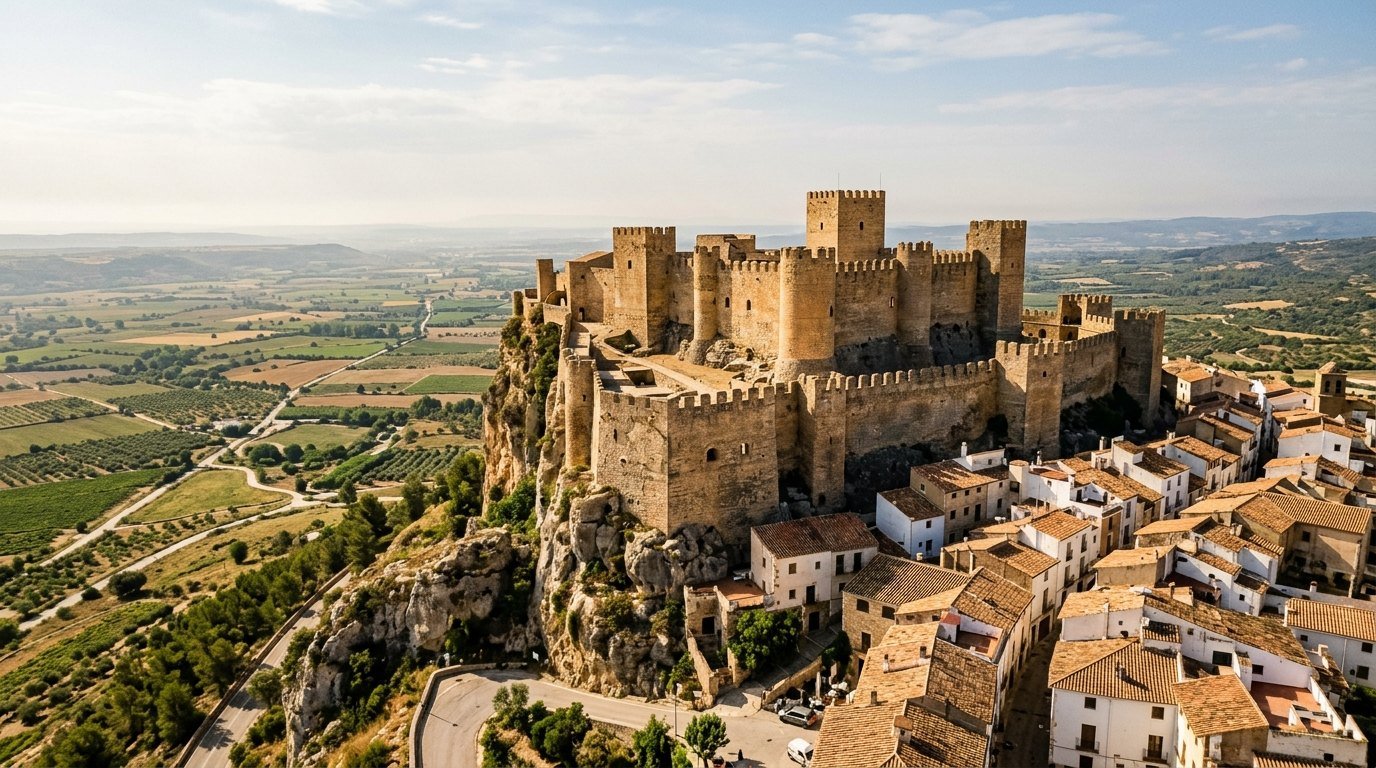
Why would a pope travel to a country of 35,000 people to make an argument about political power? Leo XIV used the world's oldest surviving republic to say that freedom rests on human dignity, and that governments lose their legitimacy when power is put above the person. Here's what he told the Grand and General Council, why the setting mattered, and how the message carried on to Rimini.
Verified key facts
- Vatican News: Leo XIV visited San Marino on 22 August before travelling to Rimini for the Meeting for Friendship among Peoples.
- Holy See / Vatican programme: The programme placed his arrival at Torraccia in the morning, followed by Piazza della Libertà, the Grand and General Council, a balcony blessing and the Basilica.
- Associated Press: Leo praised San Marino as a model of political freedom and civic responsibility and warned against systems that put power above the human person.
- Vatican News: The pope said freedom is rooted in human dignity, conscience, mutual respect and communion rather than the exercise of power alone.
- Vatican News: The visit followed John Paul II in 1982 and Benedict XVI in 2011, making Leo the third pope to visit the microstate in the modern era.
A microstate became the stage for a large argument about freedom
Pope Leo XIV used one of Europe's smallest countries to make a broad claim about political life. During his 22 August pastoral visit to San Marino, the world's oldest surviving republic, he praised a tradition of civic freedom while warning that political and economic systems lose legitimacy when power is placed above the human person. The Associated Press described the address as a defence of freedom and the common good, while Vatican News emphasised the pope's focus on conscience, mutual respect and communion. The setting gave the message unusual force. San Marino's population is only about 35,000 and its institutions developed outside the scale of modern nation-states. Leo's argument was that smallness can be an advantage when it allows politics to remain close to the person rather than becoming an impersonal competition for control.
The schedule was designed around institutions as much as worship
The Holy See's published programme made the political symbolism explicit. It scheduled Leo's landing at Torraccia for about 9am, the official reception in Piazza della Libertà at 9.45am, his address to the Grand and General Council at 10.40am, a balcony blessing at 11.15am and a visit to the Basilica to venerate the relics of Saint Marinus at 11.45am. Live Vatican reporting placed the helicopter's actual touchdown slightly before the scheduled hour, a normal difference between an itinerary and events on the ground. Later he continued to Rimini for the Meeting for Friendship among Peoples. The sequence put republican institutions, public space and worship within the same morning rather than treating San Marino as a brief devotional stop. Vatican News also tied the journey to the centenary of formal diplomatic relations between San Marino and the Holy See, giving the visit a diplomatic anniversary as well as a pastoral purpose.
Leo linked civil liberty to the dignity of the individual
The pope's most consequential point was that civil freedom cannot be sustained if the person becomes subordinate to the state, the market or another concentration of power. AP reported his warning against political and economic systems that elevate power above human dignity. Vatican News's account of the address adds the importance Leo placed on freedom of conscience, describing it as an essential dimension of authentic liberty. That framing differs from a narrower idea of freedom as simply the absence of regulation. Leo instead ties freedom to the conditions that allow a person to act according to conscience and participate in a community built on respect. It is a recognisably Catholic political argument, but it was delivered to a civil legislature and was phrased as a test for good government rather than a demand for clerical rule.
Saint Marinus became a political example rather than only a religious founder
Vatican News said Leo traced San Marino's identity to Saints Marinus and Leo, lay stonemasons who were later ordained and whose Christian witness, in the pope's telling, helped produce a communal model marked by freedom, mutual respect and communion. The historical tradition around San Marino is partly legendary, but its political use in the speech is clear. Leo presented the republic's founding story as evidence that institutions can grow from moral commitments rather than from conquest or concentration of power. That does not mean contemporary San Marino mirrors fourth-century Christianity or that every modern policy conforms to church teaching. It means the pope used the national story to argue that civic freedom requires habits of responsibility and care, not only constitutional language. The example allowed him to praise the republic while still offering a standard by which any government can be judged.
The visit quietly continued a papal line stretching back to 1982
Leo is not the first modern pope to use San Marino as a platform for reflections on freedom and society. Vatican records show John Paul II visited in 1982 and Benedict XVI returned in 2011. Vatican News explicitly placed Leo's journey in that line, calling him the third pope to visit the republic. The continuity matters because each visit has occurred in a different European political setting: the late Cold War, the post-financial-crisis era and now a period shaped by war, polarisation and technological change. Leo's contribution is to emphasise the primacy of conscience and the danger of systems in which power becomes self-justifying. The message is less about San Marino's constitutional mechanics than about what a small republic can symbolise when larger democracies struggle with distrust and concentration of authority.
Rimini widened the message from civic freedom to peace
After San Marino, Leo travelled to Rimini for the Meeting for Friendship among Peoples, the annual gathering associated with Communion and Liberation. AP's account says he used the wider day to call for dialogue in a world marked by conflict and militarisation, while Vatican News described his appeal to young Catholics as a sign of hope. The transition from a republican chamber to a mass Catholic gathering gave the visit two registers. In San Marino, he spoke about institutions and the person; in Rimini, he spoke about encounter, peace and the social responsibilities of believers. The two themes reinforce one another in Leo's argument: a politics that respects dignity creates space for genuine dialogue, while dialogue is how communities resist the temptation to solve disagreement through domination.
22 August will be remembered for San Marino’s “laboratory” claim
The phrase likely to endure from the visit is Vatican News's description of San Marino as a potential "laboratory" of good politics because a small state can keep public institutions close to the people they serve. The value of that claim will not be measured by whether larger countries can copy San Marino's arrangements. They cannot. Its scale, history and geography are unique. The useful test is whether governments of any size can preserve what Leo identified: respect for conscience, institutions ordered to the common good and political power limited by the dignity of the person. The 22 August itinerary gave those ideas a concrete setting in Piazza della Libertà, the Grand and General Council and the Basilica before the pope carried the same concern for peace to Rimini.
Sources
- Associated Press (apnews.com)
- Vatican News - San Marino address (www.vaticannews.va)
- Vatican News - programme (www.vaticannews.va)
- Vatican calendar (press.vatican.va)
- Note: Published Vatican timing is the authoritative schedule; some live accounts reported slightly different arrival minutes.
You may also like to read
Putin Warns Europe of Reciprocal Ship Seizures as the Shadow-Fleet Standoff Hardens
Speaking aboard a missile warship, the Russian leader said Moscow will start seizing European vessels if EU states keep detaining sanction-busting tankers, and claimed conflict potential in the Asia-Pacific is growing.
Zelensky Dismisses Defence Minister Fedorov in Sweeping Ukraine Cabinet Reshuffle
Ukraine's president has removed Mykhailo Fedorov as defence minister after six months, deepening a sweeping cabinet overhaul as peace diplomacy resumes.
Starmer Bows Out at Final PMQs as Andy Burnham Prepares to Take Over in Downing Street
Keir Starmer told MPs his political journey is over at his final PMQs, as Labour prepares to crown Andy Burnham and reshape the cabinet within days.
Merz Vows to Keep AfD Out of Government as Far Right Leads Polls in Eastern Germany
Germany's chancellor used his summer press conference to rule out any AfD role in government, as polls show the far right leading in two eastern states.