Why Is Iran's President Claiming Victory Over the United States?
Iran’s president says global opinion has accepted Tehran’s victory over the US, casting control of Hormuz and resistance as the measure of success.
Commentary & Analysis ·
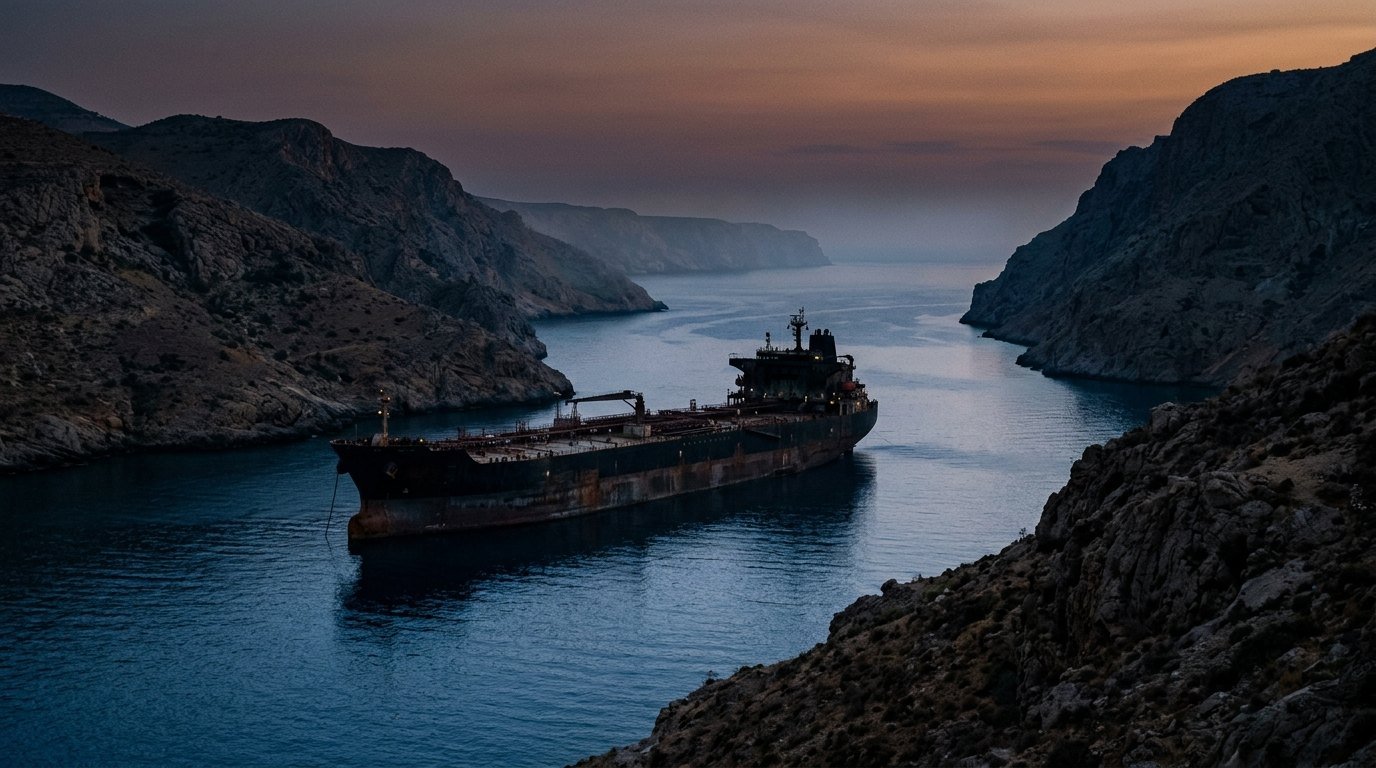
Iran's president says the war should end because the world has already accepted Tehran's victory. Nearly six months in, with sanctions tightening and hardship at home, that is a claim worth taking apart rather than repeating. Here's what Pezeshkian actually said, why the Strait of Hormuz is the scoreboard he has chosen, and what the quiet talks in Egypt and Oman could do to it.
Verified key facts
- Associated Press, citing IRNA: Masoud Pezeshkian said the war should end because “the entire world approved our victory and the U.S. is hated”.
- Associated Press: Iran is presenting control over the Strait of Hormuz and refusal to accept US demands as evidence that it has prevailed.
- CBS News: Pezeshkian also argued it was better to end the war while Iran was “strong and honored”, even as he acknowledged severe domestic economic strain.
- CBS News: The Trump administration is simultaneously promising an “economic D-Day” campaign aimed at intensifying Iran’s financial isolation.
- Associated Press: Egypt has been speaking with Iran in an effort to revive negotiations involving Washington, while Iranian-Omani talks address management of the Strait.
Tehran is trying to win the argument about what victory means
Nearly six months into a war launched by the United States and Israel, Iran's president is attempting to define victory before the shooting and economic pressure have fully ended. The Associated Press, citing the state-run IRNA agency, reported Masoud Pezeshkian saying that "the entire world approved our victory and the U.S. is hated" and that the conflict should therefore end. The claim is not a neutral assessment of military outcomes. It is a political definition built around survival, refusal and strategic leverage. Iran has not accepted Washington's principal demands, and Tehran points to its control over the Strait of Hormuz as proof that a vastly more powerful adversary failed to dictate terms. The statement is best read as a bargaining position aimed at Iranian citizens, regional governments and the United States simultaneously.
Control of Hormuz has become Tehran’s chosen scoreboard
Iran's narrative depends heavily on the Strait of Hormuz because the waterway converts geography into leverage over the global economy. Associated Press reporting says Tehran regards its ability to control the Strait, together with its refusal to give in to US demands, as the central evidence of victory. That measure differs from the traditional military tally of territory seized, forces destroyed or political leadership replaced. It says endurance itself is success if the adversary cannot restore the pre-war status quo on its preferred terms. For Washington, however, reopening the Strait to oil and gas traffic is one of the outcomes President Trump says Iran must accept. The same strip of water therefore appears in both sides' victory conditions. As long as shipping remains a bargaining chip, neither side can easily declare that its strategic objective has been conclusively secured.
Pezeshkian’s language also addresses exhaustion inside Iran
CBS News reported a fuller version of Pezeshkian's remarks in which he said it was better to end the war now while Iran was "strong and honored" and while the world acknowledged its victory. He also referred to public hardship. That domestic element matters because the victory claim is arriving amid severe economic strain, shortages and disruption. A government that asks its population to endure war needs a story explaining what the sacrifice achieved. By arguing that Iran forced the United States to respect its resistance, Pezeshkian offers a dignified exit narrative that does not require admitting weakness. The phrase also gives him room to advocate ending the conflict without appearing to surrender. In Iranian politics, where hardliners can punish language that sounds conciliatory, defining peace as the conclusion of victory is politically safer than defining it as compromise.
Washington is offering an opposite theory of pressure
The Trump administration's response is not to accept Tehran's definition but to raise the economic cost of maintaining it. CBS News says Washington is promising an "economic D-Day" of intensified sanctions and financial isolation intended to force Iran to change course on its nuclear programme and the Strait. That campaign was the subject of a separate earlier article and should not be mistaken for the new angle here. Its relevance is as the counterpoint to Pezeshkian's claim: Tehran says survival and resistance prove US failure; Washington says Iran's deteriorating economic position proves pressure is working. Both governments are therefore competing to define the time horizon. Iran wants the war judged by what the US has failed to compel so far. The White House wants it judged by what further economic pain may compel later.
Egypt and Oman are testing whether the rhetoric leaves room for a deal
Behind the declarations, diplomacy is active. Diplomatic reporting from the Associated Press says Egypt has spoken with Iran about reviving US-Iran negotiations, while Iranian and Omani officials have been discussing management of the Strait. Those contacts reveal why Pezeshkian's statement deserves attention beyond propaganda. A leader who publicly says his country has already won can make concessions easier to sell if talks produce a settlement. Equally, an inflated victory narrative can narrow room for compromise if domestic audiences are told that no further concession is necessary. Egypt and Oman are useful intermediaries because they can discuss practical security and shipping arrangements without asking either side to endorse the other's public account. The question for mediators is whether the symbolism of victory can be separated from the operational issues of navigation, nuclear limits and sanctions.
The phrase “the entire world” is political rhetoric, not measurable consensus
Pezeshkian's assertion that the entire world approved Iran's victory cannot be verified as a literal description of international opinion. Governments have taken varied positions on the war, the Strait, Iran's nuclear programme and US-Israeli military action. Some condemn attacks on Iran, others focus on navigation and nuclear risk, and many are trying to avoid choosing a victor. The Associated Press correctly attributes the phrase to Pezeshkian through IRNA rather than presenting it as an external judgment. Readers need that attribution because state-media language can quickly become a factual-looking headline when detached from its speaker. The statement tells us something real about Tehran's messaging strategy: Iran wants neutral and non-Western states to be seen as validating its resistance. It does not establish that those states have actually endorsed Iran as the winner.
The Strait negotiations will test Pezeshkian’s victory claim
The practical test now lies in the terms of any arrangement over the Strait of Hormuz. If Iran can secure an end to fighting while retaining meaningful leverage and avoiding the core demands it rejected at the start, Pezeshkian will have evidence for his narrative. If reopening the waterway requires concessions Washington can present as capitulation, the claim will look more like pre-negotiation positioning. Egypt's outreach and the Iranian-Omani channel make the coming discussions more important than another round of competing slogans. At home, Pezeshkian also needs economic relief quickly enough to make "victory" meaningful to households facing shortages and lost income. The phrase may dominate today's headlines, but the balance of the eventual Strait settlement will determine whether it survives as Iran's lasting account of the war.
Sources
- Associated Press (apnews.com)
- CBS News live Iran war coverage (www.cbsnews.com)
- CityNews / Associated Press copy (vancouver.citynews.ca)
- Note: The “victory” assertion is Pezeshkian’s political claim, reported by IRNA and attributed by AP.
You may also like to read
Analysts Say Iran Is Setting the Tempo in a Prolonged War With the United States
Analysts describe Tehran using regional disruption and endurance, not a single decisive battle, to shape US choices, as mediators keep searching for an off-ramp.
Strait of Hormuz Disruption Drives Oil Risk and a Global Naval Response
Iranian actions and threats sharply cut shipping through the world's key oil chokepoint, as the US and partners escorted vessels and sought guaranteed passage.
Scott Bessent Promises the Toughest Sanctions in History as Washington Widens Operation Economic Fury Against Iran
The Treasury secretary told CNBC that companies trading with Tehran will face the full force of the United States, as the war nears its sixth month.
US Helicopter Disables Cargo Ship Accused of Running the Iran Blockade, as Threat Reports Shadow the President's NATO Trip
The US military said a Navy MH-60 fired Hellfire missiles to disable a Panama-flagged ship's steering after repeated warnings, one of several signs of how far the confrontation with Iran now reaches, from shipping lanes to presidential security.