Pakistan's floods batter farms, factories and the budget as an IMF mission prepares its verdict
With over 1,000 dead, crops devastated in Punjab and Sindh and inflation at a 26-month high, the IMF will review whether Pakistan's budget can absorb the shock.
Commentary & Analysis ·

Verified key facts
- Floods since late June have killed at least 1,006 people and inundated Punjab and Sindh, Pakistan's most populous and economically vital provinces, Arab News reported.
- Around 50% of rice and 60% of cotton and maize crops in affected areas have been damaged, the Pakistan Farmers Association said, with up to 2.5 million acres worth about $3.53 billion at risk.
- A sensitive price index has hit a 26-month high as wheat, sugar, onion and tomato prices jump, and former finance minister Hafeez Pasha warned the current account deficit could widen by $7 billion.
- The Express Tribune reported an IMF mission will assess whether the FY26 budget remains agile enough to fund flood response, ahead of a review under the $7 billion Extended Fund Facility.
- The central bank projects growth near the lower end of its 3.25-4.25% range, putting the government's 4.2% target for 2026 in doubt.
A disaster that hit the economic heartland
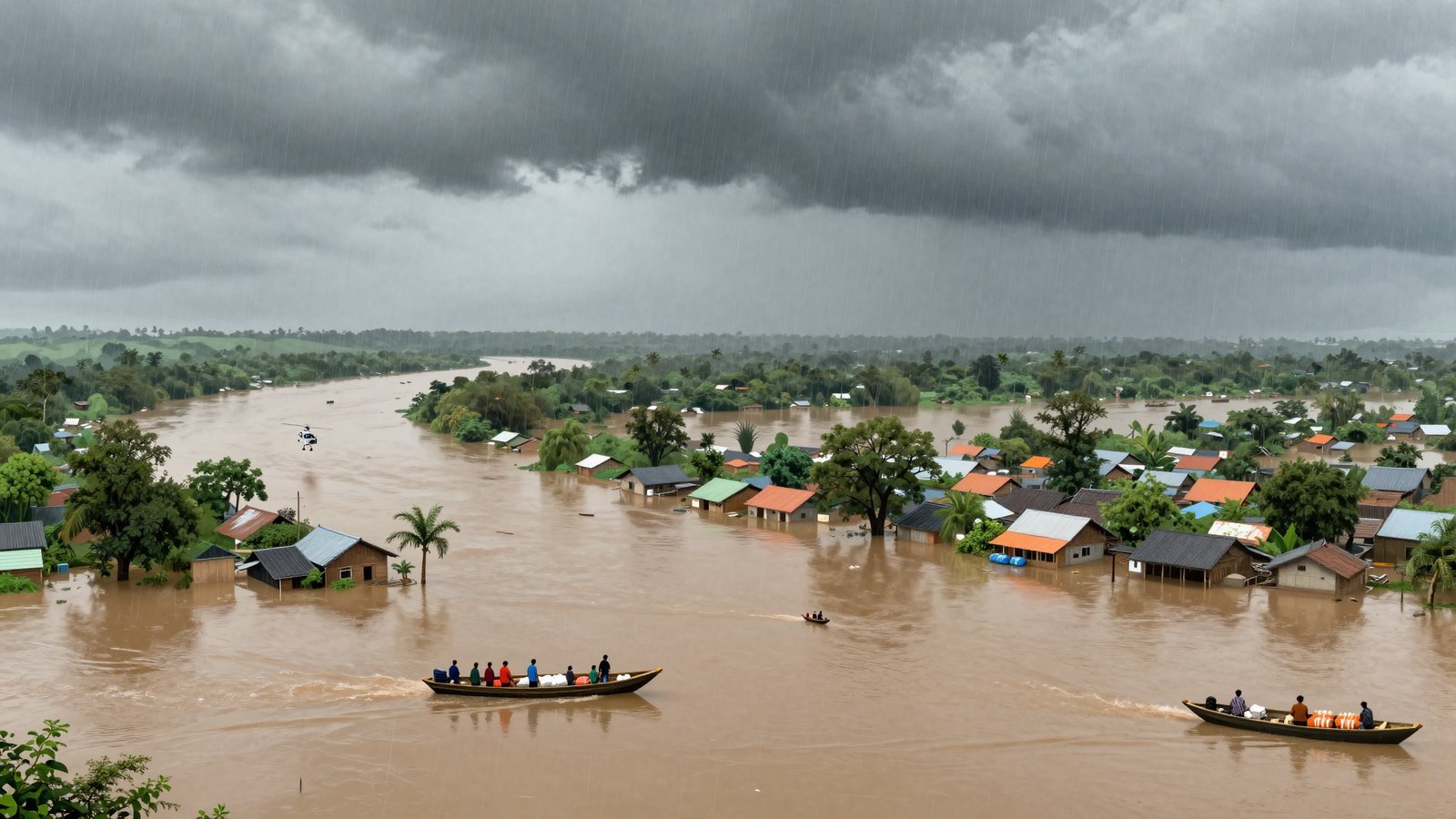
Pakistan's monsoon floods have struck the country's rural core and its industrial centres at the same time, a combination not seen in decades. Arab News reported that at least 1,006 people have died since 26 June, with Punjab and Sindh, the two provinces that anchor the national economy, bearing the worst of the deluge.
The scale of agricultural loss is staggering. Some 1.8 million acres of farmland were inundated in Punjab alone, including about 220,000 hectares of rice fields. 'About 50 percent of rice, and 60 percent of cotton and maize crops have been damaged,' Khalid Bath of the Pakistan Farmers Association told Arab News.
Total losses could reach 2.5 million acres of crops worth roughly 3.53 billion dollars, according to estimates cited in the same reporting. In some districts, vegetable losses hit 90 percent.
From the fields to the factories
The damage does not stop at the farm gate. Cotton shortages now threaten Pakistan's textile industry, the country's largest source of foreign exchange. Arab News reported that workshops in Sialkot, the export hub for textiles and sporting goods, suffered direct flood damage.
Food markets are already transmitting the shock to households. Prices for wheat, sugar, onions and tomatoes have jumped, pushing Pakistan's sensitive price index to a 26-month high. 'Food insecurity is coming, not just higher prices,' agricultural scientist Iqrar Ahmad Khan, a former university vice chancellor, told Arab News.
The macroeconomic bill comes due
The floods land on an economy that had only just stabilised. After a near-default in 2023, Pakistan secured a 7 billion dollar Extended Fund Facility from the IMF and had returned to modest growth with cooling inflation. That recovery is now in question.
The State Bank of Pakistan called the deluge a 'temporary yet significant supply shock' and placed growth near the lower end of its 3.25 to 4.25 percent range, Arab News reported. The government's 4.2 percent target for the fiscal year looks increasingly out of reach. Former finance minister Hafeez Pasha warned the floods could widen the current account deficit by 7 billion dollars.
- At least 1,006 deaths since 26 June, with Punjab and Sindh worst hit
- Up to 2.5 million acres of crops at risk, valued near $3.53 billion
- Sensitive price index at a 26-month high on food staples
- Growth seen near the bottom of the central bank's 3.25-4.25% range
The IMF prepares its assessment
Attention now turns to the International Monetary Fund. The Express Tribune reported that an IMF mission will assess the floods' impact on the economy, examining whether the FY26 budget, its spending allocations and emergency provisions remain agile enough to meet the disaster's demands.
Economists expect the Fund to lower Pakistan's growth forecast on flood damage, Arab News reported separately. The IMF's board had already approved a 1.4 billion dollar climate resilience loan in May, and the Fund has repeatedly warned that Pakistan is highly exposed to floods, heatwaves and glacier melt.
The review carries real stakes. Programme continuity underpins Pakistan's access to bilateral financing from China, Saudi Arabia and the UAE. Any slippage on fiscal targets, or unbudgeted flood spending, will need to be reconciled with IMF conditions without derailing disbursements.
An echo of 2022, and a warning
The catastrophe inevitably recalls the 2022 floods, which submerged a third of the country and caused damage exceeding 30 billion dollars. This year's waters cover less ground but cut deeper into productive assets, striking standing crops just before harvest and industrial clusters that drive exports.
Pakistan contributes less than 1 percent of global emissions yet ranks among the most climate-vulnerable countries on earth. Its case has become the standard exhibit in developing-world arguments for loss-and-damage financing, a debate that will resurface at COP31 later this year.
The IMF mission's findings
The IMF mission's findings will shape the next tranche of Pakistan's programme and the credibility of its budget. Watch also the September-October cotton arrivals, which will reveal whether the textile sector faces a genuine raw material crisis, and food inflation prints over the coming months.
The political dimension looms over all of it. Flood relief performance has repeatedly reshaped Pakistani politics, and a government managing IMF austerity alongside disaster recovery has little fiscal room for error. How Islamabad distributes that pain will define its standing well beyond this monsoon season.
Sources
- Arab News - Pakistan floods batter fields, factories and fiscal plans (July 2026)
- The Express Tribune - IMF mission to assess floods impact on Pakistan's economy (July 2026)
- Reuters via Investing.com - IMF says Pakistan's flood spending, budget agility to be reviewed (July 2026)
- Arab News - Economists expect IMF to lower Pakistan's growth forecast over flood damage (July 2026)
You may also like to read

India and Pakistan Trade Sharp Kashmir Warnings While a Fragile Truce Holds
Defence officials in New Delhi and Islamabad traded sovereignty claims over Kashmir this week, hardening the rhetoric even as the Line of Control stayed quiet.
At Least 50 Killed and 700,000 Displaced by Floods in India's Assam
Monsoon floods along the Brahmaputra have killed at least 50 people and displaced 700,000 in Assam, submerging hundreds of villages.

Deadly Unrest in Pakistan-Administered Kashmir Deepens India-Pakistan Tensions
Protests, a crackdown and phased elections created a new flashpoint in Pakistan-administered Kashmir, as rights groups and authorities gave clashing accounts.

Suicide Bomber Kills at Least 14 at Anti-Militant Rally in Pakistan's Swat Valley
A suicide bomber struck an anti-militant rally in Kabal, killing civilians and police who had gathered to demand protection from a resurgence of militancy.