Israel Raises Serious Concerns Over Hamas Disarmament Verification and Withdrawal Sequencing
Israeli officials warned Hamas could rebuild if troops left before weapons and tunnels were dismantled, exposing the security dispute the framework has not settled.
Commentary & Analysis ·

Verified key facts
- Israeli officials said they feared Hamas would rebuild if troops withdrew before weapons and tunnels were verifiably dismantled, according to AP.
- Netanyahu's representatives said intelligence indicated Hamas was rebuilding.
- Hamas insisted withdrawal and disarmament must advance together.
- Israel sought destruction rather than storage of weapons and questioned verification roles for Qatar and Turkey.
- US mediators are attempting to bridge the sequencing gap.
A framework meets its central obstacle
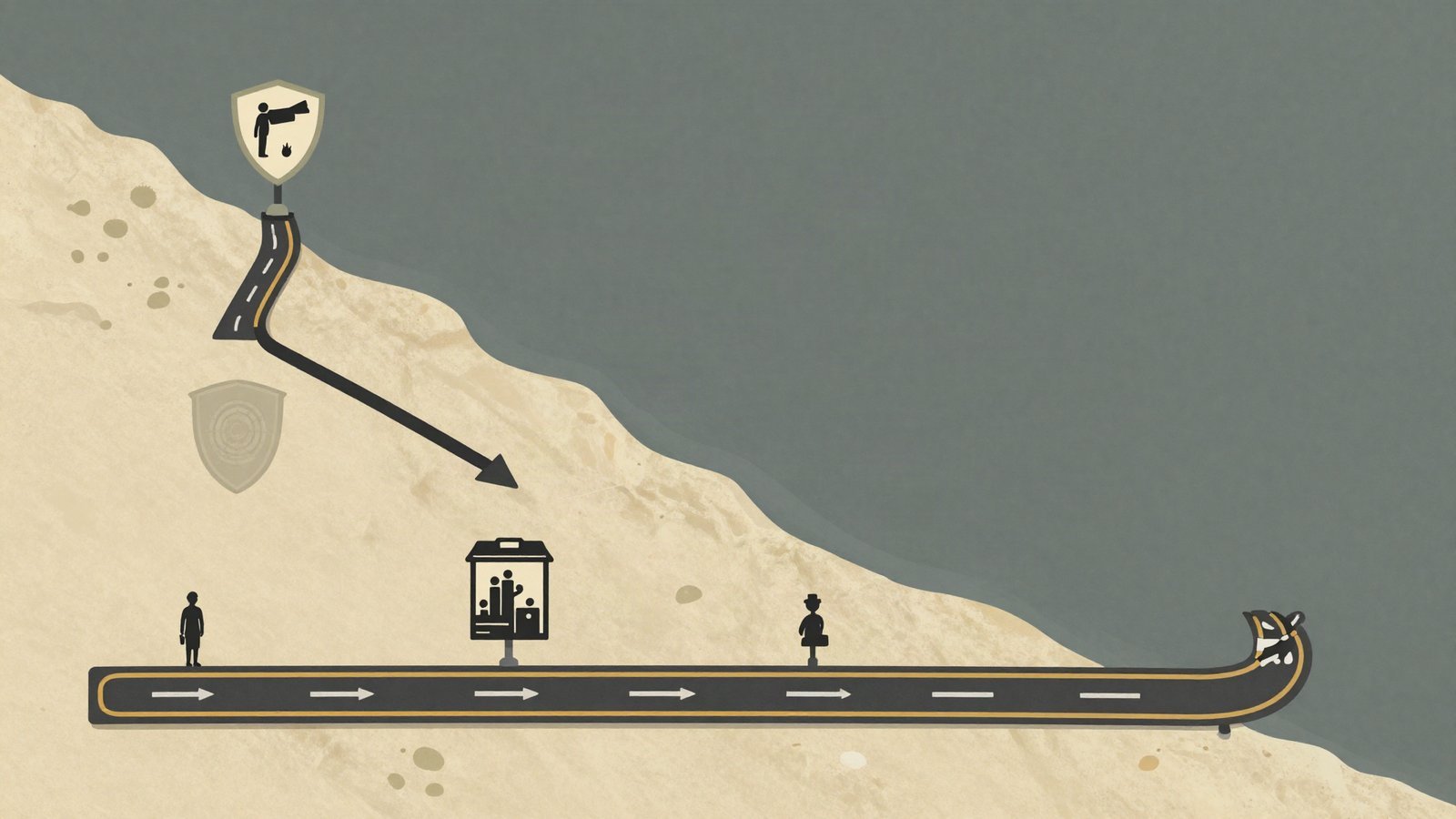
Israeli objections to the published Gaza framework brought the plan's hardest problem into focus: the sequencing and verification of Hamas disarmament. According to The Associated Press, Israeli officials said they feared Hamas would rebuild its capabilities if troops withdrew before weapons and tunnels were verifiably dismantled. The concern showed that a peace framework on paper had not yet resolved the security dispute at the conflict's core.
The disagreement is not about whether disarmament should happen but about how and in what order. That distinction is decisive. A plan can command broad support in principle and still founder on a practical question: who takes the first irreversible step. The linked question is how the other side can trust that step is real.
Israel's case
Representatives of Prime Minister Benjamin Netanyahu said intelligence indicated Hamas was rebuilding, a claim that cannot be independently verified but that underpins Israel's caution. Israel sought the destruction rather than the storage of weapons, arguing that stored arms could be recovered. It also questioned proposed verification roles for Qatar and Turkey, states it views with differing degrees of trust.
The Israeli position, in essence, is that withdrawal must follow demonstrable, irreversible disarmament, verified by parties it considers reliable. Anything less, in this view, risks trading a temporary pause for a stronger adversary later. Whether that assessment is accurate is contested, but it shapes Israel's stance on sequencing.
Hamas's counter-position
Hamas insisted that withdrawal and disarmament must advance together, rejecting a model in which it disarms first while Israeli forces remain. From this vantage, moving first would mean surrendering leverage and security guarantees without assurance that withdrawal would follow. The two positions are close to mirror images: each side wants the other to take the first substantive step.
This symmetry of distrust is the crux of the impasse. Both parties have reasons, rooted in their own security calculations and in a long history of broken arrangements, to resist going first. Bridging that gap is precisely the task mediators have taken on.
The mediators' challenge
US mediators are attempting to bridge the sequencing gap and to establish an international verification structure that both sides might accept. The difficulty lies in designing a process credible enough to reassure Israel about disarmament while giving Hamas enough confidence that withdrawal will genuinely follow. The disputed roles for Qatar and Turkey illustrate how even the choice of verifiers becomes contested.
Verification is not a technical afterthought but the heart of the matter. Without an arrangement both parties trust, the sequencing question cannot be answered, and the wider framework cannot proceed to its later stages.
Consequences while talks continue
The persistence of the dispute has immediate costs. Continued disagreement means Israeli strikes and Palestinian casualties may continue even as negotiators discuss implementation, keeping the humanitarian toll rising during the diplomacy. The talks, in other words, do not pause the war; they run alongside it.
There is also a longer-term risk. A breakdown could discredit the entire plan and strengthen actors on both sides who oppose compromise, making future agreements harder to reach. The stakes of the current negotiation thus extend beyond the framework itself to the credibility of negotiation as a path.
Background: why trust is scarce
The mutual suspicion on display has deep roots in a conflict marked by repeated cycles of violence and failed arrangements. Past experiences of agreements that unravelled inform each side's insistence on guarantees before acting. That history helps explain why sequencing and verification, seemingly procedural matters, carry such weight.
The dispute over verifiers illustrates how even well-intentioned mechanisms can become contested. Qatar and Turkey have both played roles in regional diplomacy, but Israel's willingness to accept them as monitors is not guaranteed, given its differing assessments of each. The choice of who verifies is not a neutral technicality; it shapes whether either party will trust the findings. That makes the selection of monitors as fraught as the substance they are meant to oversee.
The distinction between destroying and storing weapons captures the dispute in miniature. Israel's insistence on destruction reflects a concern that stored arms remain recoverable, and thus a latent threat. Hamas's approach, and the framework's provisions for weapons handover, imply arrangements that Israel views as insufficiently final. Resolving this point requires not only technical agreement on procedures but a shared judgement about what counts as irreversible, a judgement the two sides have yet to reach.
Can the verification gap narrow?
The coming period will test whether the gap can be narrowed.
- Israeli cabinet decisions on the framework
- Statements from US and other mediators on verification
- Whether an initial ceasefire or test phase begins
- The proposed roles for Qatar and Turkey in monitoring
- Any movement on weapons destruction versus storage
Israel's concerns laid bare the distance between a published framework and a workable agreement. Until the sequencing and verification questions find an answer both sides can accept, the plan's later stages remain out of reach. The fighting it aims to end continues in the meantime.
Sources
- AP - Israel concerns over disarmament deal
- AP - Deal text
You may also like to read
Hamas Disarmament Framework Sets Out a Phased Road Map for Withdrawal and New Gaza Governance
A published US-backed framework ties phased Hamas disarmament to Israeli withdrawal and an international force, but implementation and sequencing remain uncertain.

Israeli Strikes Continue in Gaza Despite Momentum Behind the Peace Plan
Israeli strikes killed Palestinians over the weekend as a disarmament framework was debated, exposing the gap between diplomacy on paper and fighting on the ground.

The National Committee and International Force Could Reshape Who Governs Gaza After the War
A proposed committee and international force would run Gaza's civil affairs and security, but their legitimacy, authority and financing remain untested.
Israel clears international stabilisation force for Gaza as disarmament dispute persists
Israel's security cabinet approved legal measures for a stabilisation force, but Hamas disarmament and aid access remain unresolved.