Hamas Disarmament Framework Sets Out a Phased Road Map for Withdrawal and New Gaza Governance
A published US-backed framework ties phased Hamas disarmament to Israeli withdrawal and an international force, but implementation and sequencing remain uncertain.
Commentary & Analysis ·
Verified key facts
- A published framework says Hamas would disarm in phases while Israel withdraws, according to AP and the Guardian.
- An international force would support a technocratic Gaza administration under the plan.
- Hamas said it accepted the framework in principle; US officials promoted it as a peace plan.
- Israel raised security objections about sequencing and verification.
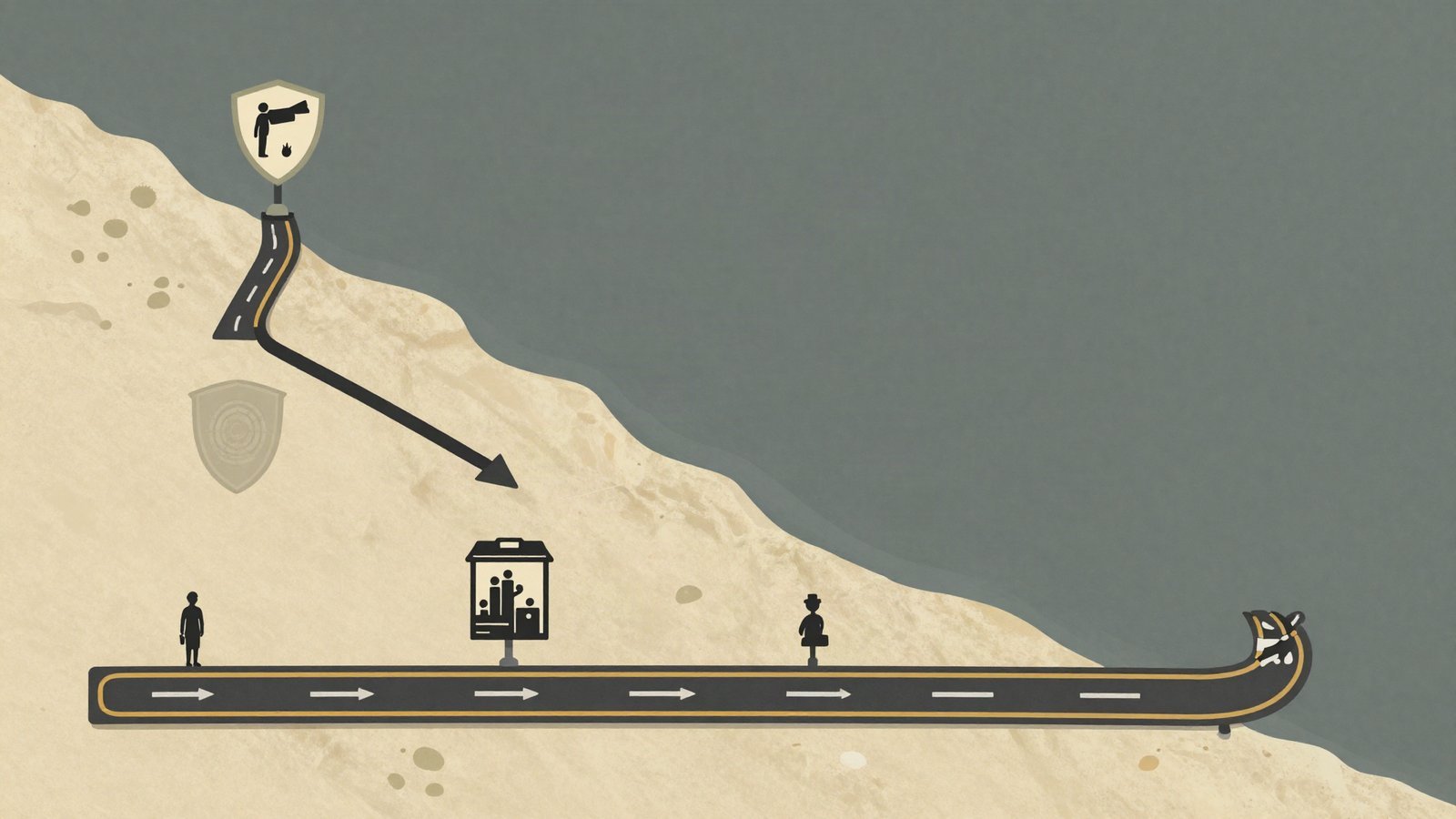
- The plan links weapons handover, tunnel dismantlement, phased withdrawal, humanitarian access and civil administration.
A framework put on paper
A published framework for Gaza sets out a phased path, according to accounts from The Associated Press and the Guardian. Under it, Hamas would disarm in stages while Israel withdraws and an international force supports a technocratic administration. Presented by US officials as a peace plan, it stood as the week's most significant potential diplomatic opening, even as its implementation remained far from assured.
The document's ambition is broad. Rather than a simple ceasefire, it attempts to knit together the military, humanitarian and governance dimensions of the conflict into a single sequenced process. That comprehensiveness is both its promise and its vulnerability, since each linked element depends on the others holding.
How the pieces fit together
According to the reporting, the plan links weapons handover, tunnel dismantlement, phased Israeli withdrawal, humanitarian access and the transfer of civil administration. The idea is that progress in one area unlocks the next. As Hamas gives up arms and infrastructure, Israeli forces pull back, aid expands and a new civil authority takes over day-to-day governance, supported on security by an International Stabilization Force.
A body described as the National Committee for the Administration of Gaza, or NCAG, would assume civil authority under the framework. The sequencing is designed to reassure both sides: Israel that disarmament is real and verifiable, Hamas that withdrawal genuinely follows. Whether that reassurance holds in practice is the central question.
What the parties have said
Hamas said it accepted the framework in principle, a significant if qualified step. US officials promoted the plan actively, casting it as a route toward ending the fighting. Israel, however, raised security objections centred on sequencing and verification, questioning the order of steps and how compliance would be confirmed. Those objections mean the framework, though published, has not yet been fully embraced by all sides.
The distance between acceptance in principle and agreement on mechanics is where such plans often falter. Each party's public position leaves room for interpretation, and the details of who does what, and when, remain to be negotiated.
What is at stake for civilians
The humanitarian stakes are considerable. A durable ceasefire could expand aid deliveries and reduce civilian deaths after a prolonged and destructive war. But the same interdependence that makes the plan comprehensive also makes it fragile: a failure at any stage of implementation could trigger renewed large-scale fighting, undoing tentative gains.
That duality, promise paired with peril, defines the moment. For Gaza's population, the difference between the framework succeeding and collapsing is measured in access to food, medicine and safety. That gives the diplomatic details a weight far beyond the negotiating table.
The hardest questions
Several disputes could unravel the process. Disagreements over who moves first, who stores or destroys weapons and which states verify compliance all remain unresolved. The framework relies on international monitoring, Palestinian governance reform and external funding for reconstruction, each of which introduces its own uncertainties about legitimacy, capacity and financing.
These are not peripheral details but the substance on which the plan stands or falls. History in the region suggests that sequencing and verification, precisely the points Israel has flagged, are where agreements most often break down.
Background to the framework
The plan emerges from a long and costly conflict that has drawn sustained international mediation. Efforts to pair a ceasefire with a longer-term political arrangement have been attempted before. The involvement of outside states in monitoring and funding reflects the difficulty of finding purely local solutions. The current framework represents the latest, and among the most detailed, of these attempts.
What sets this framework apart, according to the reporting, is its attempt to specify a sequence rather than leave the order of steps to later negotiation. By naming milestones such as weapons handover and tunnel dismantlement alongside phased withdrawal and the transfer of administration, it tries to reduce the ambiguity that has undone earlier efforts. Whether that specificity proves a strength or simply exposes more points of disagreement is one of the questions the coming weeks will answer.
The framework leans heavily on external involvement. An International Stabilization Force would support security, international monitors would verify compliance, and outside funding would underwrite reconstruction. That reliance reflects the depth of distrust between the parties, who appear unable to guarantee the arrangement to each other without third-party assurance. It also introduces dependencies: the plan's success would hinge on states following through on commitments of personnel, verification and money that have yet to be firmly secured.
From paper to practice
The near-term signals will indicate whether the framework can move from paper to practice.
- Formal Israeli acceptance or continued objections
- The verification arrangements and which states take part
- The first weapons-transfer milestone
- Access granted to humanitarian agencies
- The composition and mandate of the NCAG and international force
The published framework offered a rare moment of diplomatic possibility in a grinding war. Yet its comprehensiveness cuts both ways: it addresses the conflict's many dimensions at once, but requires all of them to advance together. Whether that delicate sequencing can survive contact with reality remains the defining uncertainty.
Sources
- AP - Full text of Hamas disarmament deal
- Guardian - Gaza plan live coverage
You may also like to read

Israel Raises Serious Concerns Over Hamas Disarmament Verification and Withdrawal Sequencing
Israeli officials warned Hamas could rebuild if troops left before weapons and tunnels were dismantled, exposing the security dispute the framework has not settled.

Israeli Strikes Continue in Gaza Despite Momentum Behind the Peace Plan
Israeli strikes killed Palestinians over the weekend as a disarmament framework was debated, exposing the gap between diplomacy on paper and fighting on the ground.

The National Committee and International Force Could Reshape Who Governs Gaza After the War
A proposed committee and international force would run Gaza's civil affairs and security, but their legitimacy, authority and financing remain untested.
Israel clears international stabilisation force for Gaza as disarmament dispute persists
Israel's security cabinet approved legal measures for a stabilisation force, but Hamas disarmament and aid access remain unresolved.