ISIS Cells Continue Low-Cost Attacks in Iraq and Syria Despite Territorial Defeat
Stripped of the ground it once held, ISIS endures through rural cells staging ambushes, kidnappings and bombings across Iraq and the Syrian desert, monitors report.
Commentary & Analysis ·
Verified key facts
- Monitors recorded persistent ISIS activity in Nineveh, Anbar, Salah al-Din, Diyala and Syrian desert areas, per the reporting.
- Cells used improvised explosives, small-arms attacks, kidnappings and attacks on infrastructure.
- Governments said counterterrorism operations were degrading ISIS leadership.
- ISIS propaganda portrayed continued survival as a form of victory.
- Rural civilians face extortion, travel risk and loss of farms or livelihoods.
Survival without a state
Years after losing the territory it once governed, ISIS continues to operate as an insurgency rather than a would-be state. According to published reporting, the group no longer controls a large area, but rural cells persist with ambushes, arson, kidnappings and bombings. This shift, from holding ground to hit-and-run activity, marks a change in form rather than a disappearance, and it presents a different kind of security challenge.
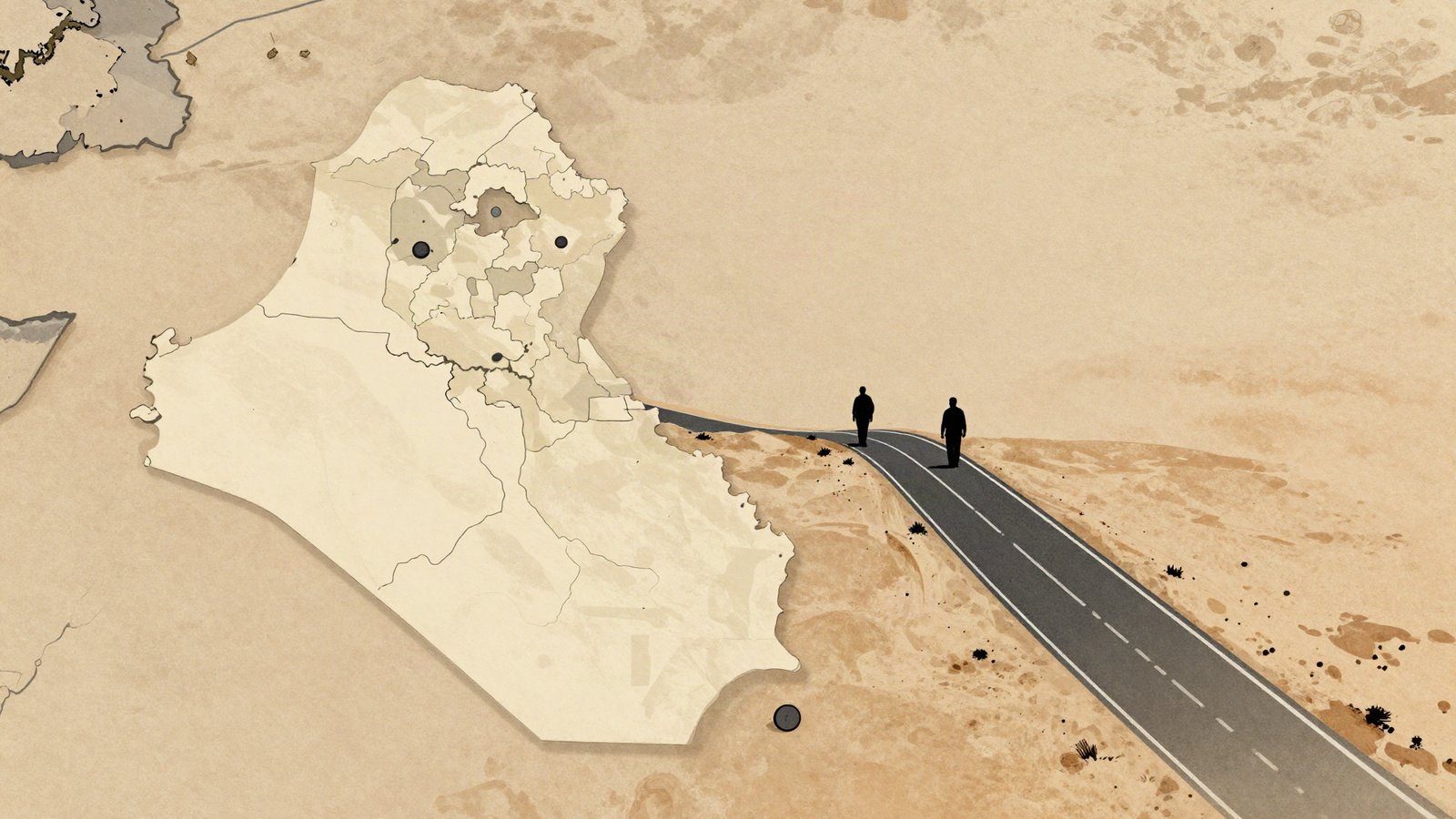
Monitors recorded persistent ISIS activity in Nineveh, Anbar, Salah al-Din, Diyala and areas of the Syrian desert during the reporting period, contemporaneous reporting states. These regions share features that have historically favoured insurgent survival: rural terrain, distance from major population centres and, in places, contested or thinly held security. The geography of the group's continued presence tracks the geography of state reach.
Low-cost, high-disruption tactics
According to available reporting, cells used improvised explosives, small-arms attacks, kidnappings and attacks on infrastructure. These are low-cost methods that require relatively little organisation or resource, which is part of what makes them resilient. An insurgency that does not need to hold territory or maintain a large administration can persist on a fraction of the capacity it once commanded.
Attacks on infrastructure, in particular, can have effects out of proportion to their scale, disrupting services and signalling insecurity. Kidnappings generate fear and can provide funds through ransom. The pattern described is one of harassment and intimidation rather than conquest, aimed at demonstrating relevance and undermining confidence in the state's ability to protect.
Competing claims about the group's strength
Governments said counterterrorism operations were degrading the group's leadership, according to available reporting, while ISIS propaganda portrayed continued survival as victory. These are the claims of opposing sides, and the NE Times presents them as such rather than as verified assessments. The true trajectory of the group, whether it is being steadily worn down or adapting to endure, is difficult to establish from the outside.
The principal actors include ISIS, Iraqi security forces, Syrian forces and US-led partners. The involvement of multiple national and international forces reflects the transnational character of the threat, which does not respect borders and requires coordination across them to address effectively.
The burden on rural communities
Rural civilians bear much of the cost of this persistent insurgency, facing extortion, travel risk and the loss of farms or livelihoods, according to the reporting. Where cells operate, the threat of ambush or kidnapping can make roads unsafe, cutting communities off from markets and services. Extortion drains resources from populations that often have little to spare.
The economic dimension of insecurity is significant. Farmers unable to reach their land, or forced to pay armed groups, may abandon livelihoods altogether, deepening rural poverty and, in some cases, displacement. This erosion of economic life can in turn feed the conditions that allow insurgency to persist, creating a cycle that is hard to break without sustained security and development.
The danger of resurgence
Regional analysts warn that prison breaks, poorly managed detention camps and sectarian abuse could accelerate a resurgence. Detention facilities holding those associated with ISIS have been a recurring concern, both as potential sources of escapees and as sites where conditions may generate further grievance. The management of these camps is widely seen as a long-term security issue in its own right.
Sectarian abuse, meanwhile, can hand insurgents a recruitment narrative, allowing them to present themselves as defenders of a mistreated community. This is a dynamic that counterterrorism efforts focused purely on force may not address, since it concerns governance and grievance rather than the battlefield. Reconciliation and inclusive local administration are often cited as necessary complements to security operations.
The seasonal and geographic patterns of the group's activity also draw attention from monitors. Rural areas with sparse security, difficult terrain and porous boundaries between Iraq and Syria offer room to move and regroup. Cells can shelter in remote districts and strike where the state's presence is thinnest.
Understanding these patterns is part of how security forces and analysts try to anticipate where attacks may next occur. Prevention efforts can then be concentrated to deny the group the space it relies on, though sustained presence in remote areas is costly and difficult to maintain over time.
Cooperation and what to watch
Regional governments continue intelligence and training cooperation even as foreign troop roles change, according to published reporting. The evolution of external military involvement means that local forces are increasingly central to the campaign, supported by intelligence-sharing and training rather than large deployments. The durability of this arrangement will shape the group's future prospects.
Looking ahead, observers will be watching attack frequency, prison security, leadership losses and local reconciliation programmes, available reporting indicates. Together these measures offer a picture of whether the insurgency is being contained or gathering strength. Each will help indicate whether the group is fading or adapting to survive in a changed environment. For now, ISIS remains defeated as a territorial project but active as a rural threat. It is a reminder that the end of a caliphate is not the same as the end of a group.
Sources
- Syria Monitor - Weekly ISIS Activity Monitor in Iraq
- CFR - Instability in Iraq
You may also like to read

Syria's Government Consolidates Control While ISIS Cells Remain Active
Damascus is extending its authority after fighting with Kurdish-led forces, but ISIS remnants and unresolved Kurdish integration shape a fragile post-Assad order.

Iraq's Government Faces a Militia Disarmament Test as the Regional War Spills Across Its Territory
Foreign strikes and militia drone attacks pressed Baghdad to assert control, as some Popular Mobilization factions weighed disarmament while others firmly refused.

Turkey-PKK Peace Process Marks One Year but Key Legal and Security Questions Remain
One year after a symbolic weapons-burning, the PKK's declared end to armed struggle has yet to yield full disarmament or the political reforms Kurds are seeking.
US-Saudi Strikes on Iran-Backed Militias Put Iraqi Sovereignty Under New Pressure
The first acknowledged joint US-Saudi strikes on Iran-linked militias in Iraq widened the war and angered Baghdad, which said it had no prior knowledge of them.