Alisa Goods Was Found Near Las Vegas Airport. How Did the Search Miss Her?
Police say surveillance shows Alisa Goods fell near Las Vegas airport and later collapsed, while mystery texts were likely sent by spoofing scammers.
Commentary & Analysis ·
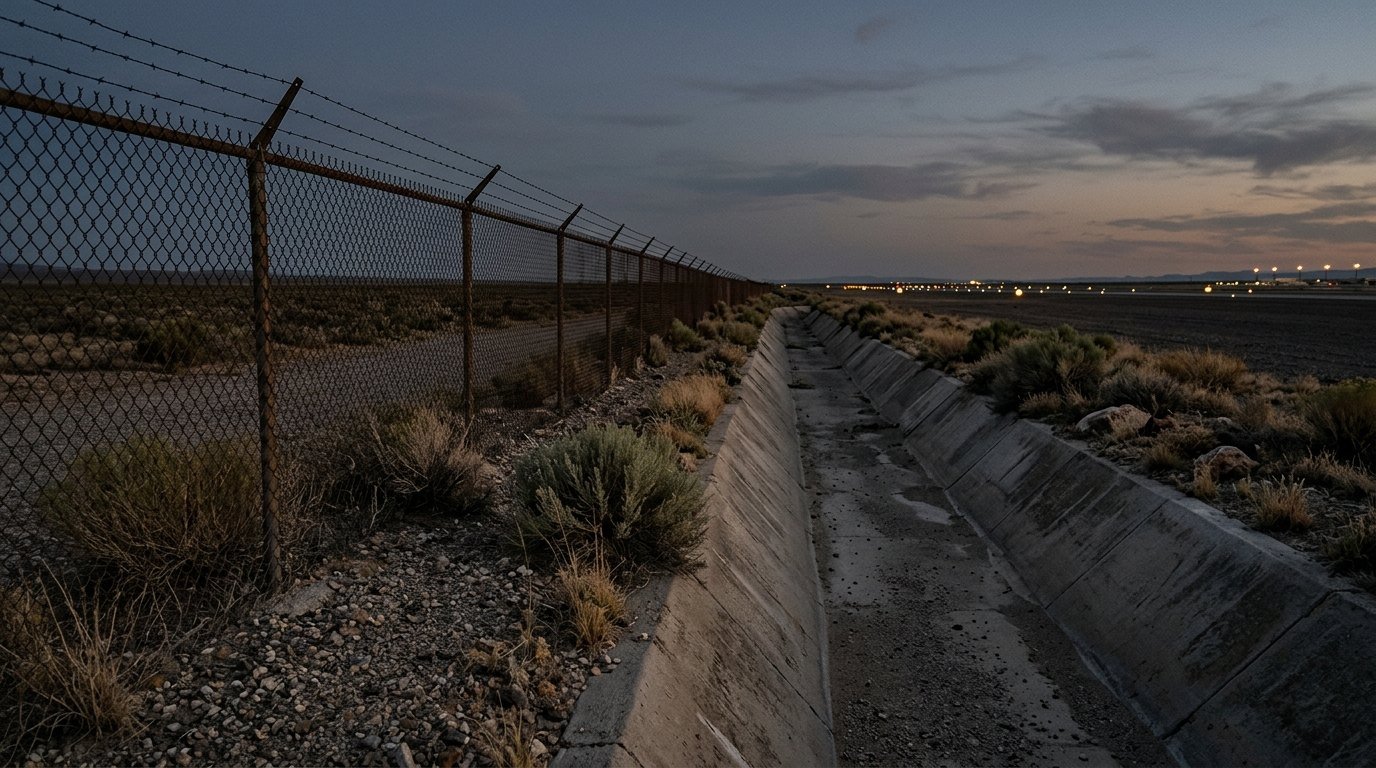
Cameras recorded what happened. It still took twelve days to find her. How does a search miss someone lying a short walk from an airport terminal? Alisa Goods found dead in a drainage channel is a story about the limits of searching, not about a crime.
Verified key facts
- Las Vegas Metropolitan Police, via CBS News: Alisa Goods, 63, was found dead early on 20 August in a drainage ditch near Harry Reid International Airport.
- LVMPD: Airport surveillance from 8 August shows Goods falling down an embankment, getting up, then collapsing with no further movement observed.
- CBS News: Goods had left a friend's home to take a bus to CVS and was reported missing on 10 August.
- NBC News: Police believe later messages appearing to come from Goods' phone may have been sent by scammers using spoofing technology.
- LVMPD/CBS: Her position in the drainage area was not visible from the roadway, and a cause and manner of death had not been released.
How was Alisa Goods found dead so close to the airport?
A missing-person search can feel as though every camera and street has been checked. Alisa Goods found dead near Harry Reid International Airport shows how a person can still be hidden in plain geography. Las Vegas Metropolitan Police said officers were called before 2am on 20 August to a drainage-ditch area near the Terminal 1 parking structure. Surveillance review then gave investigators a painful timeline: Goods fell down an embankment on 8 August, managed to get up and later collapsed, with no further movement visible. Police said the place where she came to rest could not be seen from the road. The discovery ended the search but opened questions about how information was connected.
What does the surveillance video establish about 8 August?
According to the police account carried by CBS News, the airport footage shows a sequence of movement rather than an attack: Goods falls down an embankment, gets back up and later collapses. Investigators said no further movement was observed after that point. The video narrows where and when she was last active, but it does not by itself establish a medical cause of death. The Clark County coroner had not publicly announced the cause or manner when the latest reports were published. That distinction is important. The footage explains why police focused on the airport drainage area; it does not justify speculation about what physical condition led to the collapse.
Why did the texts make the disappearance look more suspicious?
Goods' relatives began receiving messages that appeared to come from her phone days after she disappeared. CBS and NBC reported requests for cash, gas money and Bitcoin, details that alarmed the family because they did not sound like her. One relative said the request for petrol was particularly strange because Goods did not drive. The messages changed the emotional character of the search: relatives feared that another person might possess the phone or that Goods was being held. In missing-person investigations, digital activity can be a valuable lead, but spoofed caller IDs and messaging accounts can also create false trails. Here, police later said the apparent communications were likely not evidence that Goods herself was sending messages.
What does police mean by spoofing in this case?
NBC News reported that investigators believe scammers may have used spoofing technology to make messages appear as though they came from Goods' number. Spoofing can manipulate the caller or sender identity shown to a recipient without requiring the target's physical phone to be in the scammer's hand. Criminals often exploit public attention around missing-person cases because relatives are emotionally vulnerable and willing to respond quickly. Police described the suspected senders as unrelated bad actors rather than people linked to Goods' disappearance. That conclusion matters because it separates a distressing fraud attempt from the physical evidence placing Goods near the airport on 8 August.
Why can a drainage ditch remain unseen during a search?
Urban infrastructure creates surprisingly difficult search terrain. Drainage channels, retaining walls, embankments and service roads can sit only metres from heavily travelled routes while remaining invisible at street level. A person below the grade of a road or behind landscaping may not be visible to drivers, pedestrians or patrols. Airports add layers of restricted zones, parking structures and multiple camera systems operated for different purposes. Search teams must convert a broad timeline into specific locations before those spaces can be checked systematically. In Goods' case, the later surveillance review appears to have identified the embankment sequence, but the body was discovered after a separate call reporting a deceased woman in the drainage area.
How should the family's criticism of the search be understood?
Relatives had publicly expressed frustration before Goods was found, saying they wanted greater urgency and clearer answers. That frustration is understandable in a case where every day without contact increases fear. Police departments, however, triage missing-person cases using available evidence about vulnerability, threats, medical conditions and suspicious circumstances. The spoofed messages complicated that assessment by creating an apparent digital trail that investigators later viewed as unrelated. A useful review would examine when airport footage was requested, how quickly it was searched and whether information from family, transit systems and cameras was integrated efficiently. Such a review can identify procedural lessons without assuming misconduct before the chronology is documented.
What remains unresolved after the 20 August discovery?
The central unanswered question is medical, not conspiratorial: the cause and manner of Alisa Goods' death. Police have described what the video shows and where her body was found, but the coroner's findings will determine what can be said about why she collapsed. Investigators may also continue tracing the spoofed messages, both to protect the family and to identify any fraud offence. For relatives, the surveillance timeline replaces the uncertainty of a missing-person case with a different kind of grief. The most responsible reporting from this point is to follow the coroner and LVMPD records rather than fill the remaining gaps with theories the evidence has not supported. The discovery also illustrates a difficult limitation of camera evidence. Surveillance systems are usually positioned to protect entrances, traffic lanes and buildings, not to provide continuous coverage of every embankment or drainage area. A person can appear on one camera, move beyond its useful angle and remain physically close to a busy location without being visible from the road. Investigators can reconstruct that path only after identifying and synchronising the right footage. That distinction matters for the family: the later ability to trace Goods's movements does not mean searchers necessarily had a clear real-time view of where she had fallen. It is one reason police timelines can change substantially after video has been collected and reviewed.
Sources
- CBS News - Alisa Goods found dead (www.cbsnews.com)
- NBC New York - police and spoofing account (www.nbcnewyork.com)
- FOX5 Vegas - airport embankment report (www.fox5vegas.com)
- CBS News - earlier missing-person and text-message report (www.cbsnews.com)
- Note: The cause and manner of death have not been publicly released, and the surveillance footage does not establish a medical cause.
You may also like to read

US Imposes 25% Tariff on Most Brazilian Goods as Section 301 Clock Runs Out
Washington has imposed a 25% Section 301 tariff on most Brazilian goods from 22 July, citing content-moderation orders, IP failures and ethanol barriers.
Northwest Indiana Is Still Without Power. Why Is Recovery Taking So Long?
Northwest Indiana entered a second week of outages after the 11 August storm, disrupting food, schools, communications and daily life across Gary.

Texas Is Baking Above 100F. Why Does a 112F Heat Index Matter More?
Texas faces dangerous triple-digit heat, with Houston heat-index readings forecast as high as 112F and extreme heat warnings around Dallas.

A Tornado Tears Through a Long Island Beach Club as Storms Pummel the Northeast and Nassau County Declares an Emergency
A suspected twister destroyed around 50 cabanas at Atlantic Beach as flooding and storm damage spread across the region, with one minor injury reported.