NASA astronaut Anil Menon reaches the ISS aboard Soyuz as US-Russia seat swaps endure
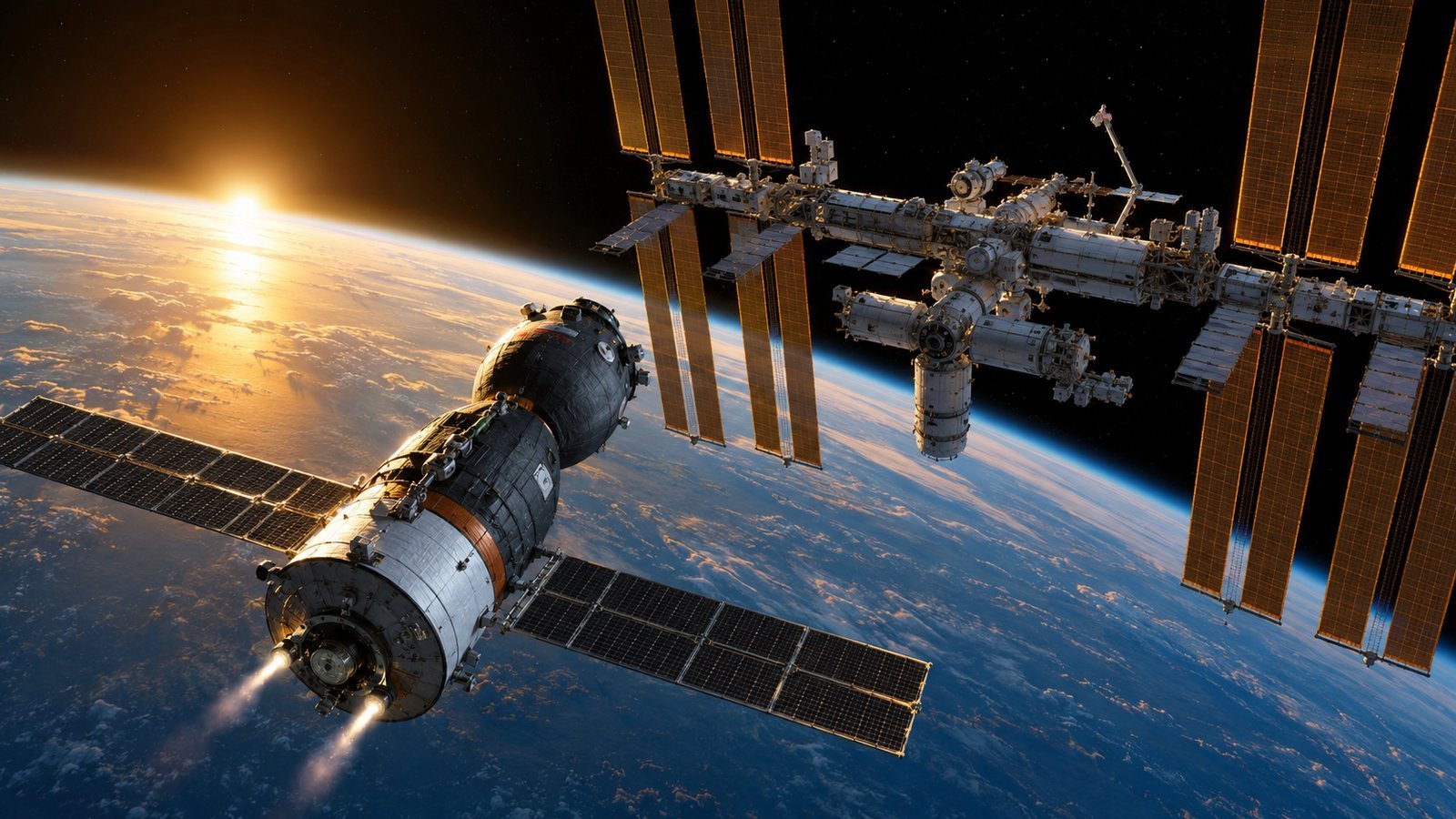
Soyuz MS-29 carried NASA's Anil Menon and cosmonauts Pyotr Dubrov and Anna Kikina from Baikonur to the ISS in just over three hours on 14 July.
Commentary & Analysis ·
Verified key facts
- Soyuz MS-29 lifted off from Baikonur Cosmodrome on 14 July 2026 at 10:47 a.m. EDT (1447 GMT), Space.com reported.
- NASA astronaut Anil Menon flew with Roscosmos cosmonauts Pyotr Dubrov and Anna Kikina, according to AIAA and Space.com.
- The spacecraft docked with the International Space Station at 1:52 p.m. EDT after a fast two-orbit rendezvous, SpacePolicyOnline reported.
- The crew is scheduled for a roughly eight-month expedition, returning to Earth around April 2027.
- The flight continues the NASA-Roscosmos integrated crew arrangement that keeps both agencies represented on every station handover.
The International Space Station gained three new residents this week. A Russian Soyuz rocket carried NASA astronaut Anil Menon and cosmonauts Pyotr Dubrov and Anna Kikina to orbit on 14 July. Space.com reported the Soyuz MS-29 spacecraft lifted off from Baikonur Cosmodrome in Kazakhstan at 10:47 a.m. EDT, which was 7:47 p.m. local time at the steppe launch site.
A three-hour commute to orbit
The ride uphill was brisk even by modern standards. SpacePolicyOnline reported the capsule reached the station after just two orbits of Earth. Docking came at 1:52 p.m. EDT, barely three hours after launch. Fast-rendezvous profiles have become a signature of Soyuz operations, sparing crews the two-day chases that were once standard.
AIAA also confirmed the smooth trip, noting the Soyuz delivered one American and two Russians to the orbiting laboratory. Hatches opened after standard leak checks, and the newcomers joined the resident crew for the traditional welcome ceremony.
Who is flying on MS-29
Anil Menon brings an unusual resume to orbit. The Minnesota-born flight surgeon served as SpaceX's first crew medical officer before joining NASA's astronaut corps in 2021. This is his first spaceflight. ABC News reported his launch continues the practice of American astronauts training and flying from Kazakhstan alongside Russian crewmates.
His companions are veterans. Pyotr Dubrov logged a marathon 355-day stay on the station across 2021 and 2022. Anna Kikina, Russia's only active female cosmonaut, previously flew on a SpaceX Crew Dragon in 2022. Between them, the Soyuz crew spans both nations' crew vehicles.
- Anil Menon: NASA flight surgeon and former SpaceX medical officer, first flight
- Pyotr Dubrov: Roscosmos veteran of a 355-day extended expedition
- Anna Kikina: previously flew on Crew Dragon under the seat-swap deal
An eight-month expedition
The trio joins the station for a long tour. Space.com reported the mission is planned to last about eight months, with a return to Earth scheduled for April 2027. That is longer than the six-month rotations that anchored station planning for two decades. Stretched expeditions reduce the number of crew rotation flights each agency must buy and schedule.
During their stay the crew will support hundreds of experiments in microgravity science. Menon's medical background makes him a natural fit for human-physiology research, an area NASA prioritizes as it plans longer missions to the Moon and eventually Mars.
Seat swaps outlast the politics
The flight is a reminder of a quiet diplomatic constant. NASA and Roscosmos still exchange seats, with American astronauts on Soyuz and Russian cosmonauts on US commercial vehicles. SpacePolicyOnline reported the integrated crew arrangement ensures each agency always has a presence aboard, protecting station operations if either transport system stands down.
That insurance has real value. Both Soyuz and Crew Dragon have faced technical stand-downs in the station era. Cross-training means a single grounded vehicle never leaves one country's segment unstaffed. The ISS cannot be safely operated without specialists for both the Russian and US segments on board.
The station's final stretch
Every new expedition now carries an endgame subtext. NASA and its partners plan to retire the ISS around 2030, with a SpaceX-built deorbit vehicle contracted to bring it down safely. Crews arriving in 2026 are among the last dozen or so rotations the laboratory will host. Menon, Dubrov and Kikina will spend their tour keeping the aging outpost productive.
Russia has signaled it will fly its own station program after the ISS, while NASA is funding commercial successors. Whether integrated crews survive that transition is an open question. For now, ABC News reported, the joint flights continue on schedule, insulated from the broader freeze in US-Russia relations.
The handover aboard the station
Attention now shifts to the handover sequence aboard the station. The outgoing Soyuz crew will complete their farewell activities and return to Kazakhstan in the coming days. After that, the expedition settles into its research rhythm. The next crewed traffic will come from the US side, keeping the busy 2026 station manifest on track.
Sources
- Space.com - Russia launches NASA astronaut Anil Menon and 2 cosmonauts to the International Space Station (July 2026)
- SpacePolicyOnline - New Russian-American Crew Arrives at ISS (July 2026)
- AIAA - Soyuz Carries U.S. Astronaut and Two Cosmonauts to Space Station (July 15, 2026)
- ABC News - NASA astronaut joins Russian cosmonauts in launch to International Space Station (July 2026)
You may also like to read

Alphabet Beats on Revenue but Shares Slip as AI Capex Guidance Climbs to $205bn
Alphabet grew revenue 24% to $119.8bn and cloud sales 82% in Q2, yet shares fell after it raised 2026 capital spending guidance to as much as $205bn.

Apple Intelligence cleared for China launch as regulator approves Alibaba-powered AI
China's cyberspace regulator has registered Apple's generative AI service, ending a 22-month wait and clearing iPhone AI features built on Alibaba's Qwen models.
ASML beats forecasts and lifts 2026 outlook as AI keeps chip equipment orders rolling
The Dutch lithography giant posted €9.3bn in sales and €2.9bn profit, raised full-year guidance sharply and will expand EUV capacity 30% to feed the AI boom.

Airtel Leads Nifty as Jio IPO Nears: Telecom's Duopoly Test
Bharti Airtel led Nifty gainers on 14 July as Jio's Rs 30,000-52,000 crore IPO heads for an August-October window. Analysts see a listed duopoly reshaping telecom.