When Do Mexican Cattle Exports Restart, and Will Beef Prices Follow?
The Douglas, Arizona livestock gate will reopen on 24 August, restoring Mexican cattle exports under tighter New World screwworm screening.
Commentary & Analysis ·
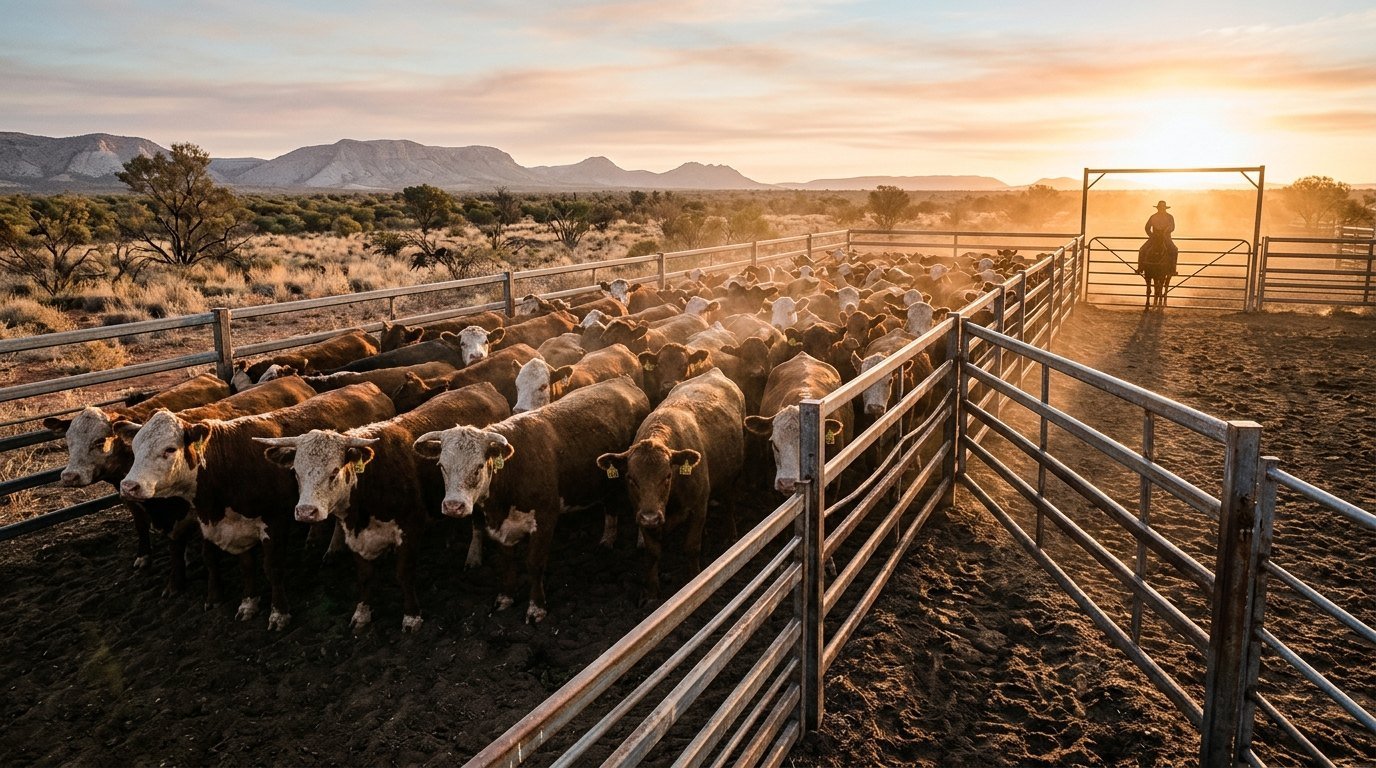
The US border reopens to Mexican cattle on Monday after a year closed by screwworm - but at one gate only, in Douglas, Arizona. If you are hoping that means cheaper beef soon, the numbers ask for patience: it starts at about 700 head a day against a trade that used to move 1.2 million a year. Here's what reopens, what stays shut, and what could close it again.
Verified key facts
- USDA APHIS: The Douglas, Arizona port is scheduled to reopen to livestock on 24 August, while other southern livestock ports remain closed.
- Associated Press: Mexico had 1,969 active New World screwworm cases, fewer than half the number a year earlier, with the outbreak present in 30 of 32 states.
- Associated Press: Before the closure Mexico exported about 1.2 million head of cattle a year to the US, a trade worth roughly $1.2bn.
- Associated Press: Mexican ranchers diverted animals into their home market during the ban and in some cases received nearly 40% less than US sale values.
- USDA / Associated Press: Initial Douglas throughput is expected to start around 700 head per day, rise to 900 and then as high as 1,300 under RFID, inspection and detection controls.
The border is reopening on Monday, not returning to normal
Mexican cattle exports to the United States are poised to resume on 24 August, but the restart is intentionally narrow. The US Department of Agriculture's Animal and Plant Health Inspection Service says Douglas, Arizona, will be the first livestock port to reopen after a yearlong closure driven by New World screwworm risk. As of Saturday, all southern livestock ports were still closed; Santa Teresa and Columbus in New Mexico remain without reopening dates. That timing is important because describing exports as already resumed would overstate the position. The Associated Press reports that ranchers in northern Mexico are preparing cattle and paperwork for the first movements, while Washington retains the power to pause the opening if disease indicators worsen. This is a controlled test of a trade lane, not the end of the animal-health emergency.
Screwworm is a biological problem with an economic border
New World screwworm is caused by fly larvae that feed on the living tissue of warm-blooded animals. A single infected animal moving north can therefore carry a risk whose consequences extend far beyond the value of the shipment. USDA's response has combined surveillance, inspection and a phased-border strategy with eradication efforts in Mexico. Associated Press reporting puts the current Mexican tally at 1,969 active cases, less than half the level a year earlier but still spread across 30 of the country's 32 states. That is why eradication and trade reopening are moving at different speeds. The US is not declaring the parasite defeated. It is judging that cattle from the lowest-risk northern areas can move under conditions that reduce the probability of transporting an infestation across the border.
Douglas was chosen because distance and inspection capacity matter
USDA says Sonora and Chihuahua are the lowest-risk Mexican states because of established inspection programmes and their distance from the heaviest disease burden farther south. Douglas borders Sonora, and the agency's latest status page says the closest active case to the port was about 325 miles away, detected on 22 July. Every animal will undergo a full USDA inspection. AP also describes additional controls including radio-frequency identification tags, electronic readers and trained detection dogs. The choice of one port allows regulators to observe how cattle, documents and inspections move before expanding to Santa Teresa or Columbus. It also creates a geographic bottleneck for ranchers who previously used several crossings. Disease risk is being priced not through a tariff but through slower throughput, extra handling and the possibility that an audit can close the gate again.
A year without the US market cut deeply into Mexican ranch income
Before the ban, Mexico exported roughly 1.2 million cattle a year to the United States, mainly from northern ranching states, according to the Associated Press. The trade generated about $1.2 billion. When the border closed, animals that would have earned US prices had to be sold domestically or kept longer. AP interviewed ranchers who said domestic sales could fetch nearly 40% less than the US market. That differential explains the intensity of pressure for reopening. It is not merely a question of export volume; it changes the value of each calf and the cash available for feed, water, breeding stock and drought resilience. The long closure also altered the US side by removing a familiar source of feeder cattle at a time when the American herd was already unusually small.
The first-week limits will keep the flow below the old rhythm
Associated Press reporting says the restart is expected to begin at about 700 head per day through Douglas, increasing to around 900 in the second week and potentially reaching 1,300 as operations prove workable. Even if those targets are achieved, the system will not instantly recreate the pre-closure trade. Inspections consume time, one port cannot replace the capacity of an entire border network, and ranchers need animals that meet weight, health and documentation requirements. For US buyers, that means the reopening may help supply but is not a sudden answer to high beef prices. For Mexican sellers, the benefit will be uneven: cattle close to Sonora and ready for export are positioned first, while producers elsewhere must wait for additional routes or continue selling into the domestic market.
Eradication remains a separate campaign from commercial reopening
The fact that active cases are below last year's level is evidence of progress, not a declaration of victory. Screwworm control depends on detecting wounds, reporting cases, treating animals, restricting movements and reducing the fly population over a large territory. USDA's current-status guidance explicitly says the reopening timeline is flexible and can be adjusted if Mexico misses Joint Action Plan milestones or if new risk appears in Sonora or Chihuahua. That design prevents commercial momentum from becoming an excuse to ignore epidemiology. It also means exporters carry policy risk that cannot be hedged in the usual way. A truck scheduled for the border could lose access if the risk assessment changes. The durability of trade will therefore depend on disease data from hundreds of miles south of the crossing as much as on demand from US feedlots.
24 August and the first 700 head will set the tone
Monday's opening at Douglas is the first concrete test. Inspectors will have to process cattle under the new protocol without creating queues that undermine animal welfare or commercial viability. Ranchers will watch rejection rates, documentation problems and the time required to move a shipment. USDA will watch for any evidence that its risk assumptions were too generous. If the first 700-head days proceed smoothly and Mexican case numbers continue to fall, Santa Teresa and Columbus could follow, restoring competition between routes and allowing trade to scale. If an infected animal or a nearby outbreak changes the assessment, the phased system is designed to stop. That is why the most important headline is not that the yearlong ban has simply ended, but that a supervised border experiment begins at Douglas on 24 August.
Sources
- USDA APHIS - phased reopening (www.aphis.usda.gov)
- Screwworm.gov / APHIS current status (direct.aphis.usda.gov)
- USDA live cattle import guidance (direct.aphis.usda.gov)
- Associated Press (apnews.com)
- Note: As of 22 August, exports had not yet resumed. The first reopening is scheduled for Douglas, Arizona on 24 August; other ports remain closed until USDA decides otherwise.
You may also like to read
US Hits Canada With 50% Tariffs as Trade Deal Collapses at the Deadline
US tariffs of 50% on $20bn of Canadian goods are now in force after talks failed, with Ottawa planning retaliation from 8 September.
Trump Opens a 90-Day Beef Import Window as Grocery Prices Become a Midterm Problem
Trump plans a 90-day expansion of low-tariff ground beef imports as record prices collide with ranchers’ effort to rebuild the US herd.

The Global Bond Rout Tests Scott Bessent's Buybacks as the 30-Year Yield Holds Above 5.2 Per Cent
Long-dated borrowing costs hit levels unseen since 2007 in the US and 1996 in Japan, and a doubled Treasury buyback has only briefly slowed the sell-off.

Warren Buffett, Not Greg Abel, Initiated Berkshire Hathaway's Alphabet Bet
Eight months after handing over as chief executive, Buffett is still making Berkshire's biggest stock calls while Abel runs the operating companies.