Katy Perry Objects After White House Uses Firework in an Iran Bombing Video
The singer objected after her song Firework appeared in a White House video tied to bombing in Iran, reviving the fraught debate over political use of popular music.
Commentary & Analysis ·
Verified key facts
- Katy Perry publicly objected after the White House used her song Firework in a social-media video connected to bombing in Iran.
- The video linked the song to a politically and militarily sensitive event.
- The precise licensing status of the use may not be public.
- An artist's objection does not automatically establish copyright infringement.
- Responses from the White House, label or publishers could clarify the situation.
An artist pushes back
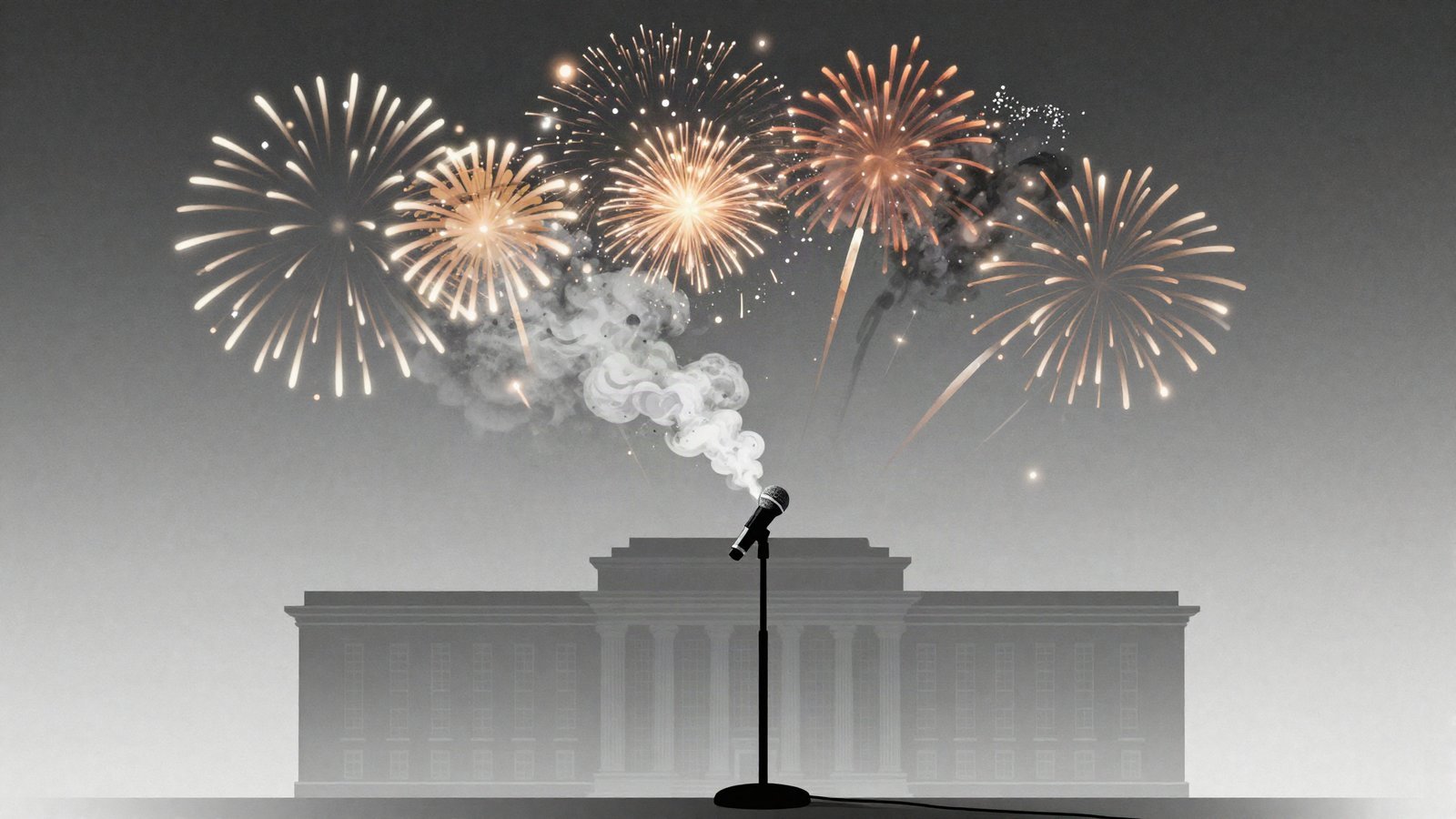
Katy Perry has publicly objected to a use of her song Firework. The White House featured the track in a social-media video connected to bombing in Iran. The objection places the singer at the center of a recurring tension. That tension pits a musician's work against its use in charged political messaging.
For Perry, Firework has long functioned as an anthem of empowerment and celebration. That association sits far from imagery of conflict. Seeing the song attached to a video about military action prompted a public statement of disapproval. She signaled that she did not welcome the use.
Licensing versus endorsement
The episode illustrates a distinction that often gets blurred. There is a technical question of whether a song was licensed for use. There is a separate matter of whether an artist endorses the message it accompanies. A track can appear through a platform's licensing arrangements without the artist controlling the context.
This is why an objection and a legal claim are not the same thing. An artist may find a use unwelcome while it remains within the bounds of a license. The precise licensing status here may not be public. That gap means the line between a moral objection and a legal grievance is hard to draw from outside.
The moral dimension
Beyond the legal mechanics lies a question of artistic association. Musicians often feel a strong sense of ownership over how their work is used. That feeling intensifies when a song becomes tied to government messaging they did not sanction. This moral claim is distinct from the copyright framework.
Perry's objection reflects that dimension. Even a permitted use can be publicly rejected as misrepresenting an artist's intentions. Such statements are a way of reclaiming the narrative around a song. They draw a clear line between the music and the message it has been enlisted to support.
High exposure, high risk
Political use of popular music is a double-edged sword. It can generate enormous exposure. It places a song before vast audiences in moments of national attention. But that same visibility can create reputational conflict.
Many parties hold a stake in a single song. They include the artist, the record label, the music publishers and the entity using it. When a song is tied to a divisive event, the artist may face pressure from fans. The entity using the music may face criticism for deploying it without clear consent.
The mechanics of platform licensing add complexity. Social platforms often hold broad music licenses. Those licenses can cover a vast catalog of songs. A video can therefore include a track without a separate, direct clearance.
That convenience is exactly what troubles many artists. Broad licensing was designed for everyday user content. It was not built with government messaging in mind. The result is a mismatch between how songs are cleared and how they are used.
Artists have limited tools once a song is used this way. They can object publicly and shape the conversation. They can ask for a takedown or explore legal options. But each path depends on facts that may not be visible from outside.
The stakes are reputational as much as legal. A song tied to a controversial event can strain an artist's brand. Fans may react strongly in either direction. Managing that response becomes part of the artist's public role.
For governments and campaigns, the calculation is different. Familiar music can lend emotion and reach to a message. But borrowing an artist's work invites the risk of a public rebuke. That tension is unlikely to disappear soon.
What the objection does not settle
It is worth being clear about limits. A public statement of disapproval does not automatically prove copyright infringement. Whether any legal line was crossed depends on the licensing arrangements in place. It also depends on the nature of the use and applicable law.
The situation could unfold in several directions. The artist and her representatives might pursue a formal takedown or licensing action. Or the objection might remain a matter of public expression. Because the underlying facts are not fully visible, the outcome cannot be predicted from the objection alone.
A familiar flashpoint
Disputes over the political use of music are far from new. Artists across genres have clashed with campaigns and officials over songs at rallies. These conflicts recur because the interests involved are structurally at odds. Political actors seek the emotional power of familiar music, while artists guard its meaning.
The persistence of these clashes has kept the underlying questions unresolved. Platform licensing systems make it easy to attach popular songs to almost any content. Those systems do not capture the artist's consent to a particular message. That gap surfaces every time a high-profile use provokes an objection.
Responses from those involved
The clearest signals will come from the parties directly involved. Responses from the White House, the label or the publishers could clarify how the song came to be used. They may also reveal whether any action will follow. A formal takedown or licensing move would show the objection escalating into a concrete dispute.
Sources
- The Washington Post entertainment
- The Guardian music
You may also like to read
Ariana Grande Sues Unidentified Hackers Over Unreleased Music and Private Files
The singer filed suit against anonymous defendants over alleged theft of unreleased music and private files, spotlighting how artists pursue hidden attackers.
Iron Maiden sells half its empire to ABBA-backed Pophouse, and Eddie is the prize
The metal legends have sold a 50% stake in their catalog, name and likeness rights to Pophouse Entertainment, with mascot Eddie central to a planned digital universe.
TIDAL stops paying royalties on AI-generated music as industry labeling rules land
From 15 July, wholly AI-generated tracks on TIDAL earn no royalties and carry visible AI badges, as an eight-group coalition pushes voluntary labels across streaming.

Netflix's 'Little House on the Prairie' reboot builds momentum after modest start
Netflix's 'Little House on the Prairie' revival opened to 6.4 million views, then surged 55% in week two as the streamer confirmed a second season.