Broadcom Is Lining Up as Much as $100 Billion of Debt to Build AI Chips
Broadcom is discussing a vast debt package for AI infrastructure as Anthropic and other customers race to secure custom chips and data-centre capacity.
Commentary & Analysis ·
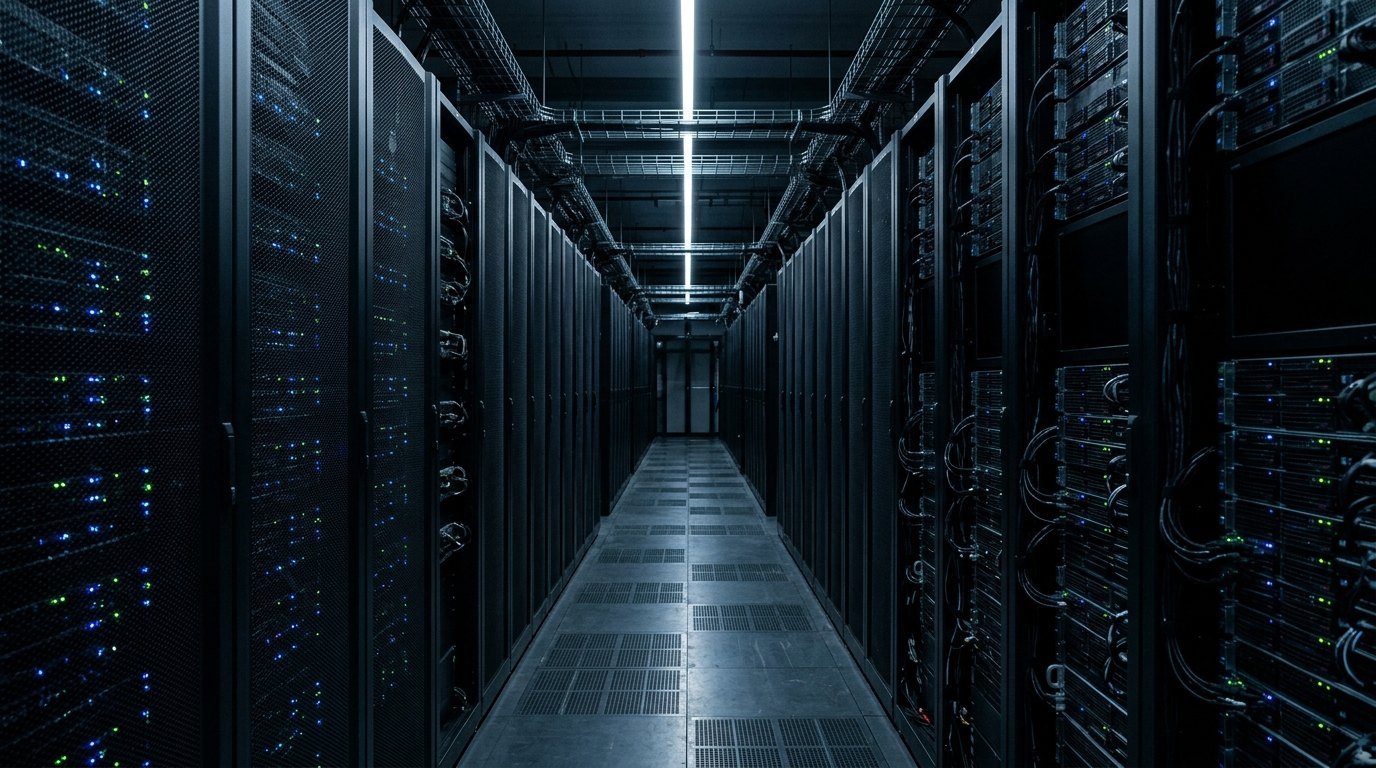
Somebody has to lend the money before an AI data centre exists. If you want to know who is really funding the AI build-out, the Broadcom AI chip debt plan is the clearest answer yet. Private credit, not shareholders, is being asked to carry it.
Verified key facts
- Bloomberg, via Yahoo Finance: Broadcom is in talks to raise more than $60 billion of debt for an AI chip financing structure benefiting Anthropic and other companies.
- SiliconANGLE: A proposed structure could include a $60-$70 billion senior-secured tranche plus roughly $30 billion of junior debt, potentially taking the package towards $100 billion.
- Reuters: Blackstone and Apollo are among parties discussing participation, and the financing terms remain subject to change.
- SiliconANGLE: Broadcom, Blackstone and Apollo launched the AI XPV Platform in June with $35 billion of financing tied to Anthropic compute expansion.
- Bloomberg reporting: Broadcom expects AI chip revenue to exceed $100 billion next year, with Anthropic expected to be a major contributor.
How big is the Broadcom AI chip debt plan really?
How much borrowing does it take to turn artificial intelligence from software into physical infrastructure? Broadcom's answer could be tens of billions of dollars at a time. Bloomberg, cited by Yahoo Finance, says the Broadcom AI chip debt plan under discussion starts above $60 billion and could become far larger if a junior layer is added. The money is intended to finance chips and related infrastructure for Anthropic and other customers rather than a conventional acquisition. That distinction changes the risk: lenders are effectively underwriting future demand for compute, the residual value of specialised hardware and the ability of fast-growing AI companies to keep consuming capacity.
Why are there senior and junior tranches in the proposed financing?
The structure described by Bloomberg resembles project finance more than an ordinary corporate bond. A senior-secured tranche could range from about $60 billion to $70 billion, with Broadcom guaranteeing part of it, while a roughly $30 billion junior tranche could absorb losses after senior lenders are paid. Different layers allow investors to choose different combinations of yield and risk. They also reveal how unusual the build-out has become. Instead of AI labs buying every accelerator outright, special-purpose vehicles can raise debt, acquire the hardware and lease compute capacity over time. The model moves enormous capital expenditure into financing structures whose economics depend on utilisation, contracts and the future value of the chips.
Where do Anthropic and OpenAI fit into Broadcom's strategy?
Anthropic is the clearest named beneficiary in the reporting. In June, Broadcom, Apollo and Blackstone launched an AI XPV platform that arranged $35 billion to support Anthropic's data-centre expansion using Broadcom silicon and networking. OpenAI is a separate but strategically important customer relationship. SiliconANGLE reported that Broadcom and OpenAI jointly unveiled an inference accelerator called Jalapeno in June, designed around the economics of serving models rather than only training them. Bloomberg's sources referred to Anthropic and other companies; some reporting has said those others may include OpenAI. Until contracts are disclosed, OpenAI should be described as a possible beneficiary, not a confirmed borrower under this particular debt package.
Why would Blackstone and Apollo want exposure to AI hardware?
Private-capital firms are looking for infrastructure-like cash flows in a sector that is growing faster than traditional infrastructure. If an AI lab signs a long-term capacity agreement, lenders can model those payments much as they would data-centre rent or power contracts. Blackstone and Apollo already have experience financing large physical assets, and their June vehicle with Broadcom created a template for combining chip supply with private credit. The attraction is yield backed by scarce computing infrastructure. The danger is that hardware generations turn over quickly: a data centre may last decades, but an accelerator can lose economic value much faster if a new architecture delivers a large efficiency leap.
What does $100 billion of AI chip revenue imply for Broadcom?
Broadcom has moved from being primarily a supplier of networking and connectivity silicon into a central designer of custom accelerators for hyperscale customers. Bloomberg has reported that the company expects more than $100 billion of AI chip revenue next year, an extraordinary number even for a company of Broadcom's size. Financing can reinforce that growth because a customer that cannot or does not want to buy tens of billions of dollars of equipment upfront can still deploy Broadcom systems through a lease-like structure. The trade-off is concentration. If a few AI labs account for a large share of revenue and financing exposure, their demand forecasts become increasingly important to Broadcom's own financial profile.
Could specialised AI chips become stranded assets?
That is the core credit question. A server rack full of accelerators has value only if it can run commercially useful workloads at competitive cost. Rapid improvements in performance per watt, memory bandwidth and model efficiency can shorten the economic life of hardware even when the machines still function. Lenders will therefore care about contract length, minimum-payment commitments, upgrade rights and any residual-value support Broadcom provides. The senior tranche can be protected with collateral and guarantees, while junior lenders demand higher returns for taking the first loss. The financing may prove highly profitable if compute demand keeps outrunning supply; it becomes more fragile if software efficiency or competing chips reduce scarcity.
What would a final $60-$100 billion Broadcom package reveal?
The decisive detail will be the final capital structure, not the headline maximum. A $60 billion senior deal with strong customer commitments would look different from a $100 billion package that depends on a large junior layer and aggressive residual-value assumptions. Reuters has stressed that discussions are still fluid, and Bloomberg's reported figures have already produced different market estimates. Once documents are signed, investors will want to know who guarantees what, how much Anthropic commits to use, whether OpenAI participates and how the assets are valued over time. The financing will be a test of whether AI compute is becoming a mature infrastructure asset class or is still being funded like a high-growth technology bet. There is also an accounting question hidden inside the financing. If a special-purpose vehicle owns the chips and leases capacity to an AI customer, Broadcom can turn a vast hardware order into a stream of contracted payments while lenders take asset and counterparty risk. That makes covenant design unusually important. Creditors will want protections around utilisation, replacement technology, customer termination and the resale value of accelerators that may be technologically dated before their financing matures. The more bespoke the silicon, the harder it may be to redeploy if one customer changes strategy, which is why the exact guarantees matter more than the eye-catching maximum headline.
Sources
- Bloomberg via Yahoo Finance - Broadcom seeks more than $60bn (finance.yahoo.com)
- Reuters via Yahoo Finance - Broadcom debt talks (finance.yahoo.com)
- SiliconANGLE - Broadcom reportedly seeking up to $100bn (siliconangle.com)
- Yahoo Finance - Broadcom financing structure (finance.yahoo.com)
- Note: The financing is under discussion and the tranches, guarantees, participants and beneficiaries may change before any transaction closes.
You may also like to read
Nvidia Pays Poolside $6 Billion to License Its Model Factory and Hire 109 Engineers
The third such deal in eight months hands Nvidia a rival's core technology and staff without a purchase, and without the antitrust review a takeover draws.

Marvell Hands Google an Option on $12.2 Billion of Its Own Shares in an Expanded Custom-Chip Deal
The warrant vests against purchasing milestones running to fiscal 2033 and could be worth around $120 billion in chip orders to Marvell.
Anthropic Signs a $9.1 Billion Compute Deal, Forms a Data-Centre Venture and Courts IPO Investors
The Claude maker locked in 191 megawatts of Texas computing capacity for 20 years, launched the Theseus infrastructure venture with Macquarie and GIC, and is meeting investors ahead of a possible autumn listing.
Brazil Splits a R$2.3 Billion AI Compute Push Across Chinese and US Technology
Brazil is committing about R$2.3bn to AI compute in Rio and Rio Grande do Norte, deliberately sourcing technology across Chinese and US ecosystems.