At Least 47 People Die When an Overloaded Boat Capsizes on a River in Nigeria's Sokoto State
The vessel was carrying more than 80 farm workers, most of them women and children, across a river in Goronyo when it went down on Thursday.
Commentary & Analysis ·
Verified key facts
- A boat capsized on Thursday on a river in the Goronyo local government area of Sokoto state, north-western Nigeria, the Associated Press reported
- At least 47 people died, according to Abdulkadir Yusuf, the Sokoto state manager of the National Inland Waterways Authority, who told the Associated Press the toll stood at 47 so far
- The boat was carrying more than 80 people, most of them travelling to farms for work near the town of Gorau, per the Associated Press
- At least 42 bodies had been recovered and counted, most of them women and children, the Associated Press reported
- Vanguard, the Nigerian daily, reported the same toll of 47 dead in its own account of the capsizing
- Deadly boat accidents are common in Nigeria during the rainy season, when overloaded and poorly maintained vessels operate without life jackets and safety rules go unenforced, according to the Associated Press
- NBC News and The Washington Post both carried the incident, describing dozens dead in the north-western state
- allAfrica reported in August 2025 that a separate Sokoto capsizing left 26 people rescued and 25 still missing as the search continued
A Morning Crossing to the Farms
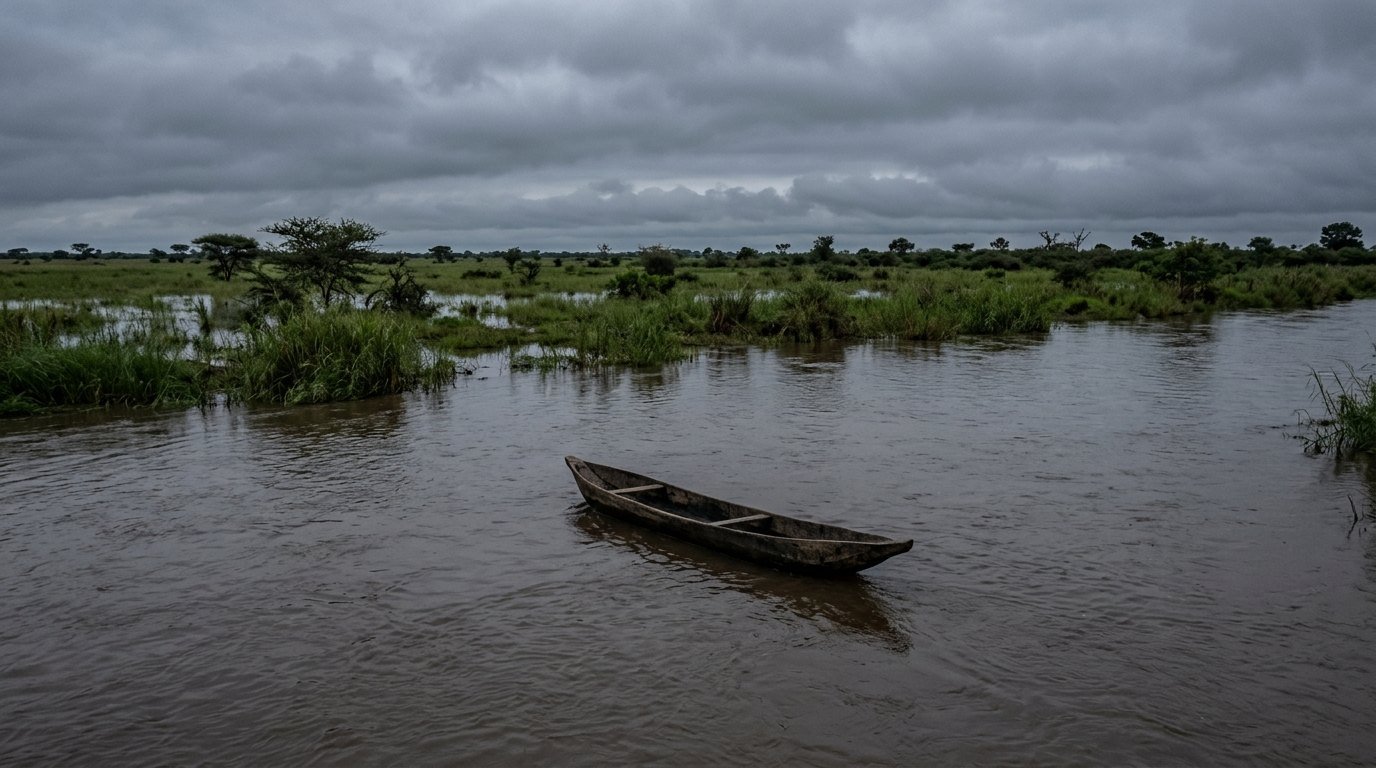
The boat left in the ordinary way, on an ordinary working morning. It was crossing a river in the Goronyo local government area of Sokoto state, in Nigeria's north-west, carrying labourers to farmland near the town of Gorau, when it capsized on Thursday, the Associated Press reported.
More than 80 people were aboard. Most of them were making the crossing because the farms are on the far bank and the river is the route, as it is every year at this point in the season. There is no bridge on that stretch and no scheduled service; the journey is made in wooden vessels operated privately and paid for by the trip.
By the time rescuers reached the site, the Associated Press reported, at least 42 bodies had been recovered. Most of the dead were women and children.
The Toll, and Why Officials Expect It to Rise
Abdulkadir Yusuf, the Sokoto state manager of the National Inland Waterways Authority, gave the death toll as 47, telling the Associated Press that this was the figure so far. The phrasing was deliberate. With more than 80 people aboard and 47 confirmed dead, a substantial number were still unaccounted for.
Vanguard, the Nigerian daily, reported the same figure of 47 dead. NBC News carried the account internationally, and The Washington Post reported dozens dead in the north-western state.
Counts in incidents of this kind move for days rather than hours. Bodies are carried downstream by a river running high with seasonal rain, and there is no passenger manifest to check recovered against expected, because none is kept.
Who Was on Board
The composition of the passenger list explains the composition of the casualty list. The Associated Press reported that the crossing was being made by people heading to the farms for work, and that most of those recovered were women and children.
That is the normal pattern of agricultural labour in the region during the growing season. Weeding, transplanting and harvesting on smallholdings are largely done by women, frequently with children accompanying them, and the work has to be reached daily from villages on the opposite bank.
It also explains why these disasters cluster in specific months. The same rains that make the farm work necessary make the river dangerous, and the two are not independent of one another.
A Pattern Nigeria Has Not Broken
River accidents of this scale recur in Nigeria with a regularity that has stopped surprising anyone. The Associated Press noted that deadly boat accidents are common in the country, particularly during the rainy season, and that the underlying causes are consistent from one incident to the next.
Sokoto state itself has seen this before. In August 2025, a capsizing in the same state left dozens missing, with allAfrica reporting at the time that 26 people had been rescued and 25 remained unaccounted for as the search continued.
The repetition matters because it removes the explanation of freak conditions. What happened on Thursday is a known failure mode of a known transport system operating in a known season.
Overloading, and the Rules That Exist on Paper
The Associated Press identified the mechanism plainly: a lack of enforcement of safety regulations allows faulty boats without life jackets to operate. Each element of that sentence is a separate failure.
Nigeria has an inland waterways regulator, the authority whose Sokoto manager gave Thursday's toll, and it has rules on passenger limits and buoyancy aids. What it does not have is a presence at the informal landing points where most crossings actually begin, which are riverbank clearings rather than licensed jetties.
Overloading is the proximate cause in most of these cases, and it is an economic decision rather than a careless one. Operators are paid per passenger, passengers need to reach the farms, and a boat that leaves half full leaves people behind.
Why the Rainy Season Is the Deadliest Time
Between roughly June and September, rivers across northern Nigeria run at several times their dry-season volume. Currents strengthen, submerged debris shifts, and banks that were firm in April become soft and undercut. A vessel that handles predictably for eight months of the year handles differently for the other four.
Wooden canoes of the type used on these crossings sit low in the water when loaded and have very little reserve buoyancy. Once water begins to come over the gunwale, the transition from stable to swamped is measured in seconds, which is why survival depends almost entirely on whether passengers can swim and whether anything floats nearby.
Life jackets would change that arithmetic. Their near-total absence on these routes, which the Associated Press specifically noted, is the single most consequential gap between the regulations as written and the crossings as made.
The Search Along the Goronyo Shoreline
The immediate task is the recovery operation on the stretch of river below Goronyo, where local divers and volunteers working alongside the National Inland Waterways Authority will continue searching for those still missing. With more than 80 people reported aboard, the gap between the passenger estimate and the 47 confirmed dead is the number that will determine the final toll.
Beyond that, the question is whether Sokoto state authorities impose any operating restriction on the crossing while the farming season continues. The labourers who used that route on Thursday still need to reach the same fields, and no alternative has been offered.
Nigeria's federal government has periodically announced life-jacket distribution schemes and passenger-limit enforcement after previous disasters. Whether anything follows this one will be visible at the landing points within weeks, not in the announcements that precede them.
Sources
- Associated Press - Boat capsizes in northwestern Nigeria, leaving dozens of people dead
- Vanguard - 47 dead as boat capsizes in Sokoto
- NBC News - Boat capsizes in northwestern Nigeria, leaving dozens of people dead
- The Washington Post - Boat capsizes in northwestern Nigeria, leaving dozens of people dead
- allAfrica - Nigeria: 47 Dead As Boat Capsizes in Sokoto
You may also like to read

At Least 30 Reported Killed in Kaduna as Nigeria's Bandit Crisis Persists
Armed men attacked Naridon village in Kaduna state, killing at least 30 people according to residents, in a night raid amid Nigeria's overlapping security crises.
Helicopter Crash in Northern Kenya Kills All Seven Aboard, Including a Telemundo Executive and Ecuador's Intelligence Chief
Five Americans, an Ecuadorian official and their Kenyan pilot died when the aircraft went down in the foothills of Mount Ololokwe in Samburu County.
Attacks, Abductions and Counter-Offensives Persist in the Lake Chad War
ISWAP and Boko Haram factions have continued attacks on bases, villages and schools while Nigerian forces report rescues, leaving the northeast an active war zone.
Cabo Delgado Attacks Displace Tens of Thousands as Insurgency Spreads to New Districts
Renewed assaults in northern Mozambique uprooted tens of thousands between May and July, testing gains that government and allied forces had claimed in the region.