US Airstrikes Hit Tehran Area for First Time as Iran Counts Rising Toll
American strikes reached the Iranian capital's outskirts on day five of renewed war, with Iran reporting 35 dead and its negotiator calling the fight existential.
Commentary & Analysis ·
Verified key facts
- US strikes hit targets around Tehran for the first time in the current wave, Iranian state media said on 16 July
- US Central Command said its fifth consecutive day of strikes targeted command centres, air defences and missile and drone capabilities
- Explosions were reported in Bandar Abbas, Qeshm Island, Chabahar, Sirik and Konarak, per Iranian media
- Iran's health ministry said at least 35 people have been killed and more than 300 injured since fighting resumed
- US forces fired on a Curacao-flagged oil tanker accused of trying to break the blockade of Iranian ports, NPR reported
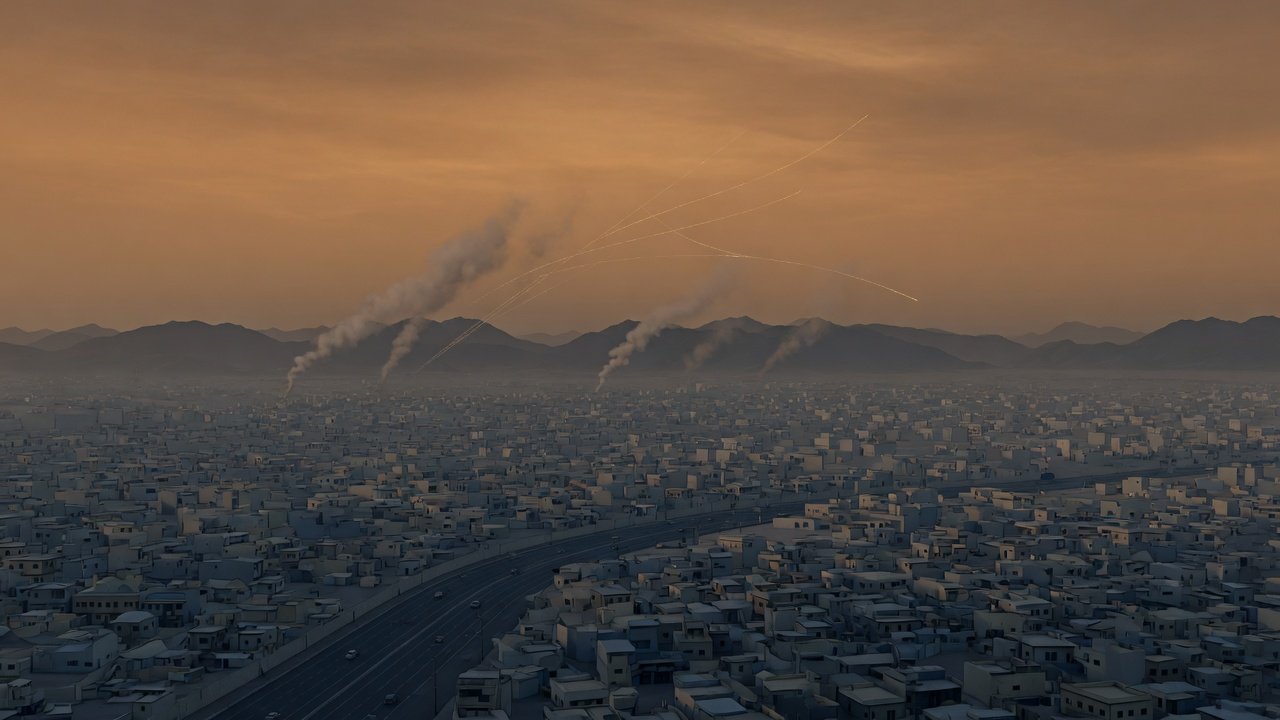
The United States extended its air campaign to the outskirts of Tehran overnight into 16 July, the first strikes around the Iranian capital in the current wave of fighting. Iranian state media reported attacks across much of the country, while Washington described the operation as the fifth consecutive day of a campaign to defang Iran's military. The widening target list is narrowing the space for diplomacy.
Strikes reach the capital
Iranian state media said US attacks hit targets around Tehran and other areas of northern Iran for the first time in this round, Euronews reported. Air defences were activated over the capital as explosions echoed through the night. Al Jazeera reported blasts in the southern port city of Bandar Abbas and on nearby Qeshm Island, as well as in Sirik, Chabahar and Konarak on the southeastern coast.
US Central Command said the fifth consecutive day of strikes was aimed at Iranian command centres, air defence sites, and missile and drone capabilities. CNN reported that Washington frames the campaign as protecting commercial vessels in the Strait of Hormuz. An earlier 90-minute wave targeted coastal defence systems and cruise missile storage on Greater Tunb Island, according to CNN's live coverage.
Enforcing the blockade at sea
The air campaign is running alongside a naval squeeze. NPR reported that US forces fired on a Curacao-flagged oil tanker accused of trying to break the blockade of Iranian ports. Al Jazeera's live blog said the vessel was disabled rather than sunk. The incident shows Washington is prepared to use force against third-country shipping to keep Iranian oil off the market.
President Trump has said strikes on Iran will continue 'until I say' they stop, according to Al Jazeera. The blockade was reinstated after the interim truce collapsed on 8 July, when each side accused the other of violating a 14-point memorandum of understanding signed in June.
Iran's toll and Tehran's message
Iran's health ministry said at least 35 people have been killed and more than 300 injured since the latest round of fighting began last week, Al Jazeera reported. Independent verification remains difficult inside Iran. The strikes around Tehran carry symbolic weight beyond their military effect, bringing the war to a capital of roughly nine million people.
Iran's lead negotiator, Brigadier General Mohammad Bagher Ghalibaf, told the New York Times that Iran is 'in an essential and existential war with America', while signalling that diplomacy remains possible. Army spokesman Brigadier General Mohammad Akraminia drew a sharper line. 'Under no circumstances will we allow America to interfere in the Strait of Hormuz. This is Iran's invincible red line,' he said, per CNBC and Reuters.
Israel kept at arm's length
One notable feature of the current campaign is Israel's low profile. The Times of Israel reported that Washington does not want Israeli jets involved in this round and is not stationing refuelling aircraft at Ben Gurion Airport. Behind the scenes, however, the US still relies heavily on Israeli intelligence, Israeli media reported.
The arrangement reflects American calculations about Gulf partners, several of whom have pressed Trump to keep the campaign narrowly framed. Arab leaders have reportedly told the US president that Israel's prime minister is an obstacle to regional peace, according to the Times of Israel's 15 July live blog.
How the war reached this point
The conflict began on 28 February with Israeli and US strikes on Iran, and has cycled through escalation and truce ever since. An April ceasefire was extended by a June memorandum of understanding that lifted the blockade and suspended some sanctions. That arrangement collapsed on 8 July after attacks on tankers in the strait, and both sides have escalated daily since.
- 28 February 2026: Israel and the US launch the war's opening strikes on Iran
- April 2026: first ceasefire takes hold, later extended by a 14-point memorandum in June
- 8 July 2026: truce collapses; the US reinstates its blockade of Iranian ports
- 12-16 July 2026: five consecutive days of US strikes, now reaching the Tehran area
The options on Trump's desk
The Wall Street Journal reported that Trump is weighing options including intensified strikes, seizing Iranian islands near Hormuz, and bombing the fortified Pickaxe Mountain site. Ghalibaf's twin message of defiance and openness suggests Tehran wants an off-ramp it can survive politically. With strikes now touching the capital, each additional day raises the threshold any ceasefire must clear.
Diplomats point to the unused machinery of the June memorandum, which envisaged 60 days of negotiations toward a final deal. Whether either capital will pause long enough to use it is the open question of the week.
Sources
- Al Jazeera - US launches new attacks on Iran as Tehran targets Gulf sites (16 Jul 2026)
- Euronews - US strikes around Tehran for first time in most recent wave, Iranian state media says (16 Jul 2026)
- NPR - US fires a new wave of strikes on Iran and hits a tanker trying to skirt its blockade (15 Jul 2026)
- CNN - US says new strikes on Iran aimed at protecting vessels in Strait of Hormuz (15 Jul 2026)
You may also like to read
Trump Considers Seizing Iranian Islands and Bombing Pickaxe Mountain, Officials Say
The Wall Street Journal reports Trump is weighing ground forces to take Gulf islands and a strike on Iran's fortified Pickaxe Mountain nuclear site.
Analysts Say Iran Is Setting the Tempo in a Prolonged War With the United States
Analysts describe Tehran using regional disruption and endurance, not a single decisive battle, to shape US choices, as mediators keep searching for an off-ramp.

Iran Hits US Bases in Kuwait, Bahrain and Jordan as Gulf States Close Ranks
Iranian missiles and drones struck US military facilities in three allied states on 16 July, drawing GCC condemnation and warnings of a wider Gulf war.
Blind Inspectors, Split Security Council: Diplomacy Strains as Iran Frees US Citizen
The IAEA says it has lost track of Iran's nuclear inventories as the Security Council splits over snapback sanctions, yet a detainee release hints at an opening.