The Vuelta Opens on a Formula One Circuit in Monaco
Twenty-five corners, the Fairmont hairpin and the Louis II tunnel decide the first red jersey of a race that ends in Granada on 13 September.
Commentary & Analysis ·
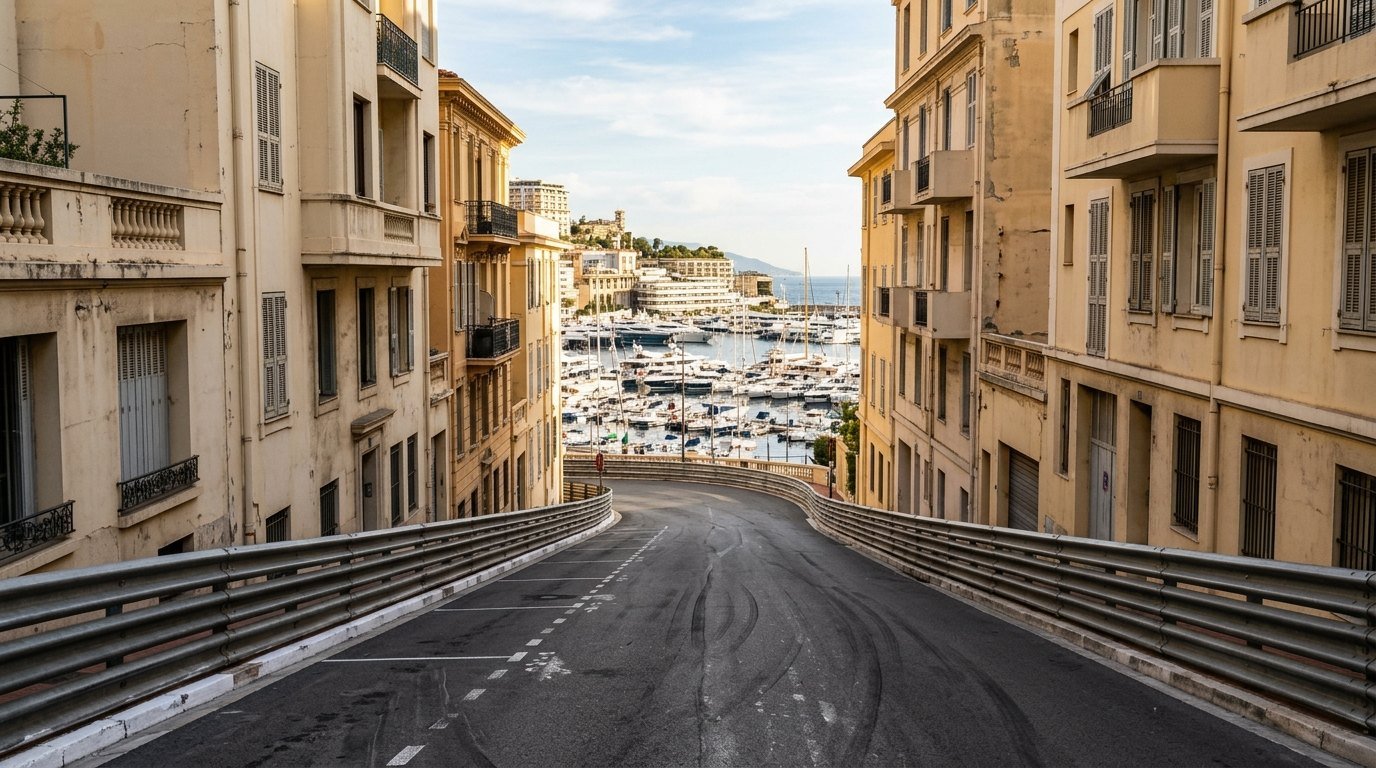
The Vuelta starts on a Formula One circuit this year: 9.4 kilometres through Monaco, 25 corners, finishing on the Grand Prix line. It is short, technical, and raw power is not the whole answer. Below: the course, the start times, who was expected to win, and where the race goes after Monaco.
Verified key facts
- The 2026 Vuelta a Espana began on Saturday 22 August with an individual time trial of about 9.4km through Monaco, according to Cyclingnews.
- The route uses sections of the Formula One circuit including the Fairmont hairpin and the Boulevard Louis II tunnel, finishing on Boulevard Albert 1er, ProCyclingUK reported.
- The first rider set off at 15:17 BST, with Tadej Pogacar starting at 18:19 BST and Primoz Roglic last at 18:20 BST, per Cyclingnews.
- Joshua Tarling was widely named as the stage favourite, with Wout van Aert the clearest challenger, according to ProCyclingUK.
- The race runs to 13 September and finishes in Granada rather than Madrid, with the Alhambra as the focal point of the final stage.
- The 21 stages cover 3,275km with six mountain stages, two individual time trials and more than 58,000 metres of climbing, per CyclingUpToDate.
A Grand Tour that starts on a racing circuit
The Vuelta a Espana began on Saturday afternoon in Monaco, on a course that belongs more naturally to motor racing than to cycling. Cyclingnews reported that the opening individual time trial measures about 9.4 kilometres, and ProCyclingUK described a route that takes in the Fairmont hairpin and the tunnel on Boulevard Louis II before finishing on Boulevard Albert 1er, the same line used for the Monaco Grand Prix.
Foreign starts are now a fixture of the Vuelta's commercial model, but few have been this compact. The whole stage is contained within a principality of barely two square kilometres, which produces an opening day of unusual density: every rider on the same short circuit, in front of the same crowd, inside a single afternoon.
Twenty-five corners in nine kilometres
The course is technical rather than fast. IDL Pro Cycling counted 25 turns across nine kilometres, and the surface changes gradient repeatedly as it climbs away from the harbour before dropping back down.
That profile rewards a specific skill set. Pure power output matters less than it would on an exposed flat course, because riders spend a large share of the effort braking, cornering and accelerating out of turns. Bike handling and line choice become worth seconds, and the aerodynamic advantage a specialist normally enjoys is compressed.
Equipment choices reflect that. On a course with this many corners, riders trade some aerodynamic benefit for control, and several will have opted for shallower wheels and a less extreme position than they would use on an open time trial. Rouleur described the stage as a discipline of its own rather than a conventional test against the clock.
The start order and the long wait
The first rider left the ramp at 15:17 BST, which is 16:17 in Monaco, Cyclingnews reported. The general classification contenders went last, as convention dictates: Tadej Pogacar at 18:19 BST and Primoz Roglic at 18:20 BST, closing the stage.
Late start slots are a mixed inheritance. They come with the best available information about split times and conditions, and with the pressure of riding to a target set hours earlier by someone who has already finished, showered and heard the crowd.
Who was expected to win it
ProCyclingUK made Joshua Tarling the stage favourite and named Wout van Aert as his clearest challenger, on the reasoning that a short, technical effort narrows the field to riders who combine time-trial power with the handling to carry speed through corners.
Pogacar was rated capable of winning outright as well as taking time from his general classification rivals, which is the more consequential outcome. Nine kilometres cannot decide a three-week race, but it can establish a deficit that shapes how the other contenders ride the first week.
Monaco is also home to a large share of the peloton, several of whom train on these roads year-round. Local knowledge on a 25-corner circuit is not decisive, but it removes the reconnaissance disadvantage that usually accompanies a technical opening stage, and it flattens one of the small edges a specialist might otherwise hold.
Where the race goes from here
Stage two runs from Monaco to Manosque over 215.2 kilometres on Sunday, taking the race into Provence before it crosses towards Spain. The transfer out of the principality is immediate, and the opening week's flat and hilly stages will be raced by riders still adjusting to the compressed start.
The Vuelta finishes on 13 September in Granada, with the Alhambra as the focal point of the final stage. Madrid, the traditional closing city, does not feature at all this year.
Long opening transfers are the price of a foreign start, and they are not neutral. Riders spend the first two days travelling as well as racing, and the accumulated fatigue of a Monaco departure tends to show up in the second week rather than the first, which is one reason teams treat the grand depart as a logistical problem rather than a promotional one.
A route designed to be brutal
The overall parcours is severe even by the Vuelta's standards. CyclingUpToDate counted 3,275 kilometres across 21 stages, including six mountain stages, four medium mountain days, four hilly stages, four flat rides, two individual time trials and an uphill finale, with more than 58,000 metres of total climbing.
That last figure is the one that shapes the race. A Grand Tour with that much vertical gain and a summit-heavy conclusion tends to be decided late, which places a premium on riders who recover well across three weeks rather than those who peak in the opening days.
Ending at the Alhambra rather than on a Madrid circuit also removes the Vuelta's traditional processional finish. A closing stage with a hilly finale means the classification is not settled until the final afternoon, which is a deliberate change of character for a race that has usually crowned its winner a day early.
The gaps at the top of the standings on Sunday morning
The number that matters when the race leaves Monaco is not the stage winner's time but the spread between the general classification favourites. A course this short usually separates the contenders by seconds rather than minutes.
If Pogacar and Roglic finish within a handful of seconds of one another, the opening time trial will have been an exhibition. If one of them takes half a minute, the first week in Provence and Catalonia will be raced defensively by whoever conceded it, and a nine-kilometre afternoon in Monaco will have set the terms for three weeks.
Sources
- Cyclingnews - Vuelta a Espana stage 1 time trial start times
- ProCyclingUK - Vuelta a Espana 2026 Stage 1 preview: Joshua Tarling favourite for Monaco time trial and first red jersey
- IDL Pro Cycling - 2026 Vuelta a Espana stage 1 preview: 9 kilometres, 25 turns
- CyclingUpToDate - Vuelta a Espana 2026 route and profiles of all 21 stages
- FloBikes - Vuelta a Espana 2026 Map: A Look At The Route
You may also like to read
Pogacar finally conquers Alpe d'Huez to extend Tour de France lead
Tadej Pogacar claimed his first career stage win on Alpe d'Huez, taking stage 19 and stretching his overall Tour de France lead past seven minutes.
Last to first: Waerenskjold wins the fastest road stage in Tour de France history
Soren Waerenskjold won the fastest road stage in Tour de France history at about 50.9km/h into Nevers, as Tadej Pogacar kept his 3:36 lead over Jonas Vingegaard.
Jannik Sinner Withdraws From the US Open, the First Grand Slam He Has Missed Through Injury
The world number one says he needs more time to recover from a right knee problem, nine days before the main draw begins in New York.
The Little League World Series Opens in South Williamsport With a 20-Team Field and a New Route In
The 79th edition runs to 30 August, and Curacao and Panama arrive for the first time through guaranteed direct entry.