Myanmar's war centres on Kachin's rare-earth belt as air raids hit Sagaing
Fighting around Bhamo focuses on a mining belt vital to China, while airstrikes on Sagaing deepen a displacement crisis affecting millions.
Commentary & Analysis ·
Verified key facts
- The Kachin Independence Army has pressed attacks on junta positions around Bhamo, near a belt that produces a large share of the world's heavy rare earths, according to The Irrawaddy and Frontier Myanmar.
- Military airstrikes on a monastery in Lin Ta Lu village, Sagaing Region, killed at least 22 displaced people on 11 July, according to reports compiled by Mizzima.
- The UN humanitarian office says nearly 3.8 million people have been displaced and more than 16 million need assistance, five years after the 2021 coup.
- The junta held a three-phase election between late December 2025 and January 2026 that the UK, EU and UN bodies described as neither free nor fair; the military says it restores civilian rule.
A war over resources and terrain
More than five years after Myanmar's military seized power, the civil war grinds on across much of the country. Analysts estimate the armed forces control only a fifth to a third of national territory. Yet the fighting is not evenly spread. Some of the sharpest battles centre on land that holds strategic and economic value.
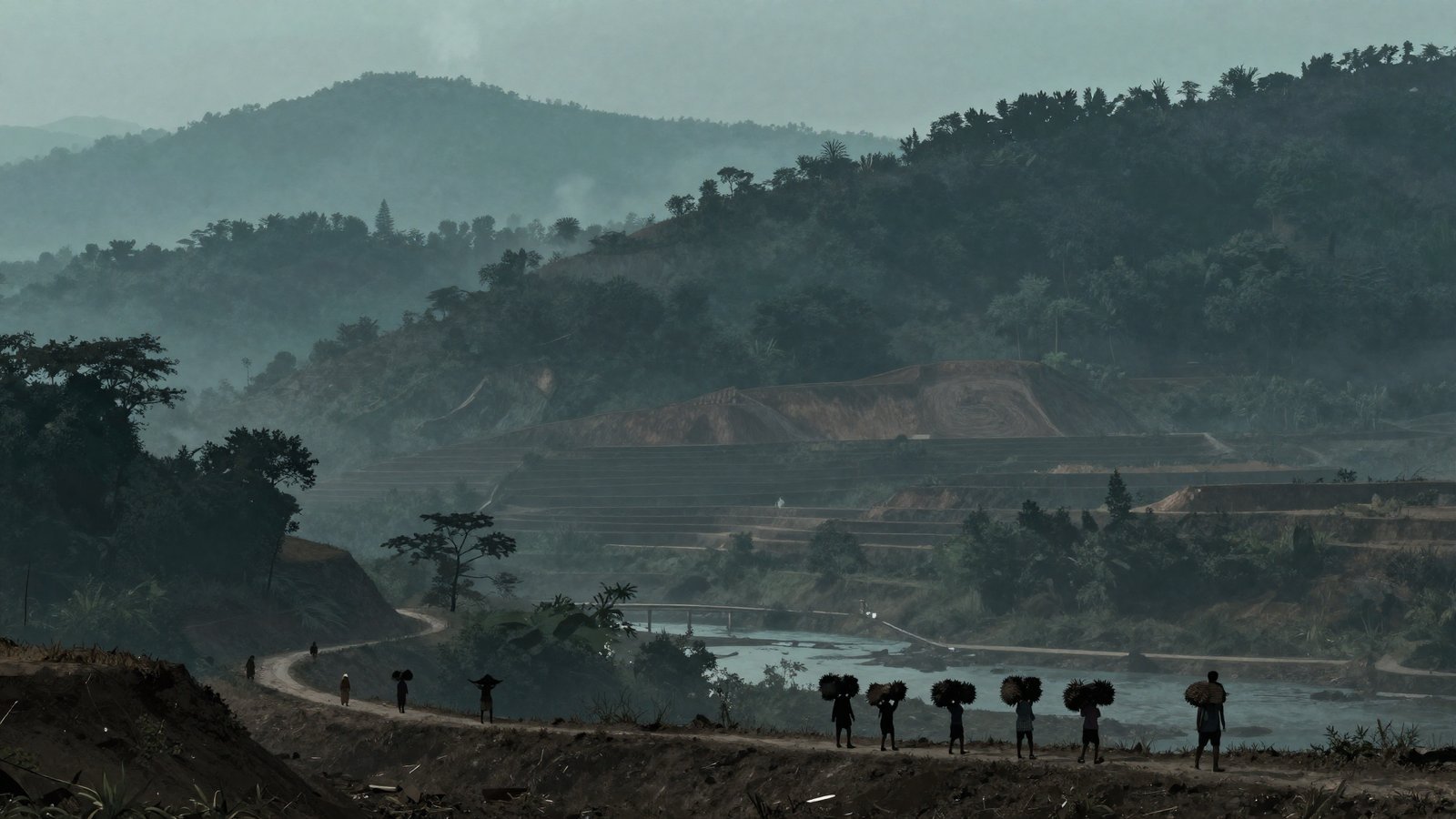
In northern Kachin State, the focus is a belt near the town of Bhamo. The area produces a significant share of the world's heavy rare earths, minerals used in magnets for electric vehicles and wind turbines. Most of the ore is processed across the border in China.
The fight for Bhamo
The Kachin Independence Army (KIA) has pressed junta battalions around Bhamo, according to The Irrawaddy. The group resumed offensives after an earlier pause tied to a 2025 earthquake, and has taken a series of military positions in the district. The junta, in turn, has launched operations to reclaim the mining belt.
Frontier Myanmar has reported that the KIA paused some rare-earth mining as leverage, describing the deposits as bargaining chips. The stakes extend beyond Myanmar. Because China depends on the region's output, analysts say Beijing has pressed the parties to keep supply lines open. The details of that pressure are disputed and hard to confirm.
Air raids in the heartland
Elsewhere, the war's toll on civilians is acute. In Sagaing Region, a stronghold of anti-junta People's Defence Forces, the military answers ground losses with near-daily airstrikes. Local reports compiled by outlets including Mizzima said an air raid on a monastery in Lin Ta Lu village killed at least 22 displaced people on 11 July.
Days later, reports said helicopters bombed a village in Ayadaw Township, killing several civilians. These accounts come from local monitors and resistance-linked sources. Independent verification is difficult, and the military rarely comments on specific strikes, though it says it targets armed groups rather than civilians.
Rights groups say airpower has become the military's main advantage as it loses ground on foot. Amnesty International reported a surge in junta atrocities around the fifth anniversary of the coup. It said air raids increasingly struck villages, displacement sites and civilian infrastructure. The military denies deliberately attacking civilians and blames armed opponents for operating among the population.
- The UN humanitarian office estimates nearly 3.8 million people have been displaced nationwide.
- More than 16 million people are said to need humanitarian assistance, according to OCHA.
- The Arakan Army controls most of Rakhine State's townships, leaving the junta holding the capital and a Chinese-backed port, analysts say.
An election the opposition rejects
The military held a general election in three phases between late December 2025 and January 2026. The UK, the EU and UN bodies described the vote as neither free nor fair, and pro-democracy groups called it a means to entrench military control. The junta says the election paves the way for a civilian administration.
The result installed a government of civilian figures under the military leadership. Opposition forces, including the National Unity Government and allied ethnic armies, reject its legitimacy and say the war will continue until military rule ends.
What the sides want
The military says it is preserving national unity and restoring order through the ballot box. Its opponents seek an end to army rule and a federal, democratic settlement. Ethnic armed organisations pursue longstanding demands for autonomy, and several now govern the territory they hold.
The balance among these actors is fluid. Resistance forces have made gains in some regions, while the military has pushed back in others. Observers say no side appears close to a decisive outcome, and the conflict remains at high intensity across multiple fronts.
Humanitarian and regional stakes
The humanitarian picture is among the world's most severe, according to the UN. Aid officials say a third of the population faces food insecurity, and millions of children are out of school. Access for relief agencies is heavily constrained by fighting and by restrictions imposed by the authorities.
China's role looms over the north. Beijing has interests in border stability, trade routes and the rare-earth trade, and has engaged multiple parties. Reports say it has pressed ethnic armies to reopen crossings and restrain offensives near the frontier. Neighbouring states and regional bloc ASEAN have pushed diplomatic initiatives with limited effect so far.
The rare-earth link gives the northern fighting a global dimension. Analysts say disruptions to mining and shipment can ripple into supply chains for magnets used worldwide. Both the KIA and the military are aware of that leverage. How each uses it may shape the pace of fighting around Bhamo in the months ahead.
The contest for Bhamo
The immediate contest is over Bhamo and the mineral belt around it. Control there carries both military and economic weight. For civilians in Sagaing and beyond, the near-term reality is continued displacement and the threat of airstrikes, with little prospect of a negotiated settlement in sight.
Sources
- The Irrawaddy
- Frontier Myanmar
- Mizzima
- Human Rights Watch
You may also like to read
Myanmar's Military Presses Forward as Resistance Groups Struggle to Coordinate
Myanmar's army has moved back onto the offensive in several regions, reports say, while resistance forces struggle with coordination and supply.

Long Prison Terms for Myanmar Activists Who Protested the Election
Nine activists received terms reported at 27 and 37 years after protesting Myanmar's election and conscription, as opponents called the trials intimidation.

Myanmar's Leader Sets Out a Five-Year Road Map and Defends Conscription
In a 100-day speech, Min Aung Hlaing set out a five-year road map of development and later elections, while rejecting an ASEAN peace plan he said lacked consensus.
Attacks, Abductions and Counter-Offensives Persist in the Lake Chad War
ISWAP and Boko Haram factions have continued attacks on bases, villages and schools while Nigerian forces report rescues, leaving the northeast an active war zone.