Four Antonello da Messina Panels Vanish From a Sicilian Museum on Italy's Biggest Summer Holiday
Thieves entered the Messina regional museum during the Ferragosto procession and left with works valued at up to 80 million euros.
Commentary & Analysis ·
Verified key facts
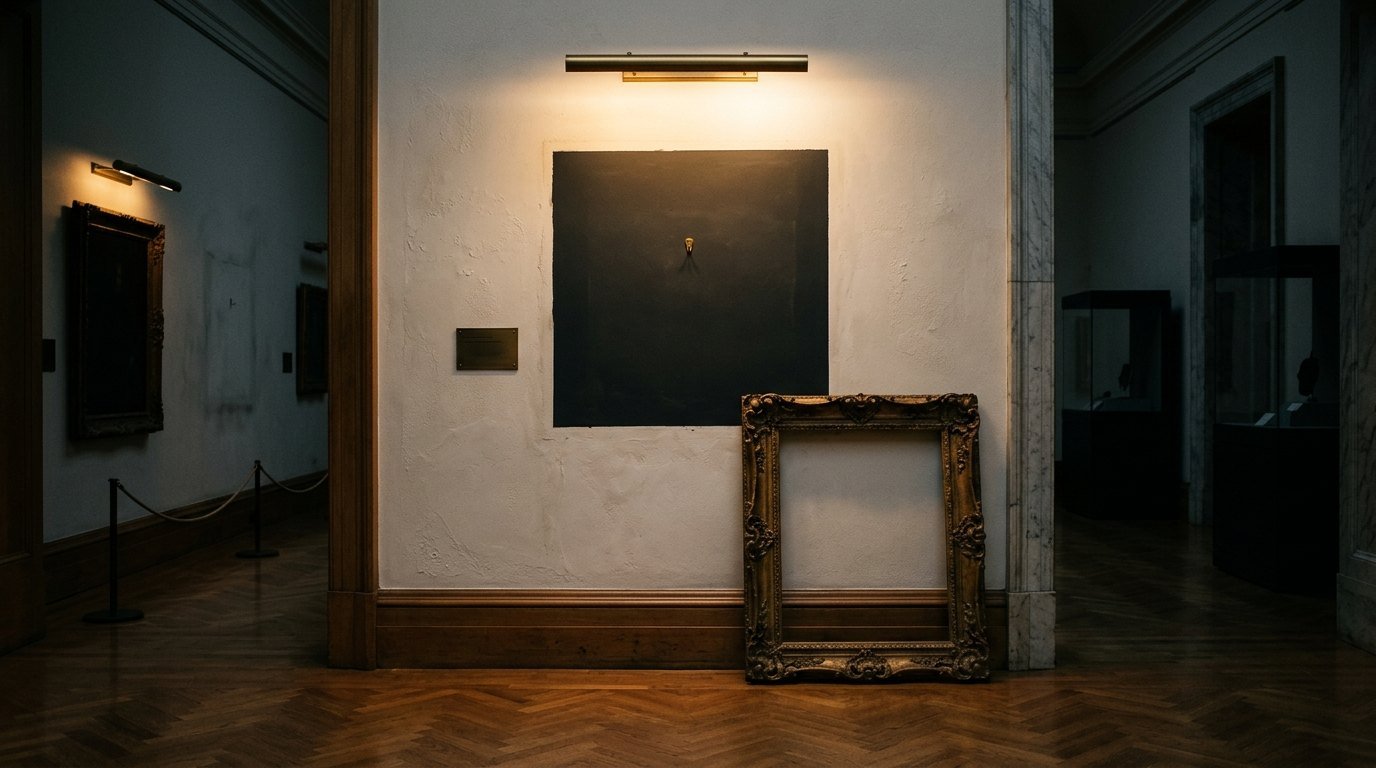
- Thieves entered the Museo Regionale Interdisciplinare di Messina at about 9.50pm on 15 August and took four works by Antonello da Messina, according to TIME and PBS NewsHour
- The theft took place during Ferragosto, one of Italy's most important public holidays, while the city's attention was on the annual procession of La Vara
- The intruders bypassed the museum's alarm and security systems, per CNN
- They took three of the five surviving panels of the San Gregorio Polyptych, dated to 1473, and a double-sided panel showing the Virgin Mary and the dead Christ in Pieta
- All five polyptych panels were removed from their frame, but two were abandoned behind a wall as the thieves fled
- Art specialists have estimated the value of the stolen works at 70 to 80 million euros, or roughly 81 to 92 million dollars
- Antonello da Messina, a fifteenth-century painter, is credited with popularising Flemish realism and oil technique in Italian art
A theft timed to a procession
At around ten minutes to ten on the evening of 15 August, while Messina was absorbed in the annual procession of La Vara, intruders entered the Museo Regionale Interdisciplinare di Messina and left with four paintings by the artist the museum is built around.
Ferragosto is the high point of the Italian summer calendar, a public holiday on which most of the country stops working and much of it leaves town. In Messina it is also the day of the city's principal religious festival, which draws crowds into the streets and police resources with them.
TIME, PBS NewsHour and CNN have all reported the timing as deliberate. A museum on a holiday evening in a city whose attention is fixed on a procession is a building with fewer people in and around it than at any other point in the year.
What was taken
The works are by Antonello da Messina, the fifteenth-century painter born in the city, and they represent the most significant holdings the museum has.
Three of the four are panels from the San Gregorio Polyptych, dated to 1473, of which five panels survive. The fourth is a double-sided panel depicting the Virgin Mary on one face and the dead Christ in Pieta on the other.
Art specialists quoted in the reporting have put the value of the stolen works at between 70 and 80 million euros, or roughly 81 to 92 million dollars. Those figures are estimates of insurance and market value rather than of any price the works could realistically fetch, because paintings of this profile cannot be sold openly.
The two panels left behind a wall
The most revealing detail in the account is what the thieves did not take. They removed all five surviving panels of the San Gregorio Polyptych from their frame, then abandoned two of them behind a wall as they fled.
That sequence suggests a plan that ran short of time or carrying capacity rather than one that targeted specific panels. Professional art thefts with a buyer arranged in advance tend to be selective at the wall; this one appears to have been selective only at the exit.
It also means two panels of the polyptych remain in the museum's possession while three do not, leaving one of Antonello's major surviving works split between a collection and a crime scene.
How they got past the alarms
CNN reported that the intruders bypassed the museum's alarm and security systems. The Italian authorities have not published a detailed account of how, and museum security specialists interviewed after the theft have declined to speculate publicly while the investigation is open.
The broader question raised in the Italian press is one of resourcing rather than of any single failure. Regional museums holding works of national importance operate on budgets calibrated to visitor numbers, not to the market value of what hangs on their walls.
NPR framed the incident as part of a bruising week for Italy's art police and for museum security, reporting it alongside a separate incident in Parma.
Why Antonello matters to art history
Antonello da Messina occupies a specific and pivotal place in the fifteenth century. He is credited with bringing the techniques of Flemish oil painting into Italian practice and popularising them, and with an approach to portraiture that treated the sitter as an individual presence rather than a type.
The consequence of that transmission is difficult to overstate. Oil technique gave Italian painters the depth of colour and the capacity for fine detail that defines the work of the following century, and the route by which it travelled south runs substantially through Antonello.
His surviving output is small. Each documented work carries a weight in the record that a painting by a more prolific contemporary does not, which is why the loss of four of them at once is treated in Italy as a national rather than a regional matter.
The market a stolen Antonello cannot enter
Works of this stature are effectively unsaleable through any legitimate channel. They are documented, photographed, catalogued and now circulated to international databases of stolen art, and no auction house or established dealer will handle them.
That leaves a narrow and well-understood set of possibilities: a theft commissioned by a private collector who intends never to display the works, an attempt to use them as collateral in criminal transactions, or a theft carried out on the assumption that a ransom or a negotiated return can be arranged.
The history of major Italian art thefts includes examples of each. It also includes cases in which paintings surfaced decades later in poor condition, having been stored by people with no means of caring for them.
Why the two abandoned panels matter to investigators
The panels left behind the wall are the most useful physical evidence the case has produced. They were handled by the people who took the others, they were moved within the building, and their position marks the route the thieves took on the way out.
They also set a boundary on what the operation could carry, which narrows the search: a group leaving on foot with three panels and a double-sided board is constrained in a way that a group with a vehicle at the door is not.
No arrests have been reported and none of the four works has been recovered. The investigation is being run by the Italian authorities responsible for cultural property, and the works have been entered into the international registers that any future sale would have to pass.
Sources
- TIME - How a Renaissance art heist happened in Sicily
- PBS NewsHour - Thieves steal 4 Renaissance artworks in a Sicilian museum heist during an Italian holiday
- CNN - Thieves steal 4 Renaissance artworks from Sicilian museum during an Italian holiday
- NPR - A good and bad week for Italy's art police and museum security
- Medievalists.net - Medieval paintings stolen in Sicilian museum heist
You may also like to read
Nick Reiner Indicted on Murder Charges in the Deaths of Rob and Michele Reiner
A grand jury indictment unsealed Wednesday charges the 32-year-old with two counts of first-degree murder with special circumstances in the December stabbing deaths of his parents; he pleaded not guilty and faces a possible death sentence if convicted.

Starz Sends Four Power Series to Netflix Overseas While Keeping the US Home
Starz has licensed four Power universe series to Netflix overseas while keeping the franchise home in the US and holding back its newer projects.

John Wells Renews His Warner Bros. Television Deal After Four Decades Together
The veteran producer has extended a relationship stretching back some forty years, a vote of confidence in trusted partnerships as overall deals face cost scrutiny.

Johnny Depp and Ti West Present Ebenezer: A Christmas Carol as a Dark Holiday Reinvention
Comic-Con audiences got a first look at Ebenezer: A Christmas Carol, a darker take on the public-domain story associated with Johnny Depp and filmmaker Ti West.